
英语没有单一的将来时。will、be going to、现在进行时、一般现在时,以及 will 的进行形式和完成形式,各自对未来的事件表达不同的信息:是何时决定的,是已经安排好还是按时刻表进行,以及在某个时刻是正在进行还是已经完成。
阅读英文版指南 → 本页为机器翻译,未经母语者审校,可能有不准确之处。以英文版为准。
诊断结果会告诉你哪个部分需要复习。请点击下面对应的部分。
一个将来,多种形式
选择哪种形式,取决于你想说明这件事的什么,而不是它离现在有多远。
| 你想表达的意思 | 形式 | 例句 |
|---|---|---|
| 此刻做出的决定、主动提议、承诺 | will | It’s dark in here. I’ll turn on the light. |
| 之前就已决定的计划 | be going to | I’m going to repaint my bedroom this summer. |
| 根据眼前证据做出的预测 | be going to | The battery is at 2 percent. My phone is going to die. |
| 根据个人看法做出的预测 | will | I think the price of coffee will go up. |
| 个人安排 | 现在进行时 | We’re having a video call with the client at ten. |
| 时刻表或正式日程 | 一般现在时 | The exam starts at 9:30 on Tuesday. |
| 马上就要发生的事 | be about to | Quiet, please. The speech is about to begin. |
| 在未来某一时刻正在进行 | will be + -ing | At noon tomorrow, I’ll be sitting in a job interview. |
| 在未来某一时刻之前已经完成 | will have + 过去分词 | By Monday, the office will have moved to the new building. |
| 持续到未来某一时刻的时间长度 | will have been + -ing | By August, he’ll have been training for a year. |
常见的简化说法是“will 用于事实,be going to 用于计划”,但这只是简化:两种形式都可以做预测,也都可以表示意图。更可靠的判断方法是:在说话的那一刻,决定或证据是否已经存在。
进行、完成与完成进行
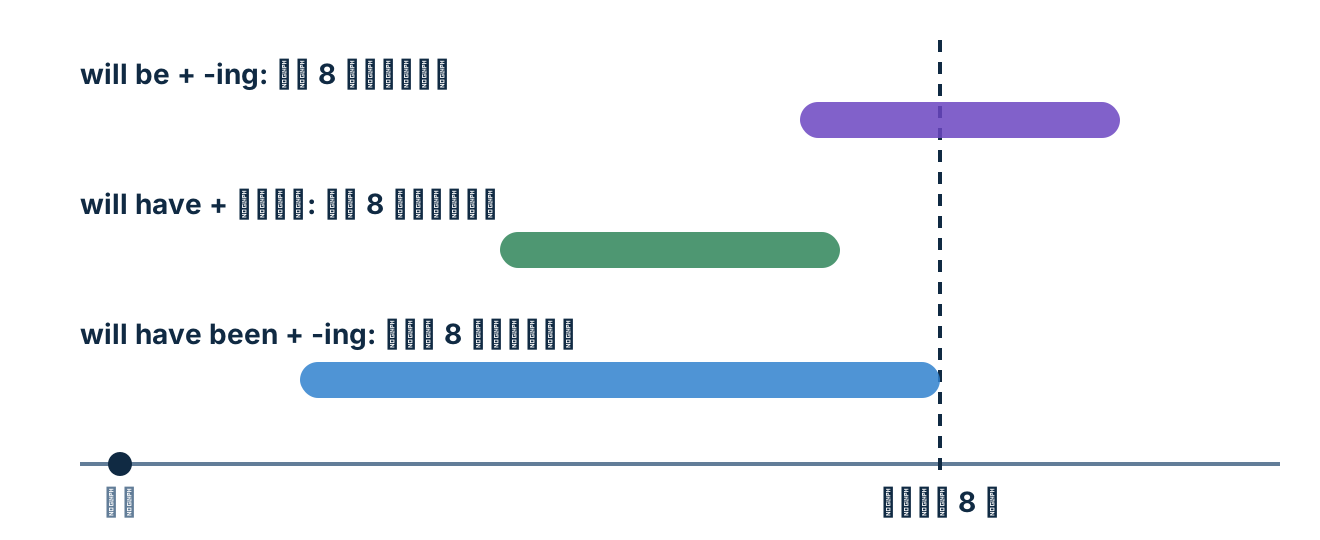
这三种形式都着眼于同一个将来时刻。区别在于动作与那个时刻的关系。
不真实的将来
如果将来取决于不太可能或想象中的条件(If I won the scholarship, I would study abroad),请看第二类条件句。 条件句指南(英文) →
可能的将来
对于可能但不确定的将来(It might rain later, She may be late),使用情态动词。 情态动词指南(英文) →
shall 主要用于提议和建议(Shall I open the window? Shall we start?),以及正式或法律文体。在日常陈述中,通常用 will。
will 还是 be going to
你是刚刚决定的,还是之前决定的?预测是基于证据,还是基于看法?
规则: 说话时做出的决定、主动提议、承诺,以及基于看法的预测,用 will。之前已经定好的计划,以及基于眼前证据的预测,用 be going to。
决定是什么时候做出的?
| 语境中的线索 | 形式 | 例句 |
|---|---|---|
| 对刚听到或看到的事情作出反应 | will | A: The bin is full. B: I’ll take it out. |
| 主动提议或承诺 | will | I’ll send you the notes tonight. I won’t tell anyone. |
| 之前已经决定、购买、预订或承诺 | be going to | I’ve downloaded the app. I’m going to learn Italian. |
预测的依据是什么?
| 依据 | 形式 | 例句 |
|---|---|---|
| 现在看得到或已知的事情 | be going to | He’s running very fast on ice. He’s going to slip. |
| 看法,常与 I think, probably, I’m sure, I expect 连用 | will | I expect the meeting will be short. |
两者都可以时
很多预测两种形式都可以用(It will rain later / It’s going to rain later)。区别在决定上最明显:说话之前已做的决定用 will 会显得别扭,说话时才做的决定用 be going to 也会显得别扭。
这一部分的常见错误
- 对当场做出的决定用了 be going to
A: The printer's jammed. B: I'm going to fix it.✓ A: The printer's jammed. B: I'll fix it.B 一听到问题就当场做了决定。 - 对早先制订的计划用了 will
I bought a guitar last week because I'll learn to play.✓ I bought a guitar last week because I'm going to learn to play.买吉他之前,这个打算就已经存在了。 - 用一般现在时表示计划或预测
Look at him. He falls off that ladder!✓ Look at him. He's going to fall off that ladder!眼前的证据可以预测摔倒;一般现在时做不到这一点。
安排、时刻表和 be about to
是已预订、有时刻表,还是马上要发生?故事发生在过去吗?
规则: 个人安排用现在进行时,时刻表用一般现在时,接下来几个瞬间内的事用 be about to,过去的故事中用 was going to 或 was about to。
| 含义 | 形式 | 例句 |
|---|---|---|
| 个人安排(已商定、已预订) | 现在进行时 | I’m having my hair cut on Saturday. |
| 时刻表、节目安排、营业时间 | 一般现在时 | The next ferry departs at 4:20. |
| 马上,转眼之间 | be about to | Turn off your phone. The plane is about to take off. |
| 站在过去看到的计划 | was / were going to | We were going to eat outside, but it rained. |
| 过去某件事发生之前的一刻 | was / were about to | I was about to leave when my boss called. |
用一般现在时表示个人计划
用一般现在时说个人计划(I study tonight),听起来像是世界上一件固定的事实,而不是一个打算。请用 be going to 或现在进行时。有些商务和旅行行程确实会用一般现在时(We fly to Osaka on Monday),因为它们读起来像日程表。
about to 指多近的将来?
be about to 通常指几秒钟或几分钟之后。在口语中它可以放宽到“很快”,但不能与明确的较远时间(如 next month 或 next year)连用。
这一部分的常见错误
- 用一般现在时表示计划或预测
I play tennis with Leo tomorrow at six.✓ I'm playing tennis with Leo tomorrow at six.已商定并有确定时间的计划,用现在进行时。 - be about to 与较远的时间连用
My cousin is about to get married in October.✓ My cousin is getting married in October.十月不属于“转眼之间”。 - 在过去的故事中用了现在时形式
He said he is going to call, but he never did.✓ He said he was going to call, but he never did.这个计划是站在过去的某个时间点来看的。
时间状语从句
空格在 when、until 或 as soon as 之后,还是在主句中?
规则: 在 when、before、after、until、once、as soon as 和 by the time 之后,用现在时形式(一般现在时或现在完成时)表示将来。will 放在主句中。
语法回顾
if 也遵循同样的规律:If it rains, we will stay inside(不是 If it will rain)。第一类条件句以及 unless 等连接词,在条件句指南中有完整介绍。 条件句指南(英文) →
后面用现在时形式的时间词
空格在哪个分句中?
| 时间状语从句 | 主句 |
|---|---|
| As soon as the parcel arrives, | I‘ll let you know. |
| Until the bridge reopens, | drivers will need a detour. |
| Once you‘ve paid, | you‘ll get a receipt by email. |
时间状语从句可以放在前面,也可以放在后面。规则取决于动词位于哪个分句,而不是分句的顺序。
这一部分的常见错误
- 在 when、until 或 as soon as 之后用 will
We'll start as soon as everyone will arrive.✓ We'll start as soon as everyone arrives.as soon as 之后,动词保持现在时。 - 需要将来形式的地方用了现在时形式
Once the box office opens, I buy the tickets.✓ Once the box office opens, I'll buy the tickets.主句需要 will。 - 在 when、until 或 as soon as 之后用 will
I won't leave until I will have finished.✓ I won't leave until I've finished.时间状语从句中不用 will,即使是完成时也一样。
正在进行还是已经完成?
在那个将来时刻,动作是仍在进行,还是已经完成?
规则: will be + -ing 表示在将来某一时刻正在进行的动作。will have + 过去分词表示在那之前已经完成。状态动词保持简单形式。
| 问题 | 形式 | 例句 |
|---|---|---|
| 在那一刻还在发生吗? | will be + -ing | When the guests arrive, we’ll still be cooking. |
| 到那一刻已经完成了吗? | will have + 过去分词 | When the guests arrive, we’ll have finished cooking. |
| 状态动词(know, be, own, need)? | will + 动词原形 | By tonight, we’ll know the answer. |
线索
进行中:this time tomorrow, at that moment, when you arrive, all afternoon。已完成:by, by the time, already, before。
礼貌的提问
Will you be using the car tonight? 是在询问对方的计划,不会像请求。Will you use the car? 则可能听起来像是在请求对方去做这件事。
这一部分的常见错误
- 需要进行形式的地方用了单纯的 will
At 3 a.m., most of the city will sleep.✓ At 3 a.m., most of the city will be sleeping.在那一刻,睡觉这个动作正在进行。 - 混淆了进行与完成
By the time we get there, the show will be starting already.✓ By the time we get there, the show will have started already.by the time 和 already 都指向完成。 - 状态动词用了进行形式
Tomorrow you will be understanding the plan better.✓ Tomorrow you will understand the plan better.understand 是状态动词。
持续到未来某一时刻的时间长度
你是在衡量时间长度,还是在数数量?
规则: will have been + -ing 表示持续到将来某一时刻已有多长时间。表示数量、状态动词以及被动语态时,用 will have + 过去分词。
| 问题 | 形式 | 例句 |
|---|---|---|
| 到那一刻已持续多长时间? | will have been + -ing | By June, I’ll have been teaching for twenty years. |
| 到那一刻已完成多少? | will have + 过去分词 | By June, I’ll have taught over 3,000 classes. |
| 状态动词 | will have + 过去分词 | By June, I’ll have had this job for twenty years. |
| 被动语态 | will have been + 过去分词 | By June, the old school will have been demolished. |
三个部分
将来完成进行时在 -ing 形式前有三个助手:will + have + been。漏掉 been(will have working)是常见的失误。
否定句和疑问句也可以用(How long will you have been living here?),但这种形式最常见于陈述句。
这一部分的常见错误
- 缺少 been 的 will have + -ing
In May, we will have dating for two years.✓ In May, we will have been dating for two years.表示持续时间需要 will have been + -ing。 - 对已完成事物的数量用了进行形式
By noon, I will have been answering 50 emails.✓ By noon, I will have answered 50 emails.50 封邮件是已完成事物的数量。 - 对将来时间点用了现在完成时
Next year, he has worked here for a decade.✓ Next year, he will have worked here for a decade.next year 是一个将来时间点,所以需要 will。
自测
每个句子正确吗?点击查看答案。如果你不确定,可以根据部分标签找到应该复习的地方。
第 1 部分Oh no, I've spilled my coffee! Don't worry, I'll get a cloth.
正确。 说话当时做出的决定用 will。
第 1 部分I've decided. I'm going to take the job in Chicago.
正确。 决定是在说话之前做出的,所以用 be going to。
第 2 部分The festival opens on Friday at noon.
正确。 正式日程用一般现在时。
第 2 部分I'm about to move to a new city next spring.
错误。 about to 表示“马上”。应说:I’m going to move(或 I’m moving)to a new city next spring.
第 3 部分I'll send you the photos when I will get home.
错误。 when 之后用现在时:I’ll send you the photos when I get home.
第 3 部分Once you've tried this recipe, you'll never buy the store version again.
正确。 once 从句用现在完成时,主句用 will。
第 4 部分When you call at nine, I'll be driving to work.
正确。 你打电话的时候,开车这个动作正在进行。
第 4 部分By the end of the week, the painters will be finishing the whole house.
错误。 by the end of the week 指向完成:the painters will have finished the whole house.
第 5 部分By 2028, she will have been living abroad for a decade.
正确。 持续到将来时间点的时间长度,用 will have been + -ing。
第 5 部分By Sunday, I will have been reading four books.
错误。 四本书是数量:By Sunday, I will have read four books.
AI 练习提示词
把下面的内容粘贴到 AI 聊天工具中。