
Level: B1
Before You Read | Reading | Vocabulary | Word Partners | Activities | Speed Challenge | Quick Reading | Questions | AI Prompts | Discussion | Language Focus | Resources
Printable: Student handout (PDF | Word) | Teacher’s key (PDF | Word)
Before You Read
Think about these questions or discuss them with a partner.
- What is the latest time you usually eat? What do you often eat late at night?
- Where do people in your town go to eat late in the evening, or do they stay home?
- How might the time people eat dinner differ by country, job, age, or season?
Reading
It is almost midnight, and you are hungry again. In Seoul, you might open an app and order fried chicken. In Taipei, you might walk to a night market for a bowl of noodles. In Madrid, you might still be at the dinner table with your family. In all three cities, eating this late is completely ordinary. But the reasons behind it are very different.
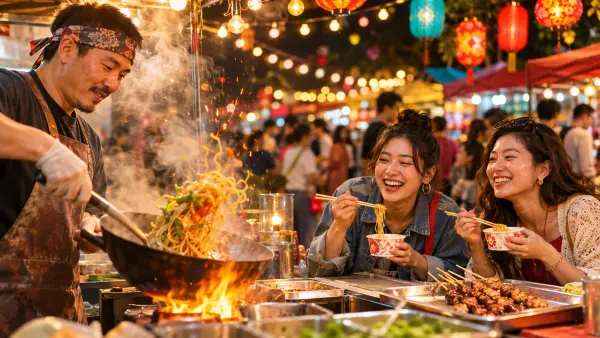
Taiwan is famous for its night markets. They grew after World War II, when cities became bigger and many workers moved in from the countryside and needed cheap food. Today, most night markets open in the evening, and crowds walk slowly between the stalls, small shops in rows along the street. Dishes such as oyster omelets and stinky tofu come in small portions at low prices, so you can try five or six things in one evening.
In Spain, dinner often starts between 9 and 10 p.m. Many people link this habit to a decision made in 1940. That year, the leader Francisco Franco moved Spain’s clocks one hour forward to match Germany. Since then, the sun has risen and set later by the clock, so the whole schedule of the day has moved later too. There is another explanation. After Spain’s civil war, many people were poor and had two jobs. They used to finish the first job in the early afternoon and then go to a second job. Dinner would come only after the second job ended. Not everyone agrees which reason matters most.
In South Korea, a late-night snack has its own name: yasik, which means “night food.” For many years, office workers would stay late and then go out with their colleagues for a meal and a drink. Today, many people eat yasik at home. They order fried chicken and beer, called chimaek, or spicy rice cakes from a delivery app. In July 2026, the app Baemin said that late-night orders from foreign visitors in the first half of the year had risen sharply compared with a year earlier.
Weather and tradition matter too. In Lagos, Nigeria, sellers of suya, spicy meat on sticks, often wait for the cooler evening air before they light their charcoal grill. Many customers are busy at work or in traffic during the day anyway. In Mexico City, one well-known taco shop is a car repair shop in the daytime and serves tacos until the early morning. During Ramadan, Muslims fast, eating and drinking nothing from dawn until sunset. In cities such as Dubai, restaurants get very busy after sunset, and many people eat again in the middle of the night, before the sun rises.
Daily life is changing in many places. In the past, many families used to eat together at a fixed time each evening, and in many towns most shops would close early. Now long working hours, night shifts, and long commutes push meals later.
So is late eating bad for you? The evidence is mixed. Several studies link eating close to bedtime with heartburn, a burning feeling in the chest, and with poorer sleep. In one small study, people ate the same meals four hours later than usual. They felt hungrier and burned fewer calories. But many studies show only a link, not a cause, and people who eat late may also sleep less or move less. Some sleep experts suggest finishing a big meal about three hours before bed. If you are hungry later, try a small snack, such as yogurt with fruit. Tonight, notice the time of your last meal, and then notice how well you sleep.
Vocabulary
Each word has a frequency score, a rank, and a tag. The score shows how common the word is in modern English: higher means more common, and each full point means roughly ten times more common. The rank is the word’s position on a list of about 321,000 English word forms, from most to least common. The tag shows where you are most likely to meet the word: Current, Formal, Literary, or Dated. The paragraph number shows where the word first appears in the reading. The labels are information, not instructions. Deciding which words are worth your time is up to you. How to read the scores, ranks, and tags.
ordinary (adjective): normal and usual, not special or strange.
Frequency: 4.42 | Rank: 3,479 | Current | Paragraph 1
Translations: 平常的 | 普通の | 평범한 | सामान्य | عادي | обычный | normal | ordinaire
- In Madrid, eating dinner at ten is completely ordinary.
- It was an ordinary day, so I went to work as usual.
stalls (noun, plural): small open shops or tables in a market or on the street where people sell things.
Frequency: 3.51 | Rank: 14,731 | Current | Paragraph 2
Translations: 摊位 | 屋台 | 노점 | स्टॉल | أكشاك | ларьки | puestos | étals
- Crowds walk slowly between the stalls at the night market.
- She bought fresh fruit from a stall near the station.
portions (noun, plural): amounts of food served to one person.
Frequency: 3.98 | Rank: 7,338 | Current | Paragraph 2
Translations: 份量 | 一人前 | 1인분 | हिस्से | حصص | порции | porciones | portions
- Night market food comes in small portions at low prices.
- The restaurant serves very large portions, so we shared one plate.
habit (noun): something you do often and regularly, often without thinking about it.
Frequency: 4.24 | Rank: 4,752 | Current | Paragraph 3
Translations: 习惯 | 習慣 | 습관 | आदत | عادة | привычка | costumbre | habitude
- Many people link the habit of late dinners to a decision made in 1940.
- Checking my phone before bed is a bad habit.
schedule (noun): a plan of when things happen during a day, week, or other period.
Frequency: 4.67 | Rank: 2,153 | Current | Paragraph 3
Translations: 日程 | スケジュール | 일정 | दिनचर्या | جدول | распорядок | horario | emploi du temps
- In Spain, the whole schedule of the day moved later.
- My schedule is very busy this week, so let’s meet next Monday.
colleagues (noun, plural): people you work with in the same company or job.
Frequency: 4.29 | Rank: 4,365 | Current | Paragraph 4
Translations: 同事 | 同僚 | 동료 | सहकर्मी | زملاء | коллеги | colegas | collègues
- Office workers would go out with their colleagues after work.
- I had lunch with two colleagues from the sales team.
sharply (adverb): suddenly and by a large amount.
Frequency: 3.89 | Rank: 8,417 | Current | Paragraph 4
Translations: 急剧地 | 急激に | 급격히 | तेज़ी से | بشكل حاد | резко | drásticamente | fortement
- Late-night delivery orders from tourists rose sharply.
- The price of coffee rose sharply last year.
grill (noun): a frame of metal bars over a fire or heat, used for cooking food.
Frequency: 3.84 | Rank: 9,045 | Current | Paragraph 5
Translations: 烤架 | グリル | 그릴 | ग्रिल | شواية | гриль | parrilla | gril
- Suya sellers light their charcoal grill in the evening.
- We cooked fish on the grill in the garden.
fast (verb): to eat no food, or no food and drink, for a period of time, often for religious reasons.
Frequency: 5.13 | Rank: 770 | Current | Paragraph 5
Translations: 斋戒 | 断食する | 금식하다 | उपवास करना | يصوم | поститься | ayunar | jeûner
- During Ramadan, Muslims fast from dawn until sunset.
- My doctor asked me to fast for twelve hours before the blood test.
dawn (noun): the time early in the morning when light first appears in the sky.
Frequency: 4.27 | Rank: 4,521 | Current | Paragraph 5
Translations: 黎明 | 夜明け | 새벽 | भोर | الفجر | рассвет | amanecer | aube
- During Ramadan, people eat a meal before dawn.
- We left the house at dawn to catch the first train.
fixed (adjective): decided and not changing from day to day.
Frequency: 4.70 | Rank: 2,041 | Current | Paragraph 6
Translations: 固定的 | 決まった | 정해진 | निश्चित | محدد | фиксированный | fijo | fixe
- Many families used to eat at a fixed time each evening.
- The shop has fixed prices, so you cannot ask for a discount.
shifts (noun, plural): periods of work in a job where different groups work at different times of the day or night.
Frequency: 4.01 | Rank: 7,009 | Current | Paragraph 6
Translations: 轮班 | シフト | 교대 근무 | पाली | نوبات عمل | смены | turnos | postes
- Night shifts push meals later for many workers.
- Nurses at the hospital work twelve-hour shifts.
commutes (noun, plural): regular trips between home and work or school.
Frequency: 2.79 | Rank: 37,459 | Current | Paragraph 6
Translations: 通勤 | 通勤 | 통근 | आवागमन | التنقل اليومي | поездки на работу | trayectos | trajets
- Long commutes mean many people get home late.
- My commute takes about forty minutes by bus.
evidence (noun): facts or information that show whether something is true.
Frequency: 5.14 | Rank: 756 | Current | Paragraph 7
Translations: 证据 | 証拠 | 증거 | प्रमाण | الأدلة | доказательства | pruebas | preuves
- The evidence about late eating and health is mixed.
- The police found new evidence in the case.
heartburn (noun): a burning pain in the chest, caused by acid coming up from the stomach.
Frequency: 2.87 | Rank: 34,063 | Current | Paragraph 7
Translations: 胃灼热 | 胸やけ | 속쓰림 | सीने में जलन | حرقة المعدة | изжога | acidez estomacal | brûlures d’estomac
- A big meal just before bed can cause heartburn.
- Spicy food gives my father heartburn.
Word Partners
Collocations. Match the two halves to make common phrases. Then use three of the phrases in sentences of your own.
| 1. break the | a. night shifts |
| 2. a tight | b. commute |
| 3. small | c. habit |
| 4. rise | d. portions |
| 5. fire up the | e. evidence |
| 6. work | f. grill |
| 7. a long | g. schedule |
| 8. strong | h. sharply |
Answers
- break the habit (c)
- a tight schedule (g)
- small portions (d)
- rise sharply (h)
- fire up the grill (f)
- work night shifts (a)
- a long commute (b)
- strong evidence (e)
Word families. Complete each sentence with the correct form of the word in brackets.
- Many __________ in big cities spend two hours a day on trains. (commutes)
- There was a __________ rise in food prices last year. (sharply)
- During Ramadan, the day of __________ ends at sunset with a meal called iftar. (fast)
- It was __________ that he was tired. He yawned all through the meeting. (evidence)
- Our meeting is __________ for 10 a.m. on Monday. (schedule)
- He is a __________ late eater. He almost never has dinner before ten. (habit)
Answers
- commuters
- sharp
- fasting
- evident
- scheduled
- habitual
Activity Page
Open the activity page in a new tab
Speed Challenge
Answer 12 questions against the clock. Every wrong answer adds 5 seconds, and the lowest score wins. Open the speed challenge in a new tab.
Quick Reading and Typing: Late-Night Eating in Brief
A shorter version of the reading that uses the lesson vocabulary. Read it for a quick introduction to the topic, or use it for reading aloud, shadowing (reading along with a model), and typing practice.
In many cities, eating near midnight is completely ordinary. In Seoul, Taipei, and Madrid, people often eat late. The reasons, however, are very different from place to place.
Taiwan is famous for its night markets. They grew after World War II, when many workers moved to the cities and needed cheap food after long days. Today, crowds walk between the stalls in the evening. Dishes such as oyster omelets come in small portions at low prices, so people can try many things in one night.
In Spain, dinner often starts between 9 and 10 p.m. Many people link this habit to 1940. That year, Francisco Franco moved Spain’s clocks one hour forward to match Germany. The whole schedule of the day moved later. Another explanation is about work. After Spain’s civil war, many people were poor and had two jobs. They used to finish the first job in the early afternoon and then go to a second job. Dinner would come only after the second job ended.
In South Korea, a late-night snack is called yasik. Office workers would often stay late and then go out with their colleagues. Today, many people order fried chicken from a delivery app instead. In 2026, the app Baemin said that late-night orders from foreign visitors had risen sharply. In Lagos, Nigeria, sellers of spicy suya meat wait for the cooler evening air before they light the grill. During Ramadan, Muslims fast from dawn until sunset, and cities such as Dubai stay busy late into the night.
Daily life is changing too. Many families used to eat together at a fixed time each evening. Now long working hours, night shifts, and long commutes push meals later. Is this bad for your health? The evidence is mixed. Several studies link eating close to bedtime with heartburn and poorer sleep. In one small study, people who ate the same meals four hours later felt hungrier and burned fewer calories. But many studies show only a link, not a cause. Some sleep experts suggest finishing a big meal about three hours before bed.
How to practice
- Read the text silently once and check any words you are unsure of.
- Read it aloud slowly, one sentence at a time. On the typing page, the Listen button reads each line with your device’s voice, so you can listen first and then repeat.
- Shadow: read aloud again at a natural speed, trying to keep a steady rhythm without stopping.
- Record yourself, listen back, and note one sentence to practice again.
- Type it on the typing page below and check your speed and accuracy.
Open the typing practice in a new tab
Comprehension Questions
- Why did night markets in Taiwan grow after World War II?
- Why can people try many dishes in one evening at a night market?
- When does dinner often start in Spain?
- What happened to Spain’s clocks in 1940, and how did it affect the day?
- How did having two jobs make dinner later in Spain?
- What is yasik, and how do many people get it today?
- Why do suya sellers in Lagos wait for the evening?
- What three things push meals later today, according to the reading?
- Why does the writer say the evidence about late eating is mixed?
IELTS-Style Questions
- True, False, or Not Given: “Most people in Taiwan eat dinner at a night market every day.” Explain your answer using the reading.
- Yes, No, or Not Given: “The writer believes that late eating has been proven to cause weight gain.” Explain your answer using the reading.
- Author’s purpose: Why does the writer mention the small study in which people ate the same meals four hours later? Is it (a) to give one example of evidence that late eating may affect hunger, (b) to prove that everyone must stop eating at night, or (c) to show that Spanish dinners are healthy?
AI Discussion Prompt
I just read an article about the culture of late-night eating around the world. It covered night markets in Taiwan, late dinners in Spain and the 1940 time zone change, late-night snacks called yasik and food delivery in South Korea, evening suya sellers in Lagos, eating at night during Ramadan, how work and commutes push meals later, and mixed evidence about late eating and health. I am an English learner at about B1 level. Please ask me one question at a time, starting with what time I usually eat dinner. Use simple language, respond to my ideas first, then briefly correct any language errors, and ask follow-up questions that make me explain my reasons.
AI Vocabulary Prompt
I want to practice vocabulary from an article about the culture of late-night eating. Please quiz me on the following words one at a time, using a mix of question types: multiple choice, true/false, and sentence completion. Give me feedback after each answer before moving on, and bring back the words I miss later. Here are the words: ordinary, stalls, portions, habit, schedule, colleagues, sharply, grill, fast, dawn, fixed, shifts, commutes, evidence, heartburn.
Discussion Questions
- What is your favorite food to eat late at night? Why?
- Have you ever been to a night market or a street full of stalls? What was it like?
- Do you prefer to go out for late-night food or to order delivery? Why?
- What time does your family usually eat dinner? Has this changed since you were a child?
- Do you ever eat with colleagues or classmates after work or class? What do you usually talk about?
- How does your work or study schedule affect when you eat?
- Would you like to live in a place where dinner starts at 10 p.m.? Why or why not?
- When you visit a new country, why is it exciting to try what local people eat?
- How do weather and seasons change when people eat in your area?
- What are the good and bad points of shops and restaurants that stay open all night?
- Delivery riders often work late so that others can eat at any hour. Is this fair to the riders?
- Should a country change its clocks to match the sun better, even if it is difficult? Why or why not?
- Health advice says one thing, but work and family life often say another. How can people find a balance?
- Do you think families eating together at a fixed time is becoming less common? What might be lost or gained?
Language Focus: Used to and Would for Past Habits
What it is: We use used to + base verb and would + base verb to talk about things that happened again and again in the past but do not happen now, or not as much. Used to also works for past states (I used to live in Busan); would does not.
Why writers use it: The reading compares how people ate in the past with how they eat now. Used to and would show that the old habit was regular, and that things have changed.
Examples from the reading:
- “They used to finish the first job in the early afternoon and then go to a second job.”
- “Dinner would come only after the second job ended.”
- “For many years, office workers would stay late and then go out with their colleagues…”
- “In the past, many families used to eat together at a fixed time each evening, and in many towns most shops would close early.”
Part A. Sentence starters Finish each sentence so that it is true for you.
Used to (a past habit or state)
- When I was a child, I used to …
- My family used to eat dinner at …
- I didn’t use to …
Would (a repeated past action)
- In high school, after class, my friends and I would …
- On summer evenings, my family would …
Model answers
- When I was a child, I used to go to bed at nine.
- My family used to eat dinner at seven o’clock every evening.
- I didn’t use to like coffee, but now I drink it every day.
- In high school, after class, my friends and I would buy snacks at a convenience store.
- On summer evenings, my family would sit outside and eat watermelon.
Part B. Questions Answer each question in a full sentence. Try to answer using used to or would. Then ask a partner.
- What did you use to eat as a late-night snack when you were a student?
- What would you do on weekends when you were ten years old?
- What were you afraid of when you were a small child?
- Where did you use to live when you were younger?
- What games would you play with your friends after school?
Model answers
- I used to eat instant noodles late at night when I was a student.
- When I was ten, I would play soccer in the park every Saturday.
- I used to be afraid of the dark.
- I used to live in a small town near the mountains.
- We would play tag or hide-and-seek until dinner time.
Online Resources
- Night markets in Taiwan (Wikipedia). The history of Taiwan’s night markets and the “small eats” they sell, with famous markets city by city (paragraph 2).
- Why do Spaniards eat so late? (The Local Spain). Typical meal times in Spain and the main explanations for late dinners, including the time zone and two jobs (paragraph 3).
- Nightlife: Real reasons suya is sold at night (The Guardian Nigeria). Suya sellers in Nigeria explain why their grilled meat is an evening food (paragraph 5).
- Ramadan’s two rush hours transform daily life across the UAE (Gulf News). How shops, restaurants, and roads in the UAE get busy before sunset and again before dawn in Ramadan.
- Is late-night eating bad for you? (Advisory Board). A short summary of what studies say about eating late, sleep, heartburn, and weight, with expert tips (paragraph 7).