
Level: B2
Before You Read | Reading | Vocabulary | Word Partners | Activities | Speed Challenge | Quick Reading | Questions | AI Prompts | Discussion | Language Focus | Resources
Printable: Student handout (PDF | Word) | Teacher’s key (PDF | Word)
Before You Read
Think about these questions or discuss them with a partner.
- When do you talk to yourself, silently or out loud? What kinds of things do you say?
- What do you usually say to yourself before an important exam, game, or presentation?
- How might the way people talk to themselves differ by age, culture, or personality?
Reading
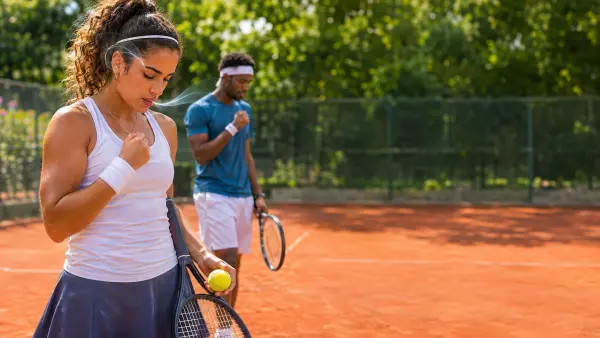
Watch a tennis match and you will notice something strange. Between points, players mutter to themselves, clench a fist and shout “Come on!”, or quietly scold themselves after a missed shot. They are not talking to the crowd. They are talking to themselves, and almost everyone does the same thing, usually in silence. Psychologists call it self-talk: the running commentary in your head that comments on what you are doing, plans what comes next, and judges how well it is going.
That inner voice is more physical than it seems. When you talk silently, parts of the brain that you use for speaking aloud become active, and sensitive equipment can detect tiny movements in the muscles of the throat. In a sense, inner speech is ordinary speech with the volume turned down. Young children show where it comes from. They often narrate their play out loud: “Now the red block goes on top.” The Russian psychologist Lev Vygotsky argued that this speech slowly goes underground and becomes the silent voice adults use to plan and control what they do. People differ a lot. When volunteers carry a beeper and write down what is in their mind at random moments, some report words in their head almost every time and others hardly ever. A small minority, perhaps 5 to 10 percent of people, say they have little or no inner voice at all.
What you say to yourself can change how well you perform. A large review of sport studies found that self-talk reliably improves results, but the type matters. Short technical reminders such as “elbow up” or “watch the ball”, known as instructional self-talk, work best for precise skills like putting in golf. Motivational phrases such as “keep going” help more with strength and endurance. In one British experiment, cyclists who practiced motivational phrases for two weeks rode about 18 percent longer before reaching exhaustion, and they said the effort felt easier. Two weeks is too short for much change in fitness. What changed was how hard the effort felt.
Even small choices of wording seem to matter. In a series of studies led by the psychologist Ethan Kross, people were given five minutes to prepare a speech about why they deserved their dream job. Those who prepared by talking to themselves using “I” tended to sound anxious (“How can I possibly do this?”). Those who used their own name or “you” felt calmer, and judges rated their speeches as better. Later brain studies found that this kind of distanced self-talk reduced emotional reactions within about a second, without requiring extra mental effort. The idea is simple: most of us give clearer advice to a friend than to ourselves, and using your name turns you into that friend.
The same logic applies to nerves. Before a speech or a test, most people try to calm down, but a racing heart is hard to slow on command. In experiments at Harvard, people who said “I am excited” before singing karaoke or giving a speech performed better than those who told themselves “I am calm”. Fear and excitement feel very similar in the body. Changing the label seems to be easier than changing the feeling.
Self-talk is not always helpful, however. Harsh inner criticism and rumination, going over the same mistakes again and again, are closely linked to anxiety and depression. The obvious fix, repeating positive statements, can backfire. In one well-known study, people with low self-esteem who repeated “I am a lovable person” ended up feeling worse, not better. The sentence clashed with what they believed, and the gap made them more aware of their doubts. Self-talk seems to work best when it is believable, specific, and focused on the next action rather than on your value as a person.
So what can you do? First, notice your inner voice, especially after small mistakes, and ask whether you would speak to a friend that way. When you feel stressed, try talking to yourself by name. Before a game, a presentation, or an exam, choose one short cue: a technical reminder for a precise task, an encouraging phrase for a long, tiring one. If you are nervous, try “I’m excited” instead of “calm down”. None of these techniques is magic, and most of the studies behind them are small. But they cost nothing to try, and you are already talking to yourself all day. The first step takes a moment: after your next small mistake, listen to the exact words you use.
Vocabulary
Each word has a frequency score, a rank, and a tag. The score shows how common the word is in modern English: higher means more common, and each full point means roughly ten times more common. The rank is the word’s position on a list of about 321,000 English word forms, from most to least common. The tag shows where you are most likely to meet the word: Current, Formal, Literary, or Dated. The paragraph number shows where the word first appears in the reading. The labels are information, not instructions. Deciding which words are worth your time is up to you. How to read the scores, ranks, and tags.
mutter (verb): to speak quietly and not clearly, often to yourself or because you are annoyed.
Frequency: 2.77 | Rank: 38,416 | Current | Paragraph 1
Translations: 嘟囔 | ぶつぶつ言う | 중얼거리다 | बड़बड़ाना | يتمتم | бормотать | murmurar | marmonner
- Tennis players often mutter to themselves between points.
- He muttered something about the weather and closed the door.
scold (verb): to speak angrily to someone because they have done something wrong.
Frequency: 2.81 | Rank: 36,565 | Current | Paragraph 1
Translations: 责骂 | 叱る | 꾸짖다 | डाँटना | يوبخ | ругать | regañar | gronder
- Some players scold themselves after a missed shot.
- The teacher scolded the boys for running in the hallway.
commentary (noun): a series of spoken remarks that describe or explain events as they happen.
Frequency: 4.19 | Rank: 5,206 | Current | Paragraph 1
Translations: 解说 | 実況 | 해설 | टिप्पणी | تعليق | комментарий | comentario | commentaire
- Self-talk is a running commentary on what you are doing.
- We listened to the radio commentary of the final.
detect (verb): to notice or discover something, especially something small or hidden.
Frequency: 4.05 | Rank: 6,565 | Current | Paragraph 2
Translations: 检测到 | 検出する | 감지하다 | पता लगाना | يكتشف | обнаруживать | detectar | détecter
- Sensitive equipment can detect tiny movements in the throat during inner speech.
- The test can detect the virus in just a few minutes.
narrate (verb): to describe events in words, often aloud and as they happen, or to tell a story.
Frequency: 2.79 | Rank: 37,459 | Formal | Paragraph 2
Translations: 叙述 | 語る | 말로 서술하다 | वर्णन करना | يروي | рассказывать | narrar | raconter
- Young children often narrate their play out loud.
- A well-known actor narrates the nature series.
instructional (adjective): giving information or directions about how to do something.
Frequency: 3.51 | Rank: 14,731 | Formal | Paragraph 3
Translations: 指导性的 | 指示的な | 지시적인 | निर्देशात्मक | إرشادي | инструктивный | instruccional | d’instruction
- Instructional self-talk works best for precise skills like putting in golf.
- I watched an instructional video on how to change a tire.
endurance (noun): the ability to keep doing something tiring or difficult for a long time.
Frequency: 3.74 | Rank: 10,519 | Current | Paragraph 3
Translations: 耐力 | 持久力 | 지구력 | सहनशक्ति | قدرة على التحمل | выносливость | resistencia | endurance
- Motivational self-talk helps most with strength and endurance.
- Swimming is a good way to build endurance.
exhaustion (noun): the state of being so tired that you cannot continue.
Frequency: 3.49 | Rank: 15,146 | Current | Paragraph 3
Translations: 精疲力竭 | 疲労困憊 | 탈진 | थकावट | إنهاك | изнеможение | agotamiento | épuisement
- The cyclists rode longer before reaching exhaustion.
- After the night shift, she fell asleep from exhaustion.
distanced (adjective): here, looking at your own situation from a distance, as an outside observer would.
Frequency: 2.99 | Rank: 29,270 | Formal | Paragraph 4
Translations: 拉开距离的 | 距離を置いた | 거리를 둔 | दूरी बनाकर | من مسافة نفسية | дистанцированный | distanciado | distancié
- Distanced self-talk uses your own name instead of “I”.
- Writing about the problem gave her a more distanced view of it.
on command (phrase): immediately, whenever you or someone else tells you to.
Frequency: no score (phrase) | Current | Paragraph 5
Translations: 随意 | 意のままに | 마음먹은 대로 | इच्छा से | عند الطلب | по команде | a voluntad | à volonté
- A racing heart is hard to slow on command.
- Few people can fall asleep on command.
rumination (noun): thinking about the same problem or mistake again and again without solving it.
Frequency: 2.29 | Rank: 67,454 | Formal | Paragraph 6
Translations: 反刍思维 | 反すう | 반추 | बार-बार सोचना | اجترار الأفكار | руминация | rumiación | rumination
- Rumination is closely linked to anxiety and depression.
- Long walks help me stop the rumination after a bad day.
backfire (verb): to have the opposite result to the one you wanted.
Frequency: 3.11 | Rank: 25,070 | Current | Paragraph 6
Translations: 适得其反 | 裏目に出る | 역효과를 내다 | उल्टा पड़ना | يأتي بنتيجة عكسية | дать обратный эффект | ser contraproducente | avoir l’effet inverse
- Repeating positive statements can backfire.
- His joke backfired, and nobody laughed.
clashed (verb, past tense): was so different from something that the two could not fit together.
Frequency: 3.12 | Rank: 24,745 | Current | Paragraph 6
Translations: 冲突 | 食い違った | 충돌했다 | टकराया | تعارض | противоречило | chocaba | entrait en conflit
- The positive sentence clashed with what they believed.
- His plans clashed with his parents’ wishes.
believable (adjective): easy to accept as true or real.
Frequency: 3.29 | Rank: 19,825 | Current | Paragraph 6
Translations: 可信的 | 信じられる | 믿을 만한 | विश्वसनीय | قابل للتصديق | правдоподобный | creíble | crédible
- Self-talk works best when it is believable.
- Her excuse was not very believable.
cue (noun): a word, action, or signal that reminds you to do something.
Frequency: 3.75 | Rank: 10,358 | Current | Paragraph 7
Translations: 提示 | 合図 | 신호 | संकेत | إشارة | подсказка | señal | signal
- Choose one short cue before a game or an exam.
- The music was the cue for the dancers to begin.
Word Partners
Collocations. Match the two halves to make common phrases. Then use three of the phrases in sentences of your own.
| 1. a running | a. video |
| 2. mutter | b. with your beliefs |
| 3. detect | c. excuse |
| 4. an instructional | d. under your breath |
| 5. test your | e. a change |
| 6. collapse from | f. commentary |
| 7. a believable | g. exhaustion |
| 8. clash | h. endurance |
Answers
- a running commentary (f)
- mutter under your breath (d)
- detect a change (e)
- an instructional video (a)
- test your endurance (h)
- collapse from exhaustion (g)
- a believable excuse (c)
- clash with your beliefs (b)
Word families. Complete each sentence with the correct form of the word in brackets.
- The __________ of the film was done by a famous actor. (narrate)
- Early __________ of the problem saved the company a lot of money. (detect)
- After the long hike, we were completely __________. (exhaustion)
- Read the __________ carefully before you start the test. (instructional)
- The football __________ shouted with joy when the goal went in. (commentary)
- I can hardly __________ that the summer is already over. (believable)
Answers
- narration
- detection
- exhausted
- instructions
- commentator
- believe
Activity Page
Open the activity page in a new tab
Speed Challenge
Answer 12 questions against the clock. Every wrong answer adds 5 seconds, and the lowest score wins. Open the speed challenge in a new tab.
Quick Reading and Typing: Self-Talk in Brief
A shorter version of the reading that uses the lesson vocabulary. Read it for a quick introduction to the topic, or use it for reading aloud, shadowing (reading along with a model), and typing practice.
Tennis players often mutter to themselves between points. Some scold themselves after a missed shot. Almost everyone does the same thing, usually in silence. Psychologists call it self-talk. It is the running commentary in your head that plans, comments, and judges.
Inner speech is more physical than it seems. When people talk silently, brain areas used for speaking aloud become active. Sensitive equipment can detect tiny movements in the throat muscles. Young children often narrate their play out loud. The Russian psychologist Lev Vygotsky argued that this speech slowly becomes silent. People differ a lot. Some hear words in their head almost all the time, and others hardly ever. Perhaps 5 to 10 percent of people say they have little or no inner voice.
Self-talk can change how well people perform. A large review of sport studies found that the type matters. Instructional self-talk, such as “watch the ball”, works best for precise skills. Motivational phrases help more with strength and endurance. In one British experiment, cyclists practiced motivational phrases for two weeks. They rode about 18 percent longer before exhaustion, and the effort felt easier. Two weeks is too short for much change in fitness, so the feeling of effort is what changed.
Wording matters too. In studies led by the psychologist Ethan Kross, people prepared a speech in five minutes. Those who talked to themselves by name or as “you” felt calmer and gave better speeches. This distanced self-talk reduced emotional reactions quickly, without extra mental effort. Before a test, people often try to calm down, but a racing heart is hard to slow on command. People who told themselves “I am excited” before singing or speaking did better. Fear and excitement feel similar in the body.
Self-talk is not always helpful. Harsh criticism and rumination are closely linked to anxiety and depression. Positive statements can also backfire. When people with low self-esteem repeated “I am a lovable person”, they felt worse. The sentence clashed with what they believed. Self-talk works best when it is believable and points to the next action. None of these techniques is magic, and many of the studies are small. A good first step is to choose one short cue and notice the words you use after a mistake.
How to practice
- Read the text silently once and check any words you are unsure of.
- Read it aloud slowly, one sentence at a time. On the typing page, the Listen button reads each line with your device’s voice, so you can listen first and then repeat.
- Shadow: read aloud again at a natural speed, trying to keep a steady rhythm without stopping.
- Record yourself, listen back, and note one sentence to practice again.
- Type it on the typing page below and check your speed and accuracy.
Open the typing practice in a new tab
Comprehension Questions
- According to the first paragraph, what three things does self-talk do?
- What physical evidence suggests that inner speech is a kind of real speech?
- Where does inner speech come from, according to Lev Vygotsky?
- What is the difference between instructional and motivational self-talk, and when does each work best?
- What happened in the cycling experiment, and how does the writer explain the result?
- How did people who used “I” compare with people who used their own name or “you” before a speech?
- Why might saying “I am excited” work better than trying to calm down?
- Why did repeating “I am a lovable person” make some people feel worse?
- Which of the writer’s suggestions would you try first? Explain why.
IELTS-Style Questions
- True, False, or Not Given: “The cyclists in the British experiment were professional athletes.” Explain your answer using the reading.
- Yes, No, or Not Given: “The writer believes that self-talk techniques are magic.” Explain your answer using the reading.
- Author’s purpose: Why does the writer begin with tennis players? Is it (a) to show a familiar example of self-talk, (b) to prove that tennis is the hardest sport, or (c) to explain the rules of tennis?
AI Discussion Prompt
I just read an article about the science of self-talk. It explained that most people talk to themselves, usually silently; that inner speech uses some of the same brain areas as speaking aloud; that a small minority of people say they have little or no inner voice; that instructional self-talk helps with precise skills and motivational self-talk with endurance; that talking to yourself by name or as “you” can reduce stress; that saying “I am excited” can work better than trying to calm down; and that positive statements can backfire when people do not believe them. I am an English learner at about B2 level. Please ask me one question at a time, starting with what I usually say to myself before a stressful event. Respond to my ideas first, then briefly correct any language errors, and ask follow-up questions that make me explain my reasons.
AI Vocabulary Prompt
I want to practice vocabulary from an article about the science of self-talk. Please quiz me on the following words one at a time, using a mix of question types: multiple choice, true/false, and sentence completion. Give me feedback after each answer before moving on, and bring back the words I miss later. Here are the words: mutter, scold, commentary, detect, narrate, instructional, endurance, exhaustion, distanced, on command, rumination, backfire, clashed, believable, cue.
Discussion Questions
- Have you ever seen an athlete talking to themselves during a game? What do you think they were saying?
- Which language do you use when you talk to yourself? Does it change in different situations?
- Do you remember talking to yourself out loud as a child? What did you talk about?
- Is your inner voice usually kind or critical after a small mistake? Give an example if you are comfortable.
- Would you feel comfortable talking to yourself by name? Why or why not?
- What short cue could help you with a task you do often, such as studying, cooking, or exercising?
- Do you think saying “I am excited” would help you before a test or interview? Why or why not?
- How can a coach, teacher, or parent help someone improve their self-talk?
- Why do you think it is often easier to give good advice to a friend than to yourself?
- In your culture, is talking to yourself out loud in public seen as normal, strange, or funny?
- Why might positive statements help some people but not others?
- Some people have little or no inner voice. How do you think they plan, remember, or make decisions?
- Should schools teach students how to talk to themselves? What could such lessons include?
- Many of the studies in the reading are small. How much should we trust advice based on small studies?
Language Focus: Reflexive Pronouns (myself, yourself, themselves)
What it is: Reflexive pronouns end in -self or -selves: myself, yourself, himself, herself, itself, ourselves, yourselves, themselves. We use them when the object of a verb or preposition is the same person as the subject, as in talk to yourself or tell yourself.
Why writers use it: Self-talk is about a person speaking to the same person, so reflexive pronouns appear again and again in the reading. Learners often leave them out (I enjoyed) or add them where English does not use them (I relaxed myself).
Examples from the reading:
- “They are talking to themselves, and almost everyone does the same thing, usually in silence.”
- “What you say to yourself can change how well you perform.”
- “…most of us give clearer advice to a friend than to ourselves, and using your name turns you into that friend.”
- “When you feel stressed, try talking to yourself by name.”
Part A. Sentence starters Finish each sentence so that it is true for you. Use a reflexive pronoun.
- When I make a small mistake, I usually tell myself …
- Before an exam or presentation, I remind myself …
- One thing I taught myself is …
- The last time I really enjoyed myself was …
- When I am alone, I sometimes talk to myself about …
Model answers
- When I make a small mistake, I usually tell myself that it is not a big deal.
- Before an exam or presentation, I remind myself that I have prepared well.
- One thing I taught myself is how to cook simple pasta dishes.
- The last time I really enjoyed myself was at my cousin’s wedding in the summer.
- When I am alone, I sometimes talk to myself about my plans for the day.
Part B. Questions Answer each question in a full sentence. Try to answer using a reflexive pronoun. Then ask a partner.
- What is something you taught yourself to do?
- What do you say to yourself when you feel nervous?
- How do you motivate yourself to study when you are tired?
- Do you prefer to travel with friends or by yourself? Why?
- Where did you enjoy yourself most last year?
Model answers
- I taught myself to edit videos on my phone.
- I tell myself to breathe slowly and focus on the first step.
- I promise myself a short break after one hour of work.
- I prefer to travel by myself because I can choose what to do.
- I enjoyed myself most at the beach with my friends.
Online Resources
- Thoughts That Win (Association for Psychological Science). A short summary of the large review of sport studies in paragraph 3, including which kind of self-talk suits which task.
- Could this trick help you perform better in stressful situations? (World Economic Forum). How using your own name instead of “I” helped people give better speeches (paragraph 4).
- Getting excited helps with performance anxiety more than trying to calm down (American Psychological Association). The karaoke, speech, and math experiments behind paragraph 5, with the scores for each group.
- The peril of positive thinking (National Geographic). Why repeating “I am a lovable person” made some people feel worse (paragraph 6).
- People without an inner voice have poorer verbal memory (University of Copenhagen). Research on people who say they have little or no inner voice, mentioned in paragraph 2.