

Level: B2. Reading at B2. The word lists range from B1 to C1 on purpose; frequency scores show which words are common.
Introduction | Word Family | Collocations | Patterns | Expressions | Synonyms and Antonyms | Activities | Speed Challenge | Shadow Reading and Typing | Quotations | Discussion | AI Prompt | Resources
Printable: Student activity handout (PDF) | Teacher’s key (PDF)
Money: More Than Numbers in a Bank Account
Money touches almost every part of daily life. It decides where we live, what we eat, and how we spend our free time. It also shapes how we feel. Worrying about bills can keep people awake at night, while even a small amount of savings can bring a quiet sense of security. Yet for many people, money is one of the hardest topics to talk about, even with family and close friends.
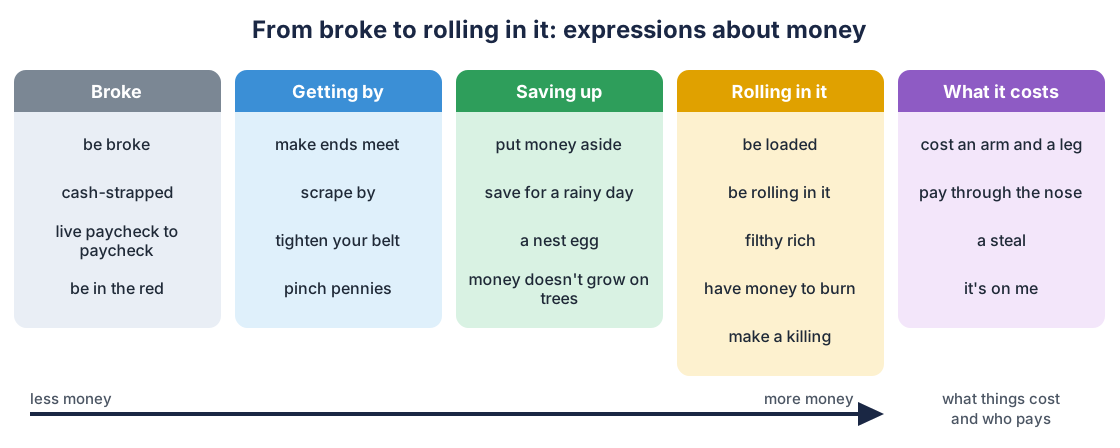
Our relationship with money changes over time. When money is tight, we tighten our belts, pinch pennies, and try to make ends meet. We look for a steal and avoid anything that costs an arm and a leg. When things get better, we start to put money aside and slowly build a nest egg. Few of us will ever be filthy rich or have money to burn, but most of us know the relief of finally having enough.
This page explores the idea of money and the language we use to talk about it. You will find word forms, common collocations and mistakes, useful expressions from “broke” to “rolling in it,” synonyms and antonyms, quotations, interactive activities, discussion questions, and a practice text for shadow reading and typing.
Word Family
Translations throughout this page are in this order: Chinese | Japanese | Korean | Hindi | Arabic | Russian | Spanish | French. Single words show a frequency score and rank. How to read the scores and ranks.
money (noun, uncountable) /ˈmʌni/: coins, notes, and the value held in bank accounts, used to buy things.
Frequency: 5.64 | Rank: 213
She doesn’t earn much money, but she spends it wisely.
Translations: 钱, 金钱 | お金 | 돈 | पैसा, धन | مال، نقود | деньги | dinero | argent
monies (noun, plural, formal) /ˈmʌniz/: sums of money, especially in legal or official documents.
Frequency: 3.15 | Rank: 23,835
All monies received will go to the hospital fund.
Translations: 款项 | 金銭, 資金 | 금액, 자금 | धनराशियाँ | مبالغ مالية | денежные средства | fondos, sumas de dinero | sommes, fonds
monetary (adjective) US /ˈmɑːnəteri/, UK /ˈmʌnɪtri/: relating to money or currency, especially in an economy.
Frequency: 4.10 | Rank: 6,047
The central bank is responsible for monetary policy.
Translations: 货币的 | 貨幣の, 金融の | 통화의, 금융의 | मौद्रिक | نقدي | денежный, монетарный | monetario | monétaire
monetize (verb (British also monetise)) US /ˈmɑːnətaɪz/, UK /ˈmʌnɪtaɪz/: to earn money from something, such as a website, app, or video channel.
Frequency: 2.81 | Rank: 36,565
She started to monetize her cooking videos after a year.
Translations: 变现, 使…盈利 | 収益化する | 수익화하다 | … से कमाई करना | يحقّق دخلًا من … | монетизировать | monetizar | monétiser
monetization (noun) US /ˌmɑːnətəˈzeɪʃən/: the process of earning money from something.
Frequency: 2.73 | Rank: 40,267
Most of the app’s monetization comes from ads.
Translations: 变现, 盈利模式 | 収益化 | 수익화 | मुद्रीकरण | تحقيق الدخل | монетизация | monetización | monétisation
moneyed (adjective, formal) /ˈmʌnid/: having a lot of money; wealthy.
Frequency: 2.41 | Rank: 58,714
The ski resort attracts a moneyed crowd.
Translations: 有钱的 | 裕福な | 돈 많은, 부유한 | धनी | ثريّ | состоятельный | adinerado | fortuné
Common mistakes
- Money is uncountable. Say a lot of money and How much money?, not many moneys or How many money? To count, use units: ten dollars, three coins. The plural monies appears only in legal and financial writing.
- Spend on, pay for. You spend money on something (I spend too much on coffee), not for it. You pay for goods and services (I paid for the tickets), not pay the tickets.
- Borrow and lend go in opposite directions. You borrow money from someone and lend money to someone. Say Can you lend me some money?, not Can you borrow me some money?
- Earn, make, or win? You earn or make money by working, and you win money in a game, contest, or lottery. Gain money sounds unnatural in most contexts.
- Prices are high or low, not expensive or cheap. Things are expensive or cheap; prices are high or low. Say The price is too high or The bag is too expensive, not The price is too expensive.
Collocations
Collocations are words that often go together. For a longer list, see money on OZDIC, a free collocation dictionary.
Verb + money
make money: to get money, usually by working or doing business.
She makes money by tutoring high school students.
Translations: 赚钱 | お金を稼ぐ | 돈을 벌다 | पैसा कमाना | يكسب المال | зарабатывать деньги | ganar dinero | gagner de l’argent
save money: to keep money instead of spending it, or to spend less.
We save money by cooking at home most nights.
Translations: 存钱, 省钱 | お金を貯める, 節約する | 돈을 모으다, 절약하다 | पैसे बचाना | يدّخر المال | копить деньги, экономить | ahorrar dinero | économiser de l’argent
waste money: to spend money on something useless or unnecessary.
Don’t waste money on apps you never open.
Translations: 浪费钱 | お金を無駄にする | 돈을 낭비하다 | पैसा बर्बाद करना | يهدر المال | тратить деньги впустую | malgastar dinero | gaspiller de l’argent
raise money: to collect money for a cause, charity, or project.
The students raised money for the local animal shelter.
Translations: 筹款 | 資金を集める | 모금하다 | धन जुटाना | يجمع الأموال | собирать деньги | recaudar dinero | collecter des fonds
owe money: to have to pay back money to someone.
I still owe my sister money for the concert tickets.
Translations: 欠钱 | お金を借りている | 돈을 빚지다 | पैसे देने बाकी होना | يكون مدينًا بالمال | быть должным деньги | deber dinero | devoir de l’argent
Adjective + money
These describe where money comes from or how it was earned.
extra money: money beyond what you usually have or need.
He walks dogs on weekends for extra money.
Translations: 额外的钱 | 臨時収入, 余分なお金 | 여윌돈, 부수입 | अतिरिक्त पैसा | مال إضافي | дополнительные деньги | dinero extra | de l’argent en plus
easy money: money earned with little effort, often in a doubtful way.
Be careful with online jobs that promise easy money.
Translations: 来得容易的钱 | 楽に稼げるお金 | 쉽게 버는 돈 | आसान कमाई | مال سهل | лёгкие деньги | dinero fácil | argent facile
hard-earned money: money you worked hard to get.
Don’t spend your hard-earned money on things you don’t need.
Translations: 血汗钱 | 苦労して稼いだお金 | 힘들게 번 돈 | मेहनत की कमाई | مال مكتسب بشقّ الأنفس | тяжело заработанные деньги | dinero ganado con esfuerzo | argent durement gagné
public money: money that belongs to the government and comes mainly from taxes.
The report showed how much public money was spent on the stadium.
Translations: 公款 | 公金 | 공금 | सार्वजनिक धन | المال العام | бюджетные деньги | dinero público | argent public
Money + noun
money problems: difficulties caused by not having enough money.
Money problems are a common cause of stress.
Translations: 经济困难 | お金の問題 | 돈 문제 | पैसों की परेशानी | مشكلات مالية | денежные проблемы | problemas de dinero | problèmes d’argent
money-back guarantee: a promise to return your money if you are not happy with something.
The headphones come with a 30-day money-back guarantee.
Translations: 退款保证 | 返金保証 | 환불 보장 | पैसे वापसी की गारंटी | ضمان استرداد المال | гарантия возврата денег | garantía de devolución del dinero | garantie de remboursement
money laundering: hiding where illegal money came from by moving it through legal businesses or accounts.
The bank was fined for failing to stop money laundering.
Translations: 洗钱 | マネーロンダリング, 資金洗浄 | 자금 세탁 | धन शोधन | غسل الأموال | отмывание денег | lavado de dinero | blanchiment d’argent
money supply: the total amount of money in an economy.
Central banks watch the money supply closely.
Translations: 货币供应量 | マネーサプライ, 通貨供給量 | 통화량 | मुद्रा आपूर्ति | المعروض النقدي | денежная масса | oferta monetaria | masse monétaire
Kinds of money
pocket money (British; American allowance): a small amount of money parents give a child regularly.
I used to spend my pocket money on comic books.
Translations: 零花钱 | お小遣い | 용돈 | जेब खर्च | مصروف الجيب | карманные деньги | paga, dinero de bolsillo | argent de poche
spending money: money you can use for small, personal, or fun purchases.
After rent and bills, I don’t have much spending money left.
Translations: 可自由支配的钱 | 自由に使えるお金 | 쓸 돈 | खर्च के लिए पैसे | مال للإنفاق الشخصي | деньги на мелкие расходы | dinero para gastos | argent pour les dépenses
seed money: money used to start a new business or project.
A small grant gave them the seed money for their café.
Translations: 启动资金 | 元手, 初期資金 | 종잣돈 | शुरुआती पूंजी | رأس مال أوّلي | стартовый капитал | capital inicial | capital de départ
prize money: money given to the winner of a competition.
She used the prize money to pay for her studies.
Translations: 奖金 | 賞金 | 상금 | इनाम की राशि | قيمة الجائزة المالية | призовые деньги | dinero del premio | prix en argent
Money + verb
money is tight: there is not much money available.
Money is tight this month, so we’re eating at home.
Translations: 手头紧 | お金に余裕がない | 돈이 빠듯하다 | पैसों की तंगी है | المال شحيح | с деньгами туго | el dinero escasea | l’argent manque
money runs out: all the money is used and none is left.
The money ran out before the end of the trip.
Translations: 钱花光了 | お金が尽きる | 돈이 떨어지다 | पैसे खत्म हो जाना | ينفد المال | деньги заканчиваются | se acaba el dinero | l’argent s’épuise
money talks (saying, informal): people with money have power and influence.
He got a table at the busiest restaurant in town. Money talks.
Translations: 有钱能使鬼推磨 | 金がものを言う | 돈이면 다 된다 | पैसा बोलता है | المال يتكلّم | деньги решают всё | el dinero manda | l’argent fait tout
Preposition Patterns
Money goes with many verbs, and each verb takes its own preposition: you spend money on things, but you borrow it from people.
spend (money) on: to use money to buy or pay for something.
How much do you spend on transport each month?
Translations: 在…上花钱 | …にお金を使う | …에 돈을 쓰다 | … पर पैसे खर्च करना | ينفق المال على … | тратить деньги на … | gastar dinero en … | dépenser de l’argent pour …
pay for: to give money in exchange for goods or a service.
Who paid for dinner last night?
Translations: 为…付钱 | …の代金を払う | …의 값을 내다 | … के पैसे चुकाना | يدفع ثمن … | платить за … | pagar … | payer …
borrow (money) from: to take money from someone and pay it back later.
She borrowed money from her parents to buy a car.
Translations: 向…借钱 | …からお金を借りる | …에게서 돈을 빌리다 | … से पैसे उधार लेना | يقترض المال من … | занимать деньги у … | pedir dinero prestado a … | emprunter de l’argent à …
lend (money) to: to give money to someone who will pay it back later.
I lent some money to a friend last month.
Translations: 借钱给… | …にお金を貸す | …에게 돈을 빌려주다 | … को पैसे उधार देना | يُقرض المال لـ … | давать деньги в долг … | prestar dinero a … | prêter de l’argent à …
save up for: to keep money over time in order to buy something.
He’s saving up for a new laptop.
Translations: 为…攒钱 | …のためにお金を貯める | …을 위해 돈을 모으다 | … के लिए पैसे जोड़ना | يدّخر من أجل … | копить на … | ahorrar para … | économiser pour …
run out of money: to have no money left.
We ran out of money on the last day of the trip.
Translations: 钱用完了 | お金がなくなる | 돈이 바닥나다 | पैसे चुक जाना | ينفد ماله | остаться без денег | quedarse sin dinero | ne plus avoir d’argent
short of money: not having enough money; American English also uses short on.
I’m a bit short of money until payday.
Translations: 缺钱 | お金が足りない | 돈이 모자라다 | पैसों की कमी होना | يعاني نقصًا في المال | не хватает денег | andar corto de dinero | être à court d’argent
for the money: because of the pay, not for any other reason.
I don’t love the job. I do it for the money.
Translations: 为了钱 | お金のために | 돈 때문에 | पैसों की खातिर | من أجل المال | ради денег | por el dinero | pour l’argent
Expressions: From Broke to Rolling in It
These idioms and phrases describe different amounts of money, from none at all to far more than enough. The last group is about prices and paying.
Broke
No money, or less than none
be broke (informal): to have no money at all.
I can’t come out tonight. I’m broke until Friday.
Translations: 身无分文 | 一文無しだ | 빈털터리이다 | कंगाल होना | مُفلِس | быть на мели | no tener ni un centavo | être fauché
cash-strapped: short of money, especially an organization.
Cash-strapped schools are cutting music classes.
Translations: 资金短缺的 | 資金難の | 자금난에 시달리는 | नकदी की कमी से जूझता | يعاني ضائقة مالية | испытывающий нехватку денег | con problemas de liquidez | à court de liquidités
live paycheck to paycheck (American): to spend all your pay before the next pay arrives.
Many young workers live paycheck to paycheck.
Translations: 靠每月工资勉强度日, 月光 | 給料ぎりぎりで暮らす | 월급을 받자마자 다 쓰며 근근이 살다 | तनख्वाह से तनख्वाह तक गुज़ारा करना | يعيش من راتب إلى راتب | жить от зарплаты до зарплаты | vivir de sueldo en sueldo | vivre d’une paie à l’autre
be in the red: to owe more money than you have.
My bank account was in the red after the holidays.
Translations: 入不敷出, 透支 | 赤字だ | 적자이다 | घाटे में होना | في حالة عجز مالي | быть в минусе | estar en números rojos | être dans le rouge
Getting by
Just enough money
make ends meet: to have just enough money for basic needs.
She works two jobs to make ends meet.
Translations: 勉强维持生计 | 家計をやりくりする | 생계를 꺾려 나가다 | गुज़ारा करना | يغطّي نفقاته الأساسية بالكاد | сводить концы с концами | llegar a fin de mes | joindre les deux bouts
scrape by: to manage to live with very little money.
As a student, I scraped by on part-time work.
Translations: 勉强度日 | 何とか暮らす | 근근이 살아가다 | मुश्किल से काम चलाना | يعيش بالكاد | перебиваться | ir tirando | s’en sortir tout juste
tighten your belt: to spend less because you have less money.
When prices rose, we all had to tighten our belts.
Translations: 勒紧裤腰带 | 財布のひもを締める | 허리떠를 졸라매다 | खर्च में कटौती करना | يشدّ الحزام | затянуть пояс | apretarse el cinturón | se serrer la ceinture
pinch pennies: to be very careful not to spend money.
They pinched pennies for a year to pay for the wedding.
Translations: 精打细算 | 切り詰めて暮らす | 한 푼이라도 아끼다 | पाई-पाई बचाना | يحسب كل قرش | экономить каждую копейку | ahorrar hasta el último céntimo | compter ses sous
Saving up
Putting money away for later
put money aside: to save money for later.
I try to put a little money aside every month.
Translations: 存一些钱 | お金を取っておく | 돈을 따로 떼어 두다 | पैसे अलग रखना | يضع المال جانبًا | откладывать деньги | apartar dinero | mettre de l’argent de côté
save for a rainy day: to save money for a future problem or need.
My grandmother taught me to save for a rainy day.
Translations: 存钱以备不时之需 | まさかの時に備えて貯金する | 만일에 대비해 저축하다 | बुरे वक्त के लिए बचाना | يدّخر للأيام الصعبة | копить на чёрный день | ahorrar para los tiempos difíciles | garder une poire pour la soif
a nest egg: money saved for the future, often for retirement.
They added the money from the old car to their nest egg.
Translations: 储蓄, 养老钱 | 蓄え, 老後資金 | 모아 둔 돈, 노후 자금 | जमा-पूंजी | مدّخرات للمستقبل | сбережения, заначка | ahorros para el futuro | pécule, bas de laine
money doesn’t grow on trees (saying): money is limited and has to be earned.
When I asked for new shoes, my dad said money doesn’t grow on trees.
Translations: 钱不是大风刮来的 | お金は木にならない | 돈은 하늘에서 떨어지지 않는다 | पैसे पेड़ पर नहीं उगते | المال لا ينمو على الأشجار | деньги на деревьях не растут | el dinero no crece en los árboles | l’argent ne pousse pas sur les arbres
Rolling in it
Far more than enough
be loaded (informal): to be very rich.
Her family must be loaded. Look at that house!
Translations: 很有钱 | 金持ちだ | 돈이 많다 | मालामाल होना | لديه أموال طائلة | быть при деньгах | estar forrado | être plein aux as
be rolling in it (informal): to have a very large amount of money.
After the app sold, the founders were rolling in it.
Translations: 钱多得不得了 | 金がうなるほどある | 돈방석에 앉다 | पैसों में खेलना | غارق في المال | купаться в деньгах | nadar en dinero | rouler sur l’or
filthy rich (informal): extremely rich.
He became filthy rich by selling software.
Translations: 极其富有 | 大金持ちの | 엄청난 부자인 | बेहद अमीर | فاحش الثراء | баснословно богатый | asquerosamente rico | riche à millions
have money to burn: to have more money than you need.
If you have money to burn, the first-class seats are very comfortable.
Translations: 钱多得花不完 | 有り余るほどお金がある | 돈이 남아돌다 | बेहिसाब पैसा होना | لديه مال يفيض عن حاجته | деньги девать некуда | tener dinero de sobra | avoir de l’argent à ne plus savoir qu’en faire
make a killing (informal): to earn a lot of money quickly.
Some shops made a killing on umbrellas during the storm.
Translations: 大赚一笔 | 大もうけする | 떼돈을 벌다 | मोटी कमाई करना | يحقّق ربحًا طائلًا | сорвать куш | hacer su agosto | se faire un paquet d’argent
What it costs
Prices, bargains, and who pays
cost an arm and a leg: to be very expensive.
Fixing the car cost an arm and a leg.
Translations: 贵得要命 | 目玉が飛び出るほど高い | 엄청 비싸다 | बहुत महंगा पड़ना | يكلّف ثروة | стоить целое состояние | costar un ojo de la cara | coûter les yeux de la tête
pay through the nose (informal): to pay much more than something is worth.
We paid through the nose for water at the festival.
Translations: 被敲竹杠 | ぼったくられる | 바가지를 쓰다 | ज़रूरत से ज़्यादा कीमत चुकाना | يدفع مبلغًا باهظًا | переплатить втридорога | pagar un dineral | payer le prix fort
a steal (informal): something sold at a very low price; a great bargain.
At half price, these boots are a steal.
Translations: 超值的东西 | 掘り出し物 | 거저나 다름없는 물건 | बेहद सस्ता सौदा | صفقة رابحة جدًا | почти даром | una ganga | une affaire
it’s on me: used to say that you will pay, especially for food or drinks.
Put your wallet away. Lunch is on me.
Translations: 我请客 | 私のおごりです | 내가 쏜게 | यह मेरी तरफ़ से है | الحساب عليّ | я угощаю | invito yo | c’est moi qui invite
Synonyms and Antonyms
No word means exactly the same as money, and money has no single opposite. The notes explain how each word differs.
Synonyms
cash (noun, uncountable): money in coins and notes, not cards or bank transfers.
Cash is physical money. In informal speech it can mean money in general: I’m short of cash this week.
Frequency: 4.92 | Rank: 1,272
Do you take cash, or only cards?
Translations: 现金 | 現金 | 현금 | नकद | نقد | наличные | efectivo | espèces, liquide
funds (noun, plural): money available for a particular purpose.
More formal than money and usually plural: raise funds, a lack of funds.
Frequency: 4.74 | Rank: 1,865
The project stopped because of a lack of funds.
Translations: 资金 | 資金 | 자금 | निधि, धन | أموال, تمويل | средства | fondos | fonds
currency (noun, countable): the system of money used in a country.
It names a type of money, such as the euro or the won, not an amount: foreign currencies.
Frequency: 4.37 | Rank: 3,814
You can pay in the local currency or in dollars.
Translations: 货币 | 通貨 | 통화, 화폐 | मुद्रा | عملة | валюта | moneda, divisa | monnaie, devise
wealth (noun, uncountable): a large amount of money and property that someone owns.
Wealth is what you own in total. A person can have a high income but little wealth, or the reverse.
Frequency: 4.51 | Rank: 2,941
Most of their wealth is in land.
Translations: 财富 | 富, 財産 | 부, 재산 | धन-संपत्ति | ثروة | богатство | riqueza | richesse
capital (noun, uncountable): money used to start or grow a business.
Used in business and economics. The frequency score also counts other meanings, such as a capital city.
Frequency: 5.01 | Rank: 1,048
They need more capital to open a second shop.
Translations: 资本 | 資本 | 자본 | पूंजी | رأس المال | капитал | capital | capital
income (noun): money you receive regularly from work or investments.
Income is a flow of money over time. You earn or have an income: a monthly income, a low income.
Frequency: 4.97 | Rank: 1,144
Rent takes about a third of my income.
Translations: 收入 | 収入 | 소득, 수입 | आय | دخل | доход | ingresos | revenu
Antonyms
poverty (noun, uncountable): the state of being very poor.
The opposite of wealth: live in poverty, lift people out of poverty.
Frequency: 4.46 | Rank: 3,218
The charity helps families living in poverty.
Translations: 贫困 | 貧困 | 빈곤 | गरीबी | فقر | бедность | pobreza | pauvreté
debt (noun): money that you owe to someone.
The b is silent: /det/. Common phrases: be in debt, pay off a debt.
Frequency: 4.69 | Rank: 2,072
It took him five years to pay off his student debt.
Translations: 债务 | 借金 | 빚 | कर्ज़ | دَين | долг | deuda | dette
expense (noun): money that you spend on something.
Money going out, the opposite direction of income. Often plural: living expenses, travel expenses.
Frequency: 4.23 | Rank: 4,838
Rent is my biggest monthly expense.
Translations: 开支 | 支出, 費用 | 지출, 비용 | खर्च | نفقة | расход | gasto | dépense
loss (noun): money a business loses when its costs are higher than its income.
The opposite of profit: make a loss (British) or take a loss, run at a loss. The score includes other meanings.
Frequency: 5.07 | Rank: 904
The café made a loss in its first year.
Translations: 亏损 | 損失, 赤字 | 손실 | घाटा | خسارة | убыток | pérdida | perte
bankruptcy (noun): the legal state of being unable to pay your debts.
The adjective is bankrupt: The company went bankrupt.
Frequency: 4.11 | Rank: 5,957
The airline filed for bankruptcy after two bad years.
Translations: 破产 | 破産 | 파산 | दिवालियापन | إفلاس | банкротство | bancarrota, quiebra | faillite
Activity Page
Five activities: Expressions, Collocations, Plenty or Short, Error Correction, and Fill in the Blank. Open the activity page in a new tab
Speed Challenge
Answer 12 questions against the clock. Every wrong answer adds 5 seconds, and the lowest score wins. Open the speed challenge in a new tab.
Shadow Reading and Typing: My First Year on My Own
This short story uses many of the expressions on this page. Use it for shadow reading (reading aloud along with a model) and for typing practice.
When I moved to a new city for university, I had to manage my own money for the first time. My parents helped a little, but money was tight. By the end of the first month, I had run out of money. I had spent most of it on takeout food and taxis. I was completely broke.
I knew I had to tighten my belt. I made a simple budget and started cooking at home. I stopped buying coffee every morning. I found a desk at a flea market for almost nothing, and it was a steal. Slowly, I learned to make ends meet, even if I was just scraping by.
In my second term, I got a part-time job at a bookstore. It didn’t pay much, but it was hard-earned money, and I didn’t want to waste it. My grandmother always told me to save for a rainy day, and I finally understood why. When my laptop broke, I didn’t have to borrow money from anyone.
Now I put money aside every month, and I’m saving up for a trip abroad. I’m not loaded, and I don’t have money to burn. But I’m not living paycheck to paycheck anymore. Last week, I took my roommate out for dinner and said, ‘It’s on me.’ It felt good.
How to practice
- Read the text silently once and check any expressions you are unsure of.
- Read it aloud slowly, one sentence at a time. On the typing page, the Listen button reads each line with your device’s voice, so you can listen first and then repeat.
- Shadow: read aloud again at a natural speed, trying to keep a steady rhythm without stopping.
- Record yourself, listen back, and note one sentence to practice again.
- Type it on the typing page below and check your speed and accuracy.
Open the typing practice in a new tab
Quotations
Use these as warm-ups. Read the quotation, then discuss the question.
“For the love of money is the root of all evil.”
1 Timothy 6:10, King James Bible (1611)
The verse warns against the love of money, not money itself. People often shorten it to “money is the root of all evil,” which changes the meaning. Many modern translations say “a root of all kinds of evil.”
Warm-up: Is money itself a problem, or is it the way people feel about money?
Translations: 贪财是万恶之根。 | 金銭を愛することは、すべての悪の根である。 | 돈을 사랑함이 일만 악의 뿌리가 되나니. | क्योंकि रुपये का लोभ सब प्रकार की बुराइयों की जड़ है। | لأنّ محبّة المال أصلٌ لكلّ الشرور. | Ибо корень всех зол есть сребролюбие. | Porque el amor al dinero es la raíz de todos los males. | Car l’amour de l’argent est une racine de tous les maux.
“Remember that time is money.”
Benjamin Franklin, Advice to a Young Tradesman (1748)
Franklin means that time spent doing nothing has a cost: it is money you could have earned.
Warm-up: Do you agree that time is money? When is your time worth more than money?
Translations: 记住,时间就是金钱。 | 時は金なりということを忘れるな。 | 시간이 곧 돈이라는 것을 기억하라. | याद रखो, समय ही धन है। | تذكّر أنّ الوقت مال. | Помни, что время есть деньги. | Recuerda que el tiempo es dinero. | Souviens-toi que le temps, c’est de l’argent.
“Money often costs too much.”
Ralph Waldo Emerson, “Wealth,” The Conduct of Life (1860)
Emerson suggests that getting money can cost us things worth more, such as time, health, or friendships.
Warm-up: What have you, or people you know, given up in order to earn money? Was it worth it?
Translations: 金钱的代价往往太高。 | お金はしばしば高くつきすぎる。 | 돈은 종종 너무 비싼 대가를 치르게 한다. | पैसा अक्सर बहुत महंगा पड़ता है। | كثيرًا ما يكلّفنا المال أكثر ممّا يستحقّ. | Деньги часто обходятся слишком дорого. | El dinero a menudo cuesta demasiado. | L’argent coûte souvent trop cher.
Discussion Questions
You and money
- How would you describe your relationship with money?
- How much time do you spend thinking or worrying about money?
- What three things do you spend the most money on?
- Who taught you the most about money, and what did they teach you?
- What is the best advice you have heard about saving or spending money?
- How do you feel about lending money to friends? Have you ever regretted it?
- Do different generations in your family have different attitudes toward money? How?
- How do you feel when people talk openly about how much they earn?
- Is it better to spend money on experiences or on things? Why?
- Would you rather have a high-paying job you dislike or a low-paying job you love?
- How much money would you need so that you could stop worrying about money?
- Do you think money is a fair measure of success? Why or why not?
Using the language of money
- What do you spend too much money on? What could you cut?
- Have you ever had to tighten your belt? What did you stop buying?
- What advice would you give a student who finds it hard to make ends meet?
- Why do you think many people live paycheck to paycheck, even with good jobs?
- Are you saving up for anything right now? How long will it take?
- Do you put money aside every month? What is the easiest way to start?
- What does saving for a rainy day mean to you? How much is enough?
- When did someone last tell you that money doesn’t grow on trees? Were they right?
- What is the best steal you have ever found?
- What costs an arm and a leg where you live but is cheap in other places?
- Where do tourists pay through the nose in your city or country?
- When friends eat out together, who usually says it’s on me? How do you split the bill?
- If you suddenly had money to burn, what would you do first?
- Are people who are filthy rich happier than people who just scrape by? What makes you think so?
AI Practice Prompt
Copy this prompt into an AI chat tool to practice.
I am a B2 English learner studying the word “money” and related expressions. Ask me one question at a time. Mix multiple-choice, true or false, and short sentence-writing tasks. Use these words and phrases: make money, save money, waste money, owe money, hard-earned money, money is tight, spend money on, borrow from, lend to, save up for, run out of money, monetary, be broke, cash-strapped, make ends meet, tighten your belt, put money aside, a nest egg, be loaded, make a killing, cost an arm and a leg, pay through the nose, a steal, it’s on me. If I make a mistake, explain it briefly in [your language] and give a correct example in English. After ten questions, tell me which items I should review.
Recommended Resources
- 3 psychological tricks to help you save money (TED, 2019). A six-minute talk by a behavioral scientist on simple ways to save more and spend less. Subtitles are available in many languages.
- Does money buy happiness? Here’s what the research says (Knowledge at Wharton (from Penn Today), 2023). How two researchers who disagreed about money and happiness worked together to find an answer. Challenging but clear.
- Money Talks! 15 English Idioms About Money (Engoo Blog). Short explanations and examples of common money idioms, including several that are not on this page.
- Advice to a Young Tradesman (1748) (Founders Online, US National Archives). The full text of the short letter behind the second quotation. Old-fashioned English, for advanced readers.