
过去时态的各种形式告诉读者:事情发生在什么时候、是已经结束还是仍在进行、两件事哪一件在先。大多数错误都出在两种相近形式之间的选择上,所以本指南的每个部分都围绕其中一种选择来设计。本指南共有五个部分,与诊断测验的五个部分完全对应。
阅读英文版指南 → 本页为机器翻译,未经母语者审校,可能有不准确之处。以英文版为准。
诊断结果会告诉你哪个部分需要复习。请点击下面对应的部分。
核心思路:动作在过去的什么位置?
把过去想象成一条时间线,按动作所处的位置选择形式:已完成的事件、正在进行的动作、发生在另一件过去的事之前的事,或已经结束的习惯。
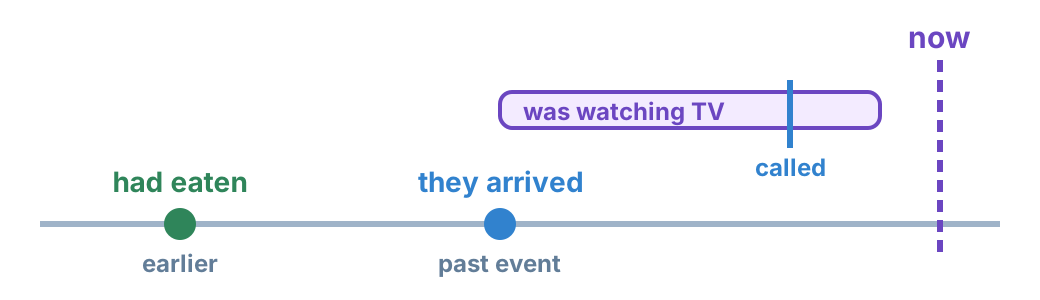
| 形式 | 结构 | 主要用法 |
|---|---|---|
| 一般过去时 | 动词 + -ed,或不规则变化 | 已完成或可计数的事件,过去的状态 |
| 过去进行时 | was/were + -ing | 过去某一时刻正在进行的动作 |
| 过去完成时 | had + 过去分词 | 两件过去的事中较早的一件,或已完成的结果 |
| 过去完成进行时 | had been + -ing | 持续了多久,或原因,截至过去某一时刻 |
| Used to / would | used to + base, would + base | 过去的习惯(would 只用于动作) |
- 1
构成形式。 单独使用过去式,did 后用动词原形,had 后用过去分词(第 1 部分)。
- 2
已完成,还是正在进行? 一般过去时还是过去进行时(第 2 部分)。
- 3
它是否发生在另一件过去的事之前? 只有在顺序重要时才用过去完成时(第 3 部分)。
- 4
持续多久、有多少,还是为什么? Had been + -ing、had + 过去分词,还是 have been + -ing(第 4 部分)。
- 5
是习惯吗? used to、would、一般过去时,还是 usually(第 5 部分)。
第 1 部分讲形式。第 2 和第 3 部分讲时间与顺序。第 4 和第 5 部分同时需要形式和意义。
原形、过去式,还是过去分词?
动词前面是哪个助动词:没有、did、had,还是 was?助动词决定动词的形式。
规则: 肯定句用过去式,did 或 didn’t 之后用动词原形,had 之后用过去分词。
不规则动词有三种形式
| 原形 | 一般过去时 | 过去分词(用于 had 之后) |
|---|---|---|
| go | went | gone |
| catch | caught | caught |
| fall | fell | fallen |
| fly | flew | flown |
| write | wrote | written |
| do | did | done |
| get | got | gotten (US) |
规则动词加 -ed。不规则动词有各自的形式,而且过去式和过去分词常常不同。注意形近词:fell(fall)和 felt(feel)。
助动词决定动词的形式
| 在……之后 | 用法 | 例句 |
|---|---|---|
| 没有助动词 | 过去式 | He caught the ball. |
| did, didn’t | 动词原形 | Did he catch it? He didn’t catch it. |
| had | 过去分词 | He had caught it before. |
| was, were | -ing 形式 | He was catching the bus. |
Was 加动词原形(I was go)不是正确的英语。表示一个已完成的动作,只用过去式:I went。
本部分的常见错误
- 动词的过去式用错
My friend teached me how to swim.✓ My friend taught me how to swim.Teach 是不规则动词:taught。 - 动词原形和过去式混淆
Did they found a parking space?✓ Did they find a parking space?did 之后用动词原形。 - 动词的过去式用错
I had forgot her birthday.✓ I had forgotten her birthday.had 之后用过去分词:forgotten。
补充:美式和英式的过去式形式
本网站使用美式英语。在美国,learned、dreamed、burned 和 spelled 是常用的过去式;learnt、dreamt 和 burnt 在英式英语中更常见。get 的美式过去分词通常是 gotten(she had gotten lost),而英式英语用 got。
一般过去时还是过去进行时?
动作是已经结束或可以计数,还是在另一件事发生时仍在进行?
规则: 进行中的动作用 was 或 were 加 -ing。已完成的、可计数的或打断别的动作的事件用一般过去时,状态动词(如 know)也用一般过去时。
较长的动作正在进行,较短的动作将其打断。
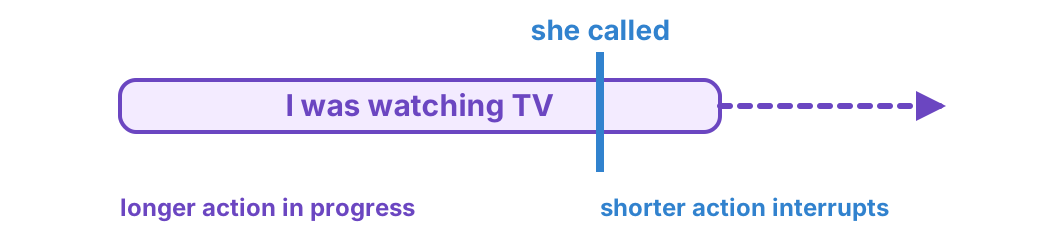
| 一般过去时 | 过去进行时 |
|---|---|
| a finished action: I finished the book on the train. | an action in progress: I was reading on the train. |
| the short event that interrupts: the storm started | the longer action it interrupts: we were playing cards |
| counted events: the phone rang twice | a repeated annoying habit: he was always losing his keys |
| state verbs: I knew, she owned | 多数状态动词不用 |
状态动词通常用一般时态
Was 用于 I、he、she、it。Were 用于 we、you、they 和复数名词。
本部分的常见错误
- 状态动词误用 -ing 形式
When I was ten, I was owning a red bike.✓ When I was ten, I owned a red bike.Own 是状态动词,所以用一般过去时。 - was、were 或 -ing 形式出错
She was cook when I called her.✓ She was cooking when I called her.Was 后面需要 -ing 形式。 - 过去进行时和一般过去时混淆
I was dropping my phone twice on the way to work.✓ I dropped my phone twice on the way to work.可计数的事件用一般过去时。
一般过去时还是过去完成时?
一件过去的事是否发生在另一件之前,顺序是否重要?
规则: 当顺序重要时,两件过去的事中较早的一件用 had 加过去分词。只有一件过去的事、按顺序叙述的事件,以及任何已完成的时间,都用一般过去时。
只有当一件过去的事发生在另一件之前时才用 had
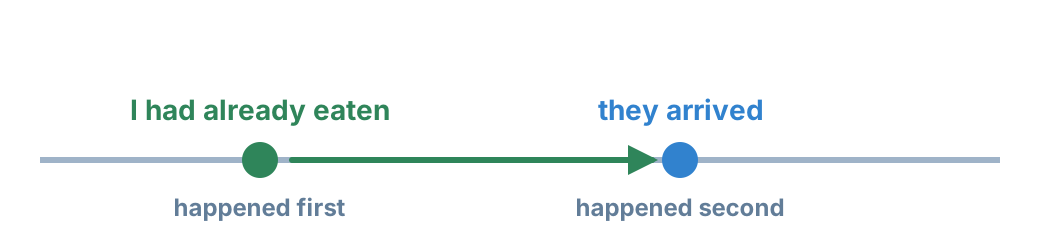
| 情况 | 形式 | 例句 |
|---|---|---|
| 两件过去的事中较早的一件 | had + 过去分词 | The plane had left when I got to the gate. |
| 与 by the time 连用 | had + 过去分词 | By the time the ambulance came, he had lost consciousness. |
| 只有一件过去的事,即使是很久以前 | 一般过去时 | I visited my grandparents last summer. |
| 按顺序叙述的事件 | 一般过去时 | I cooked, did the dishes, and went to bed. |
| after、before 或 already 已经表明了顺序 | 一般过去时(也可以用 had) | After the guests left, we cleaned up. |
已完成的时间(yesterday、last year、in 2021、ago)要用一般过去时,绝不能用 have 或 has 加过去分词。
本部分的常见错误
- 在一般过去时就够用的地方用了过去完成时
I had gone to Tokyo last year.✓ I went to Tokyo last year.在已完成时间发生的一件过去的事,用一般过去时。 - 已完成的时间却用了现在完成时
She has finished the course in 2022.✓ She finished the course in 2022.In 2022 是一个已完成的时间。 - 需要过去完成时的地方用了一般过去时
By the time I woke up, my roommate left for work.✓ By the time I woke up, my roommate had left for work.By the time 指向较早的动作:had left。
补充:美式英语中的 already 和 just
在非正式的美式英语中,already 和 just 常与一般过去时连用: I already ate. 当一件过去的事发生在另一件之前时,认真的书面表达和考试仍然要求使用过去完成时: When they arrived, I had already eaten.
had been、had,还是 have been?
你要表达的是持续多久、有多少,还是为什么?你是从那时往回看,还是从现在往回看?
规则: Had been 加 -ing 用于表示某事在一件过去的事之前持续了多久,或某个过去状态的原因。Had 加过去分词用于已完成的结果或数量。当时间一直延续到现在时,用 have been 加 -ing。
持续多久、有多少,还是为什么?
| 问题 | 形式 | 例句 |
|---|---|---|
| 持续多久,截至过去某一时刻? | had been + -ing | We had been waiting for twenty minutes when the teacher arrived. |
| 当时为什么会这样? | had been + -ing | He was out of breath because he had been running. |
| 完成了多少? | had + 过去分词 | By the end of the day, she had answered forty emails. |
| 持续多久,用状态动词? | had + 过去分词 | By 2019, they had known each other for thirty years. |
| 持续多久,截至现在? | have/has been + -ing | I have been working since six this morning. |
Was 加 -ing 不能表示在一件过去的事之前持续了多久,不能说: we were waiting for twenty minutes when the teacher arrived.
本部分的常见错误
- 在过去的事之前表示持续时间却用了 was 或 were 加 -ing
The patient was waiting for three hours when a doctor finally saw him.✓ The patient had been waiting for three hours when a doctor finally saw him.在一件过去的事之前表示持续时间,要用 had been 加 -ing。 - had been 和 have been 混淆
I'm hungry because I had been working all afternoon.✓ I'm hungry because I have been working all afternoon.时间一直延续到现在,所以用 have been。 - 已完成的结果却用了 had been 加 -ing
By noon, he had been writing three reports.✓ By noon, he had written three reports.已完成的数量要用 had 加过去分词。
used to、would,还是一般过去时?
这是过去的习惯、过去的状态、单次事件,还是现在仍然成立的事?
规则: 过去已经结束的习惯和状态用 used to;只有重复的过去动作可以用 would;单次或可计数的事件用一般过去时;现在仍然成立的习惯用一般现在时。
当时是这样,现在不是了
| 形式 | 用法 | 例句 |
|---|---|---|
| used to + base | 过去已经结束的习惯或状态 | We used to live in an apartment. |
| didn’t use to, did … use to | 否定句和疑问句 | She didn’t use to like spicy food. |
| would + base | 重复的过去动作,不能用于状态 | Every summer, Grandma would take us fishing. |
| 一般过去时 | 单次事件,或有次数的事件 | I went to Jeju three times last year. |
| usually + 一般现在时 | 现在仍然成立的习惯 | I usually drink coffee in the morning. |
Used to、be used to 和 get used to
be used to + -ing
感觉很正常:I’m used to driving on the right now.
get used to + -ing
正在变得正常:it was hard to get used to the long winters.
本部分的常见错误
- used to 用错了意思
I used to jog every morning, and I still do.✓ I usually jog every morning.现在仍然成立的习惯,用一般现在时。 - would 用于过去的状态
When I was young, I would have long hair.✓ When I was young, I used to have long hair.Would 不能用于 have 这类状态。 - used to 的结构用错
It took a while to get used to speak English at work.✓ It took a while to get used to speaking English at work.Get used to 后面接 -ing。
补充:didn’t use to 还是 didn’t used to?
Didn’t use to 是标准的书面形式,也是考试要求的形式。Didn’t used to 也会出现,尤其是在非正式的写作中,因为两者发音相同。
自我检测
每个句子正确吗?点击查看答案。部分标签会告诉你,如果拿不准应该看哪一部分。
第 1 部分She brang cookies to the party.
错误。 She brought cookies to the party. Bring 是不规则动词。
第 1 部分Did the package arrive on time?
正确。 did 之后,动词用原形。
第 2 部分I was having a bath when someone knocked on the door.
正确。 洗澡正在进行,敲门打断了它。
第 2 部分He was seeming nervous during the interview.
错误。 He seemed nervous during the interview. Seem 是状态动词。
第 3 部分I have seen a great play on Saturday.
错误。 I saw a great play on Saturday. On Saturday 是已完成的时间。
第 3 部分When I checked my bag, my phone had disappeared.
正确。 手机在我检查之前就不见了。
第 4 部分The ground was muddy because it had been raining.
正确。 Had been 加 -ing 说明了过去某个状态的原因。
第 4 部分By 2020, they had been having that car for ten years.
错误。 They had had that car for ten years. Have 表示拥有时是状态动词。
第 5 部分My grandfather would tell us stories every night.
正确。 Would 可以描述重复的过去动作。
第 5 部分I am used to wake up early.
错误。 I am used to waking up early. Be used to 后面接 -ing。
AI 练习提示词
把下面的内容粘贴到 AI 聊天工具中。
显示提示词
更多练习
- EnglishPage: Simple past and past continuous
- EnglishPage: Simple past and past perfect
- EnglishPage: Past perfect and past perfect continuous
- Perfect English Grammar: Irregular past simple, part 1
- Perfect English Grammar: Past continuous mixed exercise
- Perfect English Grammar: Past perfect exercise 1