
bored と boring のように、同じ語根をもつ形容詞はよく混同されます。-ed の形は、 感じる人を表し、-ing の形は、その感情を 引き起こす ものを表します。このテーマの 2 つのパートは 意味、2 つのパートは 形、残りの 1 つのパートは 両方が必要です。このガイドは 5 つのパートでできていて、診断テストの 5 つのパートとぴったり対応しています。
英語版ガイドを読む → このページは機械翻訳で、ネイティブスピーカーによる確認は受けていません。不正確な点があるかもしれません。英語版が基準です。
診断の結果を見れば、どのパートを復習すればよいかがわかります。下からそのパートをタップしてください。
中心となる考え方:誰が感じるのか、何が引き起こすのか
2 つの形は同じ動詞から作られるので、違いに気づきにくいものです。形容詞が説明する名詞が、どちらを使うかを決めます。
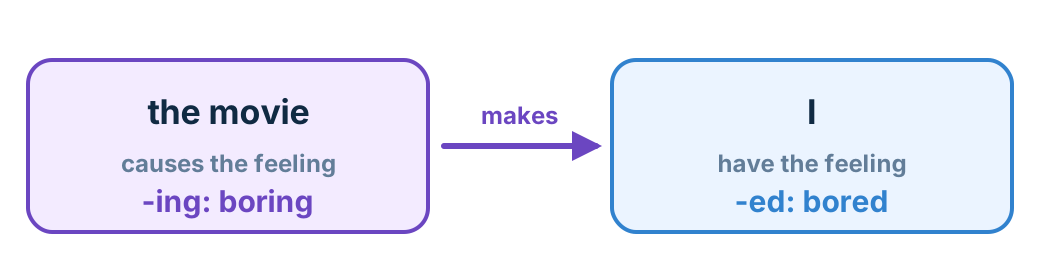
| -ed:人が感じる | -ing:それが感情を引き起こす |
|---|---|
| bored | boring |
| tired | tiring |
| confused | confusing |
| excited | exciting |
| interested | interesting |
| stressed | stressful |
| scared | scary |
- 1
形容詞が説明している名詞を見つけましょう。 主語のこともあれば、すぐ後ろの名詞のことも、make や find の目的語のこともあります。
- 2
その名詞は感じますか。 次を使います: -ed:the tired travelers, the news made me worried。
- 3
それは感情を引き起こしますか。 次を使います: -ing:a tiring journey, I found the film boring。人はどちらにもなりえます(パート 1)。
パート 1 と 2 は意味に関するものです。パート 3 は意味と形の両方が必要です。パート 4 と 5 は形に関するもので、不規則なペア、語尾、スペリング、前置詞を扱います。
be、feel、seem のあと
主語は感じるのか、引き起こすのか。人はどちらにもなりえます。
ルール: 感じる人には -ed を使います。感情を引き起こすものには -ing を使います。
be、feel、look、seem、get のあと
| 主語 | 感じる:-ed | 引き起こす:-ing |
|---|---|---|
| 人 | I am bored。 | My uncle is boring。 |
| 物や出来事 | (感じることはできない) | The film is boring。 |
| 状況 | (感じることはできない) | The wait was tiring。 |
人は両方になりえます
| 文 | 意味 |
|---|---|
| He is bored。 | 彼は興味がないと感じています。 |
| He is boring。 | 彼は周りの人を退屈させます。 |
| She is tired。 | 彼女は休息が必要です。 |
| She is tiring。 | 彼女は周りの人を疲れさせます。 |
感情には感じる側が必要です
人や動物は感じることができます。映画、本、仕事、ゲームは感じることができないので、感情を表す -ed は使いません。
このパートのよくある間違い
- 感じる人に -ing を使った場合
I felt really boring at the party.✓ I felt really bored at the party.感じているのはあなたです。 - 感情を引き起こすものに -ed を使った場合
The second half of the lesson was tired.✓ The second half of the lesson was tiring.授業が疲れを感じることはありません。 - 人の説明が逆になった場合
My roommate never stops talking about himself. He is so bored.✓ My roommate never stops talking about himself. He is so boring.彼は周りの人にその感情を起こさせます。
補足:人についての簡単なテスト
その人が感じているのか、周りの人に感じさせているのかを考えましょう。 The audience was amused (彼らが感じる)。 The comedian was amusing (彼が引き起こす)。
名詞の前
その名詞は感じますか、それとも引き起こしますか。表情や声は感情を表します。
ルール: 名詞の前では、その名詞が感じる(-ed)のか、引き起こす(-ing)のかを考えます。表情、声、顔は感情を表すので、たいてい -ed を使います。
名詞の前でも同じ問い
| 感じる:-ed | 引き起こす:-ing |
|---|---|
| tired travelers | a tiring journey |
| excited fans | an exciting match |
| confused students | a confusing map |
| disappointed customers | a disappointing meal |
表情、声、顔
| フレーズ | 意味 |
|---|---|
| a worried look | その人は心配している |
| a bored expression | その人は退屈している |
| surprised faces | その人たちは驚いている |
表情や声は何かを感じるわけではありませんが、その人の気持ちを表すので、英語ではたいてい -ed を使います。a worrying look は、 あなた を心配させる表情のことです。
このパートのよくある間違い
- 感情を引き起こすものに -ed を使った場合
It was a really interested trip.✓ It was a really interesting trip.旅行が感情を引き起こします。 - 感じる人に -ing を使った場合
The exciting crowd cheered when the band came on.✓ The excited crowd cheered when the band came on.群衆が感じています。 - 感じる人に -ing を使った場合
He answered with a boring sigh.✓ He answered with a bored sigh.ため息は彼の気持ちを表しています。
make、find、it
make の目的語は誰か。find されるのは何か。it は何を指すか。
ルール: make someone のあとでは、その人の気持ちを表す -ed を使います。find something のあと、そして it is や what I find のあとでは、原因を表す -ing を使います。
目的語、またはそれが指すものを見る
| パターン | 例 | 誰が、または何が |
|---|---|---|
| make or leave + person + -ed | The delay made us annoyed。 | 私たちが感じる |
| get or become + -ed | I get bored easily. | 私が感じる |
| find + thing + -ing | I found the book boring。 | 本が引き起こす |
| it is + -ing + to or that | It is tiring to commute every day. | 状況が引き起こす |
| what I find + -ing | What I find most annoying is the noise. | 騒音が引き起こす |
よくある間違い
It makes me boring. これは、それがあなたを退屈な人にしてしまう、という意味になります。自分の気持ちを言うときは -ed を使います:It makes me bored。
このパートのよくある間違い
- make someone のあとの -ing
Long meetings make me boring.✓ Long meetings make me bored.Make me は自分の気持ちを表します。 - 感情を引き起こすものに -ed を使った場合
I found the lecture very interested.✓ I found the lecture very interesting.find のあとでは、講義が感情を引き起こします。 - 感情を引き起こすものに -ed を使った場合
It is surprised that the shop is still open.✓ It is surprising that the shop is still open.it は状況を指しています。
不規則なペアと語尾
相手の語、語尾、スペリングは正しいですか。
ルール: stressed は stressful と、scared は scary とペアになります。-ed の語尾は最後まで書き、スペリングを確認し、副詞には -ly を付けます。
パターンに当てはまらないペア
| 感じる側(人) | 原因(もの) |
|---|---|
| stressed | stressful (not stressing) |
| scared | scary または frightening (not scaring) |
| worried | worrying |
| relaxed | relaxing |
I am scary は、あなたが他の人を怖がらせるという意味です。I feel stressful は正しくありません。stressed を使いましょう。
語尾を最後まで書く
| ルール | 例 |
|---|---|
| -ed を落とさない | I am interested in art (not interest) |
| 発音しない e は落とす | excite → excited, exciting |
| 子音字 + y は -ed の前で i になる | worry → worried (but worrying) |
| 重ねた文字はそのまま残す | embarrass → embarrassed |
| 副詞には -ly を付ける | interesting → interestingly |
このパートのよくある間違い
- 感じる人に stressful や scary を使った場合
I feel so stressful this week.✓ I feel so stressed this week.ストレスを感じる人は stressed です。 - 形容詞の代わりに動詞の原形を使った場合
I am interest in learning Spanish.✓ I am interested in learning Spanish.-ed の語尾を書きましょう。 - -ed または -ing のスペリングの間違い
We were all very embarassed.✓ We were all very embarrassed.Embarrassed には r が 2 つ、s が 2 つあります。
-ed 形容詞のあとの前置詞
形容詞のあとにはどの前置詞が続くか。ペアで覚えましょう。
ルール: -ed 形容詞は、それぞれ前置詞とセットで覚えましょう。
形容詞を前置詞とセットで覚える
| 形容詞 | 前置詞 | 例 |
|---|---|---|
| interested | in | interested in history |
| excited、worried、concerned | about | worried about the exam |
| surprised、shocked、amazed | by | shocked by the news |
| bored、satisfied、disappointed | with | bored with this game |
| tired、scared | of | tired of waiting |
2 つの前置詞が使える形容詞もあります。たとえば surprised at または by、bored with または of、そして disappointed with または in。アメリカ英語では excited for もよく使われます。1 つ選んで、一貫して使いましょう。
このパートのよくある間違い
- -ed 形容詞のあとの前置詞が違う場合
I am interested about Japanese films.✓ I am interested in Japanese films.Interested には in を使います。 - -ed 形容詞のあとの前置詞が違う場合
She is worried of the weather tomorrow.✓ She is worried about the weather tomorrow.Worried には about を使います。 - -ed 形容詞のあとの前置詞が違う場合
We were disappointed of the hotel.✓ We were disappointed with the hotel.Disappointed には with を使います。
補足:-ing 形容詞と前置詞
-ing 形容詞には、決まった前置詞はふつうありませんが、誰が感じるかを示すために for または to を付けることができます: The film was boring for the children.
セルフチェック
それぞれの文は正しいですか。タップして答えを見ましょう。迷ったときは、パートの表示がどこを見ればよいかを教えてくれます。
パート 1The students seemed confused by the question.
正しい。 生徒たちが感じています。
パート 1My job is very tired these days.
正しくない。 My job is very tiring these days. 仕事が感情を引き起こします。
パート 2We stayed in a relaxing little hotel by the lake.
正しい。 ホテルが感情を引き起こします。
パート 2The boring children started to throw paper at each other.
正しくない。 The bored children started to throw paper at each other. 子どもたちが感じています。
パート 3The loud music made the neighbors annoyed.
正しい。 made the neighbors のあとでは、その人たちの気持ちを表します。
パート 3I find grammar rules confused.
正しくない。 I find grammar rules confusing. find のあとでは、規則が感情を引き起こします。
パート 4I get scary when I walk home alone at night.
正しくない。 I get scared when I walk home alone at night. 恐怖を感じる人は scared です。
パート 4Starting at a new school can be stressful.
正しい。 ストレスを引き起こすものは stressful です。
パート 5Are you interested on this topic?
正しくない。 Are you interested in this topic? Interested には in を使います。
パート 5They were shocked by the size of the bill.
正しい。 Shocked は通常 by を取ります。
AI 練習用プロンプト
これを AI チャットツールに貼り付けてください。