
Level: B2
Reading | Vocabulary | Activities | Speed Challenge | Shadow Reading and Typing | Questions | AI Prompts | Discussion | Language Focus | Resources
Printable: Student handout (PDF) | Teacher’s key (PDF)
Reading
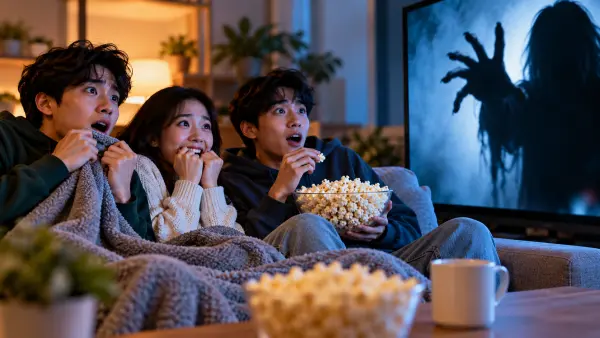
The lights go down. On screen, a floorboard creaks, and a character walks slowly toward the one door she should leave alone. Your heart is pounding, your palms are damp, and yet you are having a wonderful time. Nobody would choose to be chased through a dark forest in real life, but millions of people happily buy tickets to be frightened. It is a paradox that researchers are still working to explain.
Start with the body, because it does not know the film is fiction. A sudden noise or a leaping monster can startle you, and a small region deep in the brain called the amygdala sounds the alarm before you have time to think. Stress hormones such as adrenaline flood your system, your heart beats faster, your breathing quickens, and your senses become heightened. This is the classic fight-or-flight response, the same one that would help you run from a real danger. For most healthy adults, the surge in heart rate is not a problem, although anyone with a heart condition should ask a doctor first.
So why does fear turn into fun? Part of the answer is that a second system is watching. Knowing that the danger is fictional, the thinking part of your brain reminds you that you chose to be here and can leave at any time. With that safety net in place, a pounding heart can feel like excitement rather than terror, much as it does on a roller coaster. A slow build of suspense adds to the effect. Finnish researchers who scanned viewers’ brains during horror films found that creeping dread and sudden shocks involve different brain systems. Some psychologists also argue that the relief when the tension finally breaks makes the whole experience more enjoyable, although the evidence for this is mixed.
Enjoyment, however, has limits. Fitted with heart monitors, visitors to a haunted house in Denmark later rated their fear and enjoyment at each scare. The more frightened people said they were, the higher their heart rates went. Enjoyment followed a different pattern: it rose with fear up to a point and then fell, forming an upside-down U. Too little fear is dull, and too much leaves you overwhelmed. Everyone’s sweet spot sits in a different place, which may explain why one friend laughs through a film that keeps another awake all night. One of the researchers is convinced that fans actively manage their fear to stay near that point.
Who are these fans? The obvious guess is thrill-seekers, and people who score high in thrill-seeking do tend to enjoy horror more, although the link is weaker than you might expect. Surveys of fans have also found three broad types. “Adrenaline junkies” simply love the rush. “White-knucklers” often find the experience stressful but come away feeling that they have learned something about themselves. “Dark copers” report both a better mood and a sense of personal growth. A related trait, morbid curiosity, a pull toward dark and dangerous subjects, has also been linked to an interest in horror.
Some researchers go further and suggest that scary stories let us rehearse for real life. In a safe setting, you can practice staying calm, noticing your own reactions, and learning how to cope with fear. Looking at survey responses collected early in the COVID-19 pandemic, researchers found that horror fans reported lower distress and greater psychological resilience. That shows a link, not a cause. People who are already hardy may simply be more likely to choose horror. Still, the idea that frightening fiction works as a kind of practice is worth testing.
None of this means everyone should push their limits. Fear can linger long after the credits roll, and many adults looking back on their childhoods remember frightening films that disturbed their sleep for weeks or even months. Parents are right to be wary of letting young children watch them, because the younger the viewer, the longer such effects tend to last. For adults, the sensible approach is to gauge your own limit: notice how you feel during and after a film, and stop if the thrill turns into distress. Researchers who have reviewed the evidence see little sign that horror films damage most adults’ mental health, but if fear keeps you awake for days, or you already struggle with anxiety, a doctor or counselor can help. Next time a floorboard creaks on screen, notice what you do. Do you grin, grip the armrest, or reach for the remote?
Vocabulary
Each word has a frequency score, a rank, and a tag. The score shows how common the word is in modern English: higher means more common, and each full point means roughly ten times more common. The rank is the word’s position on a list of about 321,000 English word forms, from most to least common. The tag shows where you are most likely to meet the word: Current, Formal, Literary, or Dated. The paragraph number shows where the word first appears in the reading. The labels are information, not instructions. Deciding which words are worth your time is up to you. How to read the scores, ranks, and tags.
paradox (noun): a situation or statement that seems to contradict itself but may still be true.
Frequency: 3.63 | Rank: 12,397 | Current | Paragraph 1
Translations: 悖论 | パラドックス | 역설 | विरोधाभास | مفارقة | парадокс | paradoja | paradoxe
- Paying money to feel afraid is a paradox.
- It is a paradox that the quietest town in the region hosts the loudest festival.
startle (verb, base form): to surprise someone suddenly so that they jump or feel a short shock.
Frequency: 2.69 | Rank: 42,145 | Current | Paragraph 2
Translations: 使吃惊 | ぎょっとさせる | 깜짝 놀라게 하다 | चौंका देना | يُفزِع | испугать | sobresaltar | faire sursauter
- A sudden bang in a quiet cinema can startle the whole audience.
- I did not mean to startle you when I came in.
heightened (adjective): stronger or more intense than normal.
Frequency: 3.47 | Rank: 15,613 | Formal | Paragraph 2
Translations: 增强的 | 高まった | 고조된 | तीव्र | مُتزايد | обострённый | intensificado | accru
- In a dark room, fear leaves your senses heightened and every sound seems louder.
- Security at the airport was heightened after the warning.
surge (noun): a sudden strong rise or rush of something.
Frequency: 3.82 | Rank: 9,313 | Current | Paragraph 2
Translations: 激增 | 急増 | 급증 | उछाल | ارتفاع مفاجئ | всплеск | aumento repentino | poussée
- A surge of adrenaline makes your heart beat faster.
- There was a surge in ticket sales after the film won an award.
suspense (noun): the exciting or anxious feeling of waiting to find out what will happen next.
Frequency: 3.53 | Rank: 14,307 | Current | Paragraph 3
Translations: 悬念 | サスペンス | 서스펜스 | सस्पेंस | تشويق | саспенс | suspense | suspense
- Good horror films build suspense slowly before the shock arrives.
- The final minutes of the match were full of suspense.
overwhelmed (adjective): feeling that something is too strong or too much to deal with.
Frequency: 3.88 | Rank: 8,542 | Current | Paragraph 4
Translations: 不知所措的 | 圧倒された | 압도된 | अभिभूत | مُثقَل | ошеломлённый | abrumado | submergé
- Too much fear leaves a viewer overwhelmed instead of entertained.
- She felt overwhelmed by the number of emails waiting after her holiday.
sweet spot (noun phrase): the point or level at which something works or feels best.
Frequency: no score (phrase) | Current | Paragraph 4
Translations: 最佳点 | スイートスポット | 최적점 | सर्वोत्तम बिंदु | النقطة المثلى | золотая середина | punto óptimo | point idéal
- Enjoyment is highest at the sweet spot between too little and too much fear.
- Finding the sweet spot for study time took me a whole semester.
thrill-seeking (noun): the habit of looking for exciting, risky, or intense experiences.
Frequency: no score (hyphenated compound) | Current | Paragraph 5
Translations: 寻求刺激 | スリルを求めること | 스릴 추구 | रोमांच की चाह | البحث عن الإثارة | поиск острых ощущений | búsqueda de emociones | recherche de sensations fortes
- People high in thrill-seeking often enjoy horror films and roller coasters.
- His thrill-seeking led him to try skydiving, climbing, and surfing.
morbid curiosity (noun phrase): a strong interest in dark, disturbing, or dangerous subjects such as death or disaster.
Frequency: no score (phrase) | Current | Paragraph 5
Translations: 病态好奇心 | 怖いもの見たさ | 병적인 호기심 | विकृत जिज्ञासा | فضول مرضي | болезненное любопытство | curiosidad morbosa | curiosité morbide
- Morbid curiosity makes some people watch true-crime documentaries late at night.
- Drivers often slow down to look at an accident out of morbid curiosity.
rehearse (verb, base form): to practice something in advance so that you are ready for the real event.
Frequency: 2.94 | Rank: 31,168 | Current | Paragraph 6
Translations: 预演 | リハーサルする | 예행연습하다 | पूर्वाभ्यास करना | يتدرّب | репетировать | ensayar | répéter
- Horror films may let viewers rehearse how to stay calm under stress.
- The actors will rehearse the final scene twice before opening night.
cope with (phrasal verb): to deal successfully with a difficult situation or a strong feeling.
Frequency: no score (phrase) | Current | Paragraph 6
Translations: 应对 | 対処する | 대처하다 | सामना करना | يتعامل مع | справляться с | afrontar | faire face à
- Fiction may help people learn to cope with fear.
- Many students cope with exam stress by exercising.
resilience (noun): the ability to recover quickly from difficulty or shock.
Frequency: 3.58 | Rank: 13,321 | Formal | Paragraph 6
Translations: 韧性 | 回復力 | 회복탄력성 | लचीलापन | مرونة | устойчивость | resiliencia | résilience
- Some researchers link horror fandom to greater psychological resilience.
- Children often show great resilience after moving to a new school.
linger (verb, base form): to stay for a long time, or to last longer than expected.
Frequency: 3.31 | Rank: 19,336 | Current | Paragraph 7
Translations: 挥之不去 | 長引く | 오래 남다 | बने रहना | يظلّ | не проходить | persistir | persister
- Fear from a frightening film can linger for days.
- The smell of smoke continued to linger in the room.
wary (adjective): careful because you think something may be dangerous or cause problems.
Frequency: 3.57 | Rank: 13,496 | Formal | Paragraph 7
Translations: 谨慎的 | 用心深い | 경계하는 | सतर्क | حذِر | настороженный | receloso | méfiant
- Parents are wary of letting young children watch frightening films.
- Travelers are often wary of strangers who offer help too eagerly.
gauge (verb, base form): to judge or measure something, such as a feeling, a reaction, or an amount.
Frequency: 4.02 | Rank: 6,884 | Formal | Paragraph 7
Translations: 衡量 | 見極める | 가늠하다 | आँकना | يقيس | оценивать | evaluar | jauger
- Notice how you feel during a film to gauge your own limit.
- Teachers use short quizzes to gauge how much students have understood.
Activity Page
Open the activity page in a new tab
Speed Challenge
Answer 12 questions against the clock. Every wrong answer adds 5 seconds, and the lowest score wins. Open the speed challenge in a new tab.
Shadow Reading and Typing: My Sweet Spot
This short text uses many of the words from this lesson. Use it for shadow reading (reading aloud along with a model) and for typing practice.
Every October, my friends try to drag me to a horror film. For years I refused, because I was wary of anything that might keep me awake at night. A quiet evening seemed far better than letting a monster startle me.
Last year I finally gave in. The room was dark, and my friends were quiet. The first twenty minutes were fine, but then the suspense began to build. I felt a surge of fear in my chest, and every small sound seemed louder. My senses were heightened, and I gripped the armrest so hard that my fingers hurt.
Halfway through, I realized I was smiling. I was scared, but I was not overwhelmed. I had found my sweet spot, somewhere between boredom and panic. Afterward, the fear did not linger, and I slept well. It was a strange paradox: I had paid to feel afraid, and I had enjoyed it.
Now I try to gauge how much fear I can take before I choose a film. I start with mild stories and watch them with friends. I am not sure it builds my resilience, but it feels like a safe way to rehearse how to cope with something difficult. Maybe I will try a harder film next month.
How to practice
- Read the text silently once and check any words you are unsure of.
- Read it aloud slowly, one sentence at a time. On the typing page, the Listen button reads each line with your device’s voice, so you can listen first and then repeat.
- Shadow: read aloud again at a natural speed, trying to keep a steady rhythm without stopping.
- Record yourself, listen back, and note one sentence to practice again.
- Type it on the typing page below and check your speed and accuracy.
Open the typing practice in a new tab
Comprehension Questions
- What does the writer mean by calling the enjoyment of horror a paradox?
- What happens in the body when a sudden shock in a film startles you?
- Why can a pounding heart feel like excitement instead of terror when you are watching a film?
- What did the Finnish brain-scan researchers find about creeping dread and sudden shocks?
- What is the sweet spot of fear, and how did the Danish haunted house study show it?
- Why might two friends react very differently to the same film?
- Describe the three types of horror fans mentioned in the reading.
- Why does the writer say the pandemic finding shows “a link, not a cause”?
- What advice does the writer give about finding your own limit with scary films, and why are young children treated differently?
IELTS-Style Questions
- True, False, or Not Given: “Researchers have proved that watching horror films makes people better at coping with real crises.” Explain your answer using evidence from the reading.
- Yes, No, or Not Given: “The writer believes that everyone should watch horror films to build resilience.” Explain your answer using evidence from the reading.
- Author’s purpose: Why does the writer end the reading with questions about what you do when a floorboard creaks on screen? Is the aim to give a medical warning, to prove a theory, or something else?
AI Discussion Prompt
I just read an article about why some people enjoy scary movies. It covered how the body reacts to fear, how the brain can turn fear into excitement, a Danish haunted house study on the sweet spot of fear, three types of horror fans, a possible link between watching horror and psychological resilience, and why young children should be protected from frightening films. I am an English learner at about B2 level. Please ask me one question at a time, starting with whether I enjoy scary movies. Respond to my ideas first, then briefly correct any language errors, and ask follow-up questions that make me explain my reasons.
AI Vocabulary Prompt
I want to practice vocabulary from an article about why people enjoy scary movies. Please quiz me on the following words one at a time, using a mix of question types: multiple choice, true/false, and sentence completion. Give me feedback after each answer before moving on, and bring back the words I miss later. Here are the words: paradox, startle, heightened, surge, suspense, overwhelmed, sweet spot, thrill-seeking, morbid curiosity, rehearse, cope with, resilience, linger, wary, gauge.
Discussion Questions
- Do you enjoy scary movies, haunted houses, or ghost stories? Why or why not?
- What is the scariest film, story, or ride you have ever experienced, and how did you feel afterward?
- Do you prefer to watch scary films alone or with other people? What changes?
- Think about the last time something startled you. What did your body do before you had time to think?
- Imagine a friend who hates horror and will not watch scary films with you. What would you say, and what would you do together instead?
- The reading says everyone has a different sweet spot for fear. Where is yours, and what moves it up or down?
- Ghost stories and tales of monsters exist in many cultures. What scary stories do people tell where you live, and who tells them?
- Which is scarier to you: something you can see clearly, or something that is only hinted at? Why?
- Horror fans seem to cope better with stress, but the evidence shows only a link. Can you think of another habit that is linked to something good but may not cause it?
- At what age do you think children should be allowed to watch frightening films? Who should decide?
- People also seek out roller coasters, spicy food, extreme sports, and true-crime stories. What do these experiences have in common?
- If people can practice fear safely through fiction, should parents or teachers use scary stories on purpose to help young people? Why or why not?
- What kind of evidence would convince you that frightening entertainment is harmful, or harmless?
- Is it a good thing that humans enjoy feeling afraid? What might this say about human nature?
Language Focus: Participle Clauses
What it is: A participle clause begins with an -ing or -ed form of a verb. It adds information about time, reason, or result without a separate subject and verb, and it shares the subject of the main clause.
Why writers use it: Participle clauses make writing shorter and more varied, and they are common in magazine and academic writing. Watch for a dangling participle: the person or thing doing the action in the clause must be the subject of the main clause.
Examples from the reading:
- “Knowing that the danger is fictional, the thinking part of your brain reminds you that you chose to be here and can leave at any time.”
- “Fitted with heart monitors, visitors to a haunted house in Denmark later rated their fear and enjoyment at each scare.”
- “Looking at survey responses collected early in the COVID-19 pandemic, researchers found that horror fans reported lower distress…”
- “…it rose with fear up to a point and then fell, forming an upside-down U.”
Practice task: Combine these two sentences into one by starting with a participle clause: “The viewers were frightened by the sudden noise. They screamed and dropped their popcorn.”
(Example answer: “Frightened by the sudden noise, the viewers screamed and dropped their popcorn.”)
Online Resources
- What’s the fun in fear? Science explores the appeal of scary movies (Science News Explores). A student-friendly feature on the three types of horror fans, personality, and what scary films may teach us (paragraphs 5 and 6).
- Haunted House Researchers Investigate Playing with Fear (APS Observer). A report on the Danish haunted house study behind the sweet spot of fear in paragraph 4.
- Horror movies manipulate brain activity expertly to enhance excitement (Neuroscience News). A summary of the Finnish brain-scan study on creeping dread and sudden shocks in paragraph 3.
- The Science of a Good Scare (Saturday Evening Post). A Danish researcher explains why fear can work like play and mentions the pandemic finding in paragraph 6.
- Scary movies, TV have lasting effects on youth (University of Michigan News). An older report on adults’ memories of childhood fright, relevant to paragraph 7.