
Level: C1
Reading | Vocabulary | Activities | Speed Challenge | Shadow Reading and Typing | Questions | AI Prompts | Discussion | Language Focus | Resources
Printable: Student handout (PDF) | Teacher’s key (PDF)
Reading
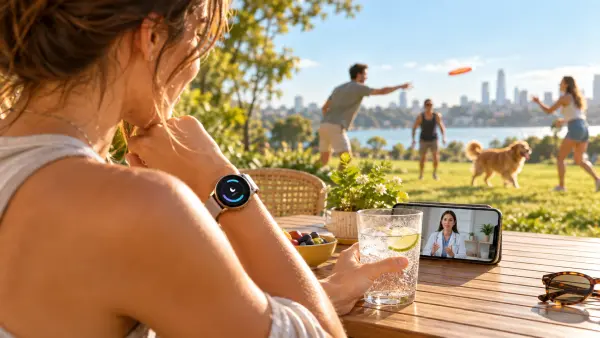
Picture a 24-year-old at a friend’s birthday party. She orders a sparkling water, checks her watch to see how well she slept the night before, and later watches a stranger’s video about whether a stomach ache is worth worrying about. Her parents, at the same age, might have ordered a beer, ignored their sleep, and visited a doctor only when something was clearly wrong. Is her generation healthier than theirs? Generation Z, usually defined as people born between 1997 and 2012, is scrutinized constantly, and the honest answer is that it depends on what you measure. In some areas, young people are doing better than their parents did. In others, the figures are worrying.
Start with the good news. Young adults are abstaining from alcohol in unusual numbers. In a long-running American poll, only about half of adults aged 18 to 34 said in 2025 that they drink at all, fewer than among older adults, and about two in three of them believed that even moderate drinking harms health. Cigarette smoking among American teenagers has also fallen to the lowest level ever recorded. Nobody knows exactly why, but researchers suggest a mix of changing attitudes, less socializing in person, and the cost of a night out. There is a caveat, though. Nicotine vapes have gained a foothold among young adults, and pouches are a newer worry, so the habit may be changing form rather than disappearing.
The worrying news starts with the mind. A review of British studies that followed people born between 1946 and 2002 found that teenagers born in the early 2000s reported more mental ill health than earlier generations did at the same age. American data fit the picture. The share of high school students reporting persistent sadness or hopelessness climbed through the 2010s, peaked at 42 percent in 2021, and fell to 33 percent in 2025, which is encouraging but still higher than in 2015. Girls report far more distress than boys. Part of the rise may reflect a fading stigma, because people who feel able to talk about distress are more likely to report it. The role of smartphones and social media is contentious, and researchers also point to pressures such as economic insecurity.
The body tells a mixed story, too. Worldwide, obesity among children and adolescents has more than quadrupled since 1990. A global estimate covering the years up to 2016 found that about four in five adolescents did not get the hour of daily exercise that the World Health Organization recommends, and in 2025 only about one American high school student in four reported sleeping at least eight hours on school nights. A sedentary, indoor childhood may also affect eyesight. In parts of East and Southeast Asia, as many as eight in ten young adults have myopia, or nearsightedness, and too little time outdoors is widely thought to be one reason. A large review of studies in China found that children who spent more time outside had about a quarter lower risk.
Cancer offers a third signal, though a less certain one. Bowel cancer in adults under 50 has been rising in more than half of the 50 countries covered by a large 2024 study, and South Korea has one of the highest rates in that age group. Most of the people in that study were born long before Gen Z, and the risk for young adults remains low, so it is too early to say what the trend means for today’s twenty-year-olds. Scientists have not pinpointed the cause. Obesity, diet, and changes in gut bacteria are among the leading suspects. Doctors do agree on one practical point: lasting changes in bowel habits, or blood in the stool, deserve a medical check at any age, however embarrassing they feel.
Habits are changing as well. Surveys by companies and consultancies suggest that social media is among the first places many Gen Z adults look for health advice, far more than older generations do. That has real benefits, such as making private topics easier to discuss, but it also spreads misinformation, because anyone can go viral with a confident claim, and creators who are paid by views are not always rewarded for being careful. A sensible habit is to ask who is speaking and what credentials they hold, to compare the claim with a national health service or a major hospital, and to see a professional before changing your diet or medication because of a video.
None of this settles the question, because a generation’s health story is far from finished. The oldest members of Gen Z reach 30 in 2027, around the age when many long-term conditions begin to appear. Over the next twenty years, we will find out whether fewer drinks and cigarettes can outweigh less sleep, less exercise, and more anxiety.
Vocabulary
Each word has a frequency score, a rank, and a tag. The score shows how common the word is in modern English: higher means more common, and each full point means roughly ten times more common. The rank is the word’s position on a list of about 321,000 English word forms, from most to least common. The tag shows where you are most likely to meet the word: Current, Formal, Literary, or Dated. The paragraph number shows where the word first appears in the reading. The labels are information, not instructions. Deciding which words are worth your time is up to you. How to read the scores, ranks, and tags.
scrutinized (verb, past participle): examined very closely and critically, often to find faults or weaknesses.
Frequency: 2.94 | Rank: 31,168 | Formal | Paragraph 1
Translations: 仔细审视 | 厳しく吟味する | 면밀히 살피다 | बारीकी से जाँचना | يدقّق في | подвергать пристальному изучению | escrutar | scruter
- Every claim about a generation’s health is scrutinized by researchers before it is accepted.
- Every decision the new manager made was scrutinized by the whole team.
abstaining (verb, present participle): choosing not to do or have something, especially something enjoyable or harmful, such as drinking alcohol.
Frequency: 2.69 | Rank: 42,145 | Formal | Paragraph 2
Translations: 戒除 | 控える | 삼가다 | परहेज़ करना | يمتنع عن | воздерживаться | abstenerse | s’abstenir
- Many young adults are abstaining from alcohol because they believe even moderate drinking harms health.
- She is abstaining from sugar for the whole month of January.
caveat (noun): a warning or condition that must be remembered because it limits or qualifies a general statement.
Frequency: 3.15 | Rank: 23,835 | Formal | Paragraph 2
Translations: 但书 | 但し書き | 단서 | सावधानी की बात | تحفّظ | оговорка | salvedad | réserve
- The writer adds a caveat: lower smoking rates do not mean that nicotine use has disappeared.
- The doctor approved the treatment with one caveat: it is not suitable for pregnant women.
foothold (noun): a secure first position from which further progress or growth can be made.
Frequency: 3.07 | Rank: 26,420 | Current | Paragraph 2
Translations: 立足点 | 足がかり | 발판 | पैर जमाने की जगह | موطئ قدم | плацдарм | punto de apoyo | point d’appui
- Nicotine vapes have gained a foothold among young adults.
- The small bakery finally gained a foothold in the city’s busy food market.
persistent (adjective): continuing firmly or for a long time, especially despite difficulty or opposition.
Frequency: 3.90 | Rank: 8,266 | Current | Paragraph 3
Translations: 持续的 | 持続的な | 지속적인 | लगातार बना रहने वाला | مستمر | стойкий | persistente | persistant
- The survey asks students whether they have felt persistent sadness over the past year.
- A persistent cough kept him awake for three weeks.
stigma (noun): a strong feeling of disapproval or shame that society attaches to a condition, behavior, or group.
Frequency: 3.69 | Rank: 11,373 | Current | Paragraph 3
Translations: 污名 | スティグマ | 낙인 | कलंक | وصمة | стигма | estigma | stigmate
- As the stigma around mental health fades, more people are willing to say that they are struggling.
- In some communities there is still a stigma attached to seeing a therapist.
contentious (adjective): likely to cause disagreement or argument between people.
Frequency: 3.31 | Rank: 19,336 | Formal | Paragraph 3
Translations: 有争议的 | 議論を呼ぶ | 논란이 많은 | विवादास्पद | مثير للجدل | спорный | controvertido | controversé
- The role of smartphones in teenage distress remains a contentious question among researchers.
- The new tax was a contentious issue that divided the parliament.
quadrupled (verb, past participle): increased to four times the original amount or size.
Frequency: 2.62 | Rank: 45,947 | Current | Paragraph 4
Translations: 翻了两番 | 4倍になる | 4배로 늘다 | चौगुना होना | تضاعف أربع مرات | вырасти вчетверо | cuadruplicarse | quadrupler
- Worldwide, obesity among children and adolescents has more than quadrupled since 1990.
- The price of a ticket quadrupled in just five years.
sedentary (adjective): involving a lot of sitting and very little physical activity.
Frequency: 3.14 | Rank: 24,170 | Formal | Paragraph 4
Translations: 久坐的 | 座りがちな | 앉아서 생활하는 | गतिहीन | قليل الحركة | малоподвижный | sedentario | sédentaire
- A sedentary, indoor childhood may also affect eyesight.
- Office workers with a sedentary routine are encouraged to stand and stretch every hour.
myopia (noun): a condition in which distant objects look blurred, also called nearsightedness.
Frequency: 2.56 | Rank: 49,368 | Formal | Paragraph 4
Translations: 近视 | 近視 | 근시 | निकट-दृष्टि दोष | قصر النظر | близорукость | miopía | myopie
- In parts of East and Southeast Asia, as many as eight in ten young adults have myopia.
- Because of her myopia, she cannot read the board without glasses.
pinpointed (verb, past participle): found or identified something exactly, such as a cause or a location.
Frequency: 2.49 | Rank: 53,573 | Current | Paragraph 5
Translations: 准确找出 | 特定する | 정확히 짚어내다 | सटीक पहचान करना | حدّد بدقة | точно определить | identificar con precisión | cerner
- Scientists have not pinpointed the cause of the rise in bowel cancer among young adults.
- Engineers pinpointed the fault in the system within an hour.
misinformation (noun): false or inaccurate information, especially information that is spread without a deliberate wish to deceive.
Frequency: 3.27 | Rank: 20,356 | Current | Paragraph 6
Translations: 错误信息 | 誤情報 | 잘못된 정보 | गलत सूचना | معلومات مضلّلة | недостоверная информация | información errónea | informations erronées
- Social media can spread health misinformation faster than doctors can correct it.
- Fact-checkers try to correct online misinformation before it spreads.
go viral (verb phrase): to spread very quickly and widely online, often through sharing on social media.
Frequency: no score (phrase) | Current | Paragraph 6
Translations: 迅速走红 | 拡散して話題になる | 바이럴이 되다 | वायरल होना | ينتشر على نطاق واسع | стать вирусным | hacerse viral | devenir viral
- Anyone can go viral with a confident health claim, whether or not it is true.
- Her short video about bus delays went viral overnight.
credentials (noun, plural): qualifications, training, or experience that show someone is suitable or trusted to do something.
Frequency: 3.74 | Rank: 10,519 | Formal | Paragraph 6
Translations: 资质 | 資格 | 자격 | योग्यता | مؤهلات | квалификация | credenciales | qualifications
- Before you trust a health video, ask what credentials the speaker holds.
- The restaurant checked the chef’s credentials before offering him the job.
outweigh (verb): to be greater or more important than something else.
Frequency: 3.27 | Rank: 20,356 | Formal | Paragraph 7
Translations: 超过 | 上回る | 더 크다 | भारी पड़ना | يفوق | перевешивать | pesar más que | l’emporter sur
- We will find out whether healthier habits can outweigh less sleep and more anxiety.
- For most patients, the benefits of the medicine outweigh the small risks.
Activity Page
Open the activity page in a new tab
Speed Challenge
Answer 12 questions against the clock. Every wrong answer adds 5 seconds, and the lowest score wins. Open the speed challenge in a new tab.
Shadow Reading and Typing: Under the Microscope
This short text uses many of the words from this lesson. Use it for shadow reading (reading aloud along with a model) and for typing practice.
I turned twenty-two last spring, and I realized that my friends and I are constantly scrutinized. Older relatives ask why we sleep so little and why so many of us are abstaining from alcohol. I usually just laugh, because I think the real picture is more complicated than they imagine.
My own habits are a mixed bag. I joined a gym because my job is sedentary, and I walk to work now. Still, I stay up too late, and I had a persistent headache for weeks before I admitted that I was simply tired. I also have myopia, so I wear glasses when I study, and I try to spend my lunch break outside whenever the weather allows.
Last month I watched a video in which a confident stranger promised to fix my sleep with one supplement. It began to go viral, but the creator had no credentials. I realized how much misinformation I scroll past every day, so now I check the source first.
I still believe that talking openly about stress matters. For me, the benefits of that openness outweigh the stigma that remains, although I know that is a contentious opinion. My friends do not always agree with me, and that is fine. I will see in ten years whether I was right.
How to practice
- Read the text silently once and check any words you are unsure of.
- Read it aloud slowly, one sentence at a time. On the typing page, the Listen button reads each line with your device’s voice, so you can listen first and then repeat.
- Shadow: read aloud again at a natural speed, trying to keep a steady rhythm without stopping.
- Record yourself, listen back, and note one sentence to practice again.
- Type it on the typing page below and check your speed and accuracy.
Open the typing practice in a new tab
Comprehension Questions
- What scene opens the reading, and what question does it raise?
- Which two changes in behavior does paragraph 2 describe, and what caveat does the writer add?
- What does the American survey show about persistent sadness among high school students from 2015 to 2025?
- Why might part of the rise in reported distress not be a real increase?
- Which signs of poorer physical health does paragraph 4 mention, and which of them is linked to time spent outdoors?
- Why does the writer call the bowel cancer trend a less certain signal for Gen Z than the other evidence?
- What advice does the reading give for judging health advice on social media, and why is each part of that advice useful?
- The writer mentions both smartphones and economic insecurity. What does this suggest about how to explain differences between generations?
- The reading moves from good news to worrying news to habits. How does this order shape the final judgment, and is the closing question fair?
IELTS-Style Questions
- True, False, or Not Given: “Researchers agree that smartphones are the main cause of the rise in distress among young people.” Explain your answer using evidence from the reading.
- Yes, No, or Not Given: “The writer believes that Gen Z’s health cannot yet be judged simply as better or worse than that of earlier generations.” Explain your answer using evidence from the reading.
- Author’s purpose: Why does the writer begin with a 24-year-old at a birthday party? Is its purpose to prove a statistic, to give a recognizable picture of the contrast between generations, or something else?
AI Discussion Prompt
I just read an article about how the health of Generation Z compares with that of earlier generations. It covered why young adults drink and smoke less, the rise in reported distress and the debate about its causes, obesity, sleep, exercise, and myopia, rising bowel cancer in adults under 50, and the use of social media for health advice. I am an English learner at about C1 level. Please ask me one question at a time, starting with how my own health habits differ from those of my parents at my age. Respond to my ideas first, then briefly correct any language errors, and challenge my assumptions when it is useful.
AI Vocabulary Prompt
I want to practice vocabulary from an article about the health of Generation Z. Please quiz me on the following words one at a time, using a mix of question types: multiple choice, true/false, and sentence completion. Give me feedback after each answer before moving on, and bring back the words I miss later. Here are the words: scrutinized, abstaining, caveat, foothold, persistent, stigma, contentious, quadrupled, sedentary, myopia, pinpointed, misinformation, go viral, credentials, outweigh.
Discussion Questions
- How do you look after your health in daily life? Is it different from what your parents did at your age?
- Do you drink alcohol, or do you know people your age who choose not to? What reasons do they give?
- How much sleep do you get on a normal weeknight, and what usually stops you from getting more?
- Do you use a watch, an app, or another device to track your health? Does it change what you do?
- Where do you usually look first when you have a health question? How do you decide whether to trust what you find?
- Is it easy or difficult to talk openly about stress and anxiety with friends and family in your country? Why?
- Do young people in your country spend enough time outdoors? What gets in the way?
- The reading says scientists have not found the cause of rising bowel cancer in adults under 50. How should people decide what to do when experts do not yet know the cause?
- Young adults seem to be drinking and smoking less, but sleeping less and exercising less. Which change matters more for long-term health, in your view?
- Some people say rising reports of distress mainly reflect more openness, while others say they reflect real change. What evidence would help you decide?
- Should governments limit teenagers’ use of smartphones and social media, or is that a job for families? Give reasons.
- Should creators who give health advice online be held legally responsible for its accuracy? What problems might that cause?
- A generation’s health may depend on its economy, its schools, and its culture as well as on personal choices. Which of these do you think matters most?
- Is it fair to describe a whole generation with one label such as Gen Z, given how different countries and families are?
Language Focus: Auxiliary Verbs in Comparisons
What it is: After than and as, English often uses an auxiliary verb (do, does, did, have, has, is, are) instead of repeating the main verb. The auxiliary shows the tense of the comparison.
Why writers use it: This structure avoids repetition and is typical of fluent, formal writing. It is especially useful when you compare groups across time, such as generations, because the auxiliary shows whether the comparison is about the past or the present.
Examples from the reading:
- “In some areas, young people are doing better than their parents did.”
- “…reported more mental ill health than earlier generations did at the same age.”
- “…many Gen Z adults look for health advice, far more than older generations do.”
Practice task: Complete the sentence with the correct auxiliary verb: “Teenagers today sleep less than their grandparents ____ at the same age.”
(Example answer: “Teenagers today sleep less than their grandparents did at the same age. The past tense is needed because the comparison is about the grandparents’ own teenage years.”)
Online Resources
- Youth Health in Focus (Centers for Disease Control and Prevention). The 2025 survey of American high school students behind the figures on sadness, sleep, and exercise in paragraphs 3 and 4.
- Percentage of Americans who say they drink alcohol hits record low, Gallup says (NPR, Michigan Public). A news report on the 2025 poll behind paragraph 2, including why experts think young adults are drinking less.
- Recently born generations may spend more years in poor health (UCL). A university summary of the British review of generations that supports paragraph 3.
- ACS Study Finds Early-Onset Colorectal Cancer Cases Surge Globally (American Cancer Society). A press release on the 50-country study of bowel cancer in adults under 50 described in paragraph 5.
- Looking to the distance for healthy vision (Pursuit, University of Melbourne). A readable article on the worldwide rise of myopia and the role of outdoor time, linked to paragraph 4.