
Level: C2
Reading | Vocabulary | Activities | Speed Challenge | Shadow Reading and Typing | Questions | AI Prompts | Discussion | Language Focus | Resources
Printable: Student handout (PDF) | Teacher’s key (PDF)
Reading
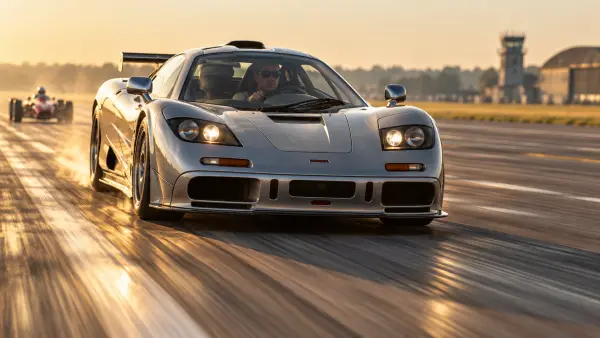
On the last day of March 1998, at a private test track in northern Germany, driver Andy Wallace pushed the throttle to the floor and kept it there. The car hurtled down a straight more than eight kilometers long, and the needle passed 240 miles an hour. It was a McLaren F1, a road car with the driver’s seat in the middle, and its engineers had raised the rev limiter for the occasion. Its two-way average of 240.1 miles an hour has not, as far as published records show, been beaten by any production car with a naturally aspirated engine, meaning one without a turbocharger or supercharger. To see how a road car came to behave like a racing machine, begin on an airfield.
The airfield was Silverstone, a windswept former Royal Air Force base, and on 13 May 1950 it hosted the first race of the Formula One World Championship. A formula is a set of technical rules that every car must follow; the novelty was joining national Grand Prix races into one title contest. Only seven races counted that year, and one was the Indianapolis 500 in the United States. Alfa Romeo of Italy dominated. Its driver Giuseppe Farina won that first race and would become the first champion, while his Argentine teammate, Juan Manuel Fangio, would go on to win five titles in all.
For its first decade, Formula One cars carried their engines in front of the driver. Then a small British firm, Cooper, tried something unorthodox and put the engine behind the seat because, by John Cooper’s own account, it was the practical thing to do. The cars were less powerful than some rivals, yet Australia’s Jack Brabham won the title in one in 1959 and 1960, and by 1961 every team had copied the layout. One of Brabham’s teammates, New Zealander Bruce McLaren, founded a team of his own in 1963. It would win its first Grand Prix in 1968, but its founder was to die while testing a car at Goodwood two years later, aged 32.
Meanwhile, racing was becoming lucrative. In the 1970s Bernie Ecclestone, who owned the Brabham team, persuaded the teams to bargain as a group instead of one by one with circuit owners, and television helped turn the championship into a billion-dollar business. Money bought engineering. McLaren, run by Ron Dennis from 1980, is widely credited with having pioneered the carbon-fiber chassis in Formula One, and in 1988 its Honda-powered cars, driven by Brazil’s Ayrton Senna and France’s Alain Prost, won 15 of 16 races. The exception came at Monza, weeks after the death of Ferrari’s founder, when Senna, leading with two laps to go, collided with a slower car. Ferrari finished first and second at home.
Afterward, in a Milan airport lounge, Dennis, technical director Gordon Murray, and two colleagues began to discuss a road car. Murray sketched a three-seater, and the McLaren F1 became his brainchild. His brief was uncompromising: lightness above all, with the driver seated in the middle like a single-seat racer, which became the car’s hallmark. It was built around a carbon-fiber shell, reportedly the first on a road car, and the engine bay was lined with gold foil to reflect heat. There was no ABS, traction control, or power steering. BMW supplied a 6.1-liter V12 of roughly 620 horsepower, and the whole car was pared down to about 1,140 kilograms. McLaren unveiled it in Monaco in 1992.
Murray had never meant the F1 to race and reluctantly agreed to a racing version only after customers pushed for one. At Le Mans in 1995, the F1 GTR cars were underdogs against purpose-built prototypes. Yet the car would go on to take the race at McLaren’s first attempt, in heavy rain, with a Frenchman, a Japanese driver, and a Finn sharing the wheel for a Japanese-sponsored team. McLaren cars also finished third, fourth, and fifth. Production ended in 1998 after 106 cars of all types, and McLaren is widely reported to have lost money on each road car it sold.
The sport changed too. After Senna and Roland Ratzenberger died at Imola in 1994, it introduced sweeping safety reforms, and a titanium “halo” above the cockpit, mandatory since 2018, has been credited with protecting drivers in serious crashes. In 2025 McLaren’s Lando Norris won the drivers’ title by two points, and 2026 brought a major overhaul of the rules, with nearly half of each car’s power coming from electricity, a long way from the F1 road car’s unassisted simplicity. Collectors, meanwhile, care about provenance, the documented history of who built, raced, and owned a car. In August 2026 a 1996 McLaren F1 GTR that began as a factory test car sold for about $34.7 million, the most ever paid for a McLaren at auction.
Vocabulary
Each word has a frequency score, a rank, and a tag. The score shows how common the word is in modern English: higher means more common, and each full point means roughly ten times more common. The rank is the word’s position on a list of about 321,000 English word forms, from most to least common. The tag shows where you are most likely to meet the word: Current, Formal, Literary, or Dated. The paragraph number shows where the word first appears in the reading. The labels are information, not instructions. Deciding which words are worth your time is up to you. How to read the scores, ranks, and tags.
hurtled (verb, past tense): moved very fast, often in a way that looks forceful or hard to control.
Frequency: 2.05 | Rank: 89,388 | Literary | Paragraph 1
Translations: 飞驰 | 猛スピードで進んだ | 질주했다 | बहुत तेज़ी से आगे बढ़ा | اندفع بسرعة | мчался | se lanzó a toda velocidad | fonça
- The car hurtled down the long straight at more than 240 miles an hour.
- A cyclist hurtled past me and disappeared around the corner.
windswept (adjective): open to strong winds, and often bare or lonely as a result.
Frequency: 2.44 | Rank: 56,788 | Literary | Paragraph 2
Translations: 风很大的 | 風の吹きさらしの | 바람이 거센 | तेज़ हवाओं वाला | تعصف به الرياح | продуваемый ветрами | azotado por el viento | balayé par les vents
- Silverstone was a windswept airfield when the championship began.
- We walked along the windswept beach in the early morning.
unorthodox (adjective): different from what is usual or traditional, and often surprising.
Frequency: 3.16 | Rank: 23,536 | Current | Paragraph 3
Translations: 非常规的 | 型破りな | 파격적인 | अपरंपरागत | غير تقليدي | нетрадиционный | poco ortodoxo | peu orthodoxe
- Cooper’s unorthodox decision to put the engine behind the driver changed the sport.
- The coach’s unorthodox training methods included swimming in the sea in winter.
lucrative (adjective): producing a lot of money or profit.
Frequency: 3.56 | Rank: 13,695 | Current | Paragraph 4
Translations: 有利可图的 | 儀かる | 수익성이 높은 | लाभदायक | مُربح | прибыльный | lucrativo | lucratif
- Television rights made Formula One a lucrative business.
- She left teaching for a lucrative job in finance.
pioneered (verb, past participle): was one of the first to develop or use a new idea, method, or technology.
Frequency: 3.29 | Rank: 19,825 | Current | Paragraph 4
Translations: 开创了 | 先駆けとなった | 개척했다 | अग्रणी भूमिका निभाई | كان رائدًا في | стал пионером | fue pionero en | a été le pionnier de
- McLaren is credited with having pioneered the carbon-fiber chassis in Formula One.
- The company pioneered online banking in the 1990s.
brainchild (noun): an original idea, plan, or invention that is mainly the work of one person or a small group.
Frequency: 2.76 | Rank: 38,863 | Current | Paragraph 5
Translations: 心血结晶 | 発案したもの | 두뇌의 산물 | किसी की सूझ की उपज | ثمرة فكر | детище | idea original de alguien | idée originale
- The McLaren F1 was Gordon Murray’s brainchild.
- The festival was the brainchild of two students who wanted to bring music to their town.
uncompromising (adjective): firm and unwilling to lower one’s standards or change one’s demands, even when this is difficult.
Frequency: 3.08 | Rank: 26,092 | Current | Paragraph 5
Translations: 毫不妥协的 | 妥協しない | 타협하지 않는 | समझौता न करने वाला | لا يقبل التنازلات | бескомпромиссный | intransigente | intransigeant
- Murray’s brief for the F1 was uncompromising: lightness above all.
- The coach was uncompromising about punctuality and sent late players home.
hallmark (noun): a typical feature or quality that clearly shows what something is like.
Frequency: 3.37 | Rank: 17,813 | Current | Paragraph 5
Translations: 标志 | 特徴 | 특징 | पहचान-चिह्न | سمة مميزة | отличительная черта | sello distintivo | marque distinctive
- The central driving seat became the hallmark of the F1.
- Careful editing is the hallmark of a good writer.
pared down (verb phrase, past participle): made smaller or simpler by removing everything that is not essential.
Frequency: no score (phrase) | Current | Paragraph 5
Translations: 精简 | 削ぎ落とされた | 필수적인 것만 남긴 | अनावश्यक चीज़ें हटाकर सरल बनाया गया | جُرِّد من الزوائد | урезанный до необходимого | reducido a lo esencial | réduit à l’essentiel
- The whole car was pared down to about 1,140 kilograms.
- For the trip, she pared down her luggage to one small bag.
unveiled (verb, past tense): showed something new to the public for the first time.
Frequency: 3.76 | Rank: 10,196 | Current | Paragraph 5
Translations: 发布 | 公開した | 공개했다 | अनावरण किया | كشف النقاب عن | представил | presentó | dévoila
- McLaren unveiled the F1 in Monaco in 1992.
- The company unveiled its new phone at an event in Seoul last spring.
reluctantly (adverb): in a way that shows you are unwilling or hesitant to do something.
Frequency: 3.45 | Rank: 16,005 | Current | Paragraph 6
Translations: 不情愿地 | しぶしぶ | 마지못해 | अनिच्छा से | على مضض | неохотно | a regañadientes | à contrecœur
- Murray reluctantly agreed to a racing version of the F1.
- He reluctantly handed over the keys and walked home.
underdogs (noun, plural): people or teams that are not expected to win, especially against stronger opponents.
Frequency: 2.96 | Rank: 30,418 | Current | Paragraph 6
Translations: 不被看好的一方 | 弱者 | 약체 | कमज़ोर माने जाने वाले | الطرف الأضعف | аутсайдеры | los menos favoritos | outsiders
- The F1 GTR cars were underdogs against purpose-built prototypes.
- The village team were underdogs, but they won the cup.
sweeping (adjective): affecting many things at once and making big changes.
Frequency: 3.79 | Rank: 9,735 | Current | Paragraph 7
Translations: 全面的 | 抜本的な | 전면적인 | व्यापक | شامل | масштабные | de gran alcance | de grande envergure
- The sport introduced sweeping safety reforms after 1994.
- The government announced sweeping changes to the tax system.
overhaul (noun): a thorough rebuilding or reorganization of something, in order to improve it.
Frequency: 3.59 | Rank: 13,127 | Current | Paragraph 7
Translations: 彻底改革 | 抜本的な見直し | 대대적인 개편 | पूर्ण सुधार | إصلاح شامل | капитальная перестройка | reforma integral | refonte
- The 2026 season brought a major overhaul of the rules.
- The airline announced an overhaul of its booking system.
provenance (noun): the documented history of where an object came from and who has owned it.
Frequency: 3.15 | Rank: 23,835 | Formal | Paragraph 7
Translations: 来历 | 来歴 | 내력 | उत्पत्ति और स्वामित्व का इतिहास | المنشأ وتاريخ الملكية | происхождение | procedencia | provenance
- A car’s provenance, including its owners, can add millions to its price.
- The museum checked the painting’s provenance before buying it.
Activity Page
Open the activity page in a new tab
Speed Challenge
Answer 12 questions against the clock. Every wrong answer adds 5 seconds, and the lowest score wins. Open the speed challenge in a new tab.
Shadow Reading and Typing: My Father’s Garage Radio
This short text uses many of the words from this lesson. Use it for shadow reading (reading aloud along with a model) and for typing practice.
When I was a child, my father kept an old radio in the garage. On race weekends he turned it up and let the commentary fill the whole street. I did not understand much of it. I only knew that the voices rose in excitement whenever the underdogs took the lead.
Later I learned why he loved the sport. He admired people who refused to follow the usual rules. A designer with an unorthodox idea, or an engineer who was uncompromising about quality, could keep him talking for an hour. He told me that every great machine began as someone’s brainchild. The best ones, he said, were pared down until nothing was wasted.
Once I begged my mother to let me stay up late for a race, and she reluctantly agreed. The next morning I was so tired that I could barely walk, but I hurtled out of the house to tell my father every detail. He listened as if I had been there myself.
Today I live far from that garage, in a small apartment in a windswept coastal town. Racing has changed, and the sweeping new rules would probably confuse my father. Still, whenever I hear an engine, I think of him. The hallmark of his enthusiasm was simple: he never cared who was favored, only who was brave.
How to practice
- Read the text silently once and check any words you are unsure of.
- Read it aloud slowly, one sentence at a time. On the typing page, the Listen button reads each line with your device’s voice, so you can listen first and then repeat.
- Shadow: read aloud again at a natural speed, trying to keep a steady rhythm without stopping.
- Record yourself, listen back, and note one sentence to practice again.
- Type it on the typing page below and check your speed and accuracy.
Open the typing practice in a new tab
Comprehension Questions
- What happened on 31 March 1998, and why does the reading describe it as notable?
- According to the reading, what was new about the 1950 World Championship, and which two drivers does the writer name from that first season?
- Why did Cooper put the engine behind the driver, and what happened to the idea over the next few years?
- How did money and technology change Formula One in the 1970s and 1980s, according to the reading?
- Describe what happened at Monza in 1988 and explain how it connects to the McLaren F1.
- The reading lists several design choices behind the McLaren F1. Choose three and explain what they have in common.
- Why does the reading call the F1 GTR cars underdogs at Le Mans in 1995, and which facts make their victory surprising?
- In the last paragraph, how does the writer link the 2026 rules, the road car, and the August 2026 auction? What point is being made?
- The reading opens in 1998, goes back to 1950, and then moves forward again. Why might the writer have chosen this order, and does it work for a reader who knows little about motor racing?
IELTS-Style Questions
- True, False, or Not Given: “Gordon Murray designed the 1988 McLaren race car that won 15 of 16 races.” Explain your answer using evidence from the reading.
- Yes, No, or Not Given: “The writer believes that electric power will make Formula One better.” Explain your answer using evidence from the reading.
- Author’s purpose: Why does the writer begin with the 1998 speed run instead of the 1950 race? Is the purpose to impress readers with a number, to link the road car to the sport from the start, or something else?
AI Discussion Prompt
I just read an article about the history of Formula One and the McLaren F1 road car. It covered the first championship race at Silverstone in 1950, Cooper’s rear-engine idea, the growth of money and carbon-fiber technology, McLaren’s 1988 season and the airport conversation that led to the F1, its 1995 Le Mans win, and how safety rules and technology have changed since. I am an English learner at about C2 level. Please ask me one question at a time, starting with whether I follow motor racing or any other sport with a long history. Respond to my ideas first, then briefly correct any language errors, and challenge my assumptions when it is useful.
AI Vocabulary Prompt
I want to practice vocabulary from an article about the history of Formula One and the McLaren F1. Please quiz me on the following words one at a time, using a mix of question types: multiple choice, true/false, and sentence completion. Give me feedback after each answer before moving on, and bring back the words I miss later. Here are the words: hurtled, windswept, unorthodox, lucrative, pioneered, brainchild, uncompromising, hallmark, pared down, unveiled, reluctantly, underdogs, sweeping, overhaul, provenance.
Discussion Questions
- Do you follow motor racing, or another sport that has a long history? What first interested you, or why does it not interest you?
- Which car, real or from a film, do you remember best? What made it memorable?
- In the story, a conversation in an airport lounge led to a famous car. Have you ever had a good idea while waiting or traveling? What happened to it?
- Have you ever watched a match or contest in which the underdogs won? How did the result make you feel?
- The F1 road car put the driver in the middle of the car. Would you enjoy driving a car like that every day, or would it be impractical?
- The F1 had no ABS, no traction control, and no power steering. Do you prefer technology that helps you, or tools that leave you in full control? Does it depend on the activity?
- John Cooper put the engine behind the driver because it was practical. Can you think of an important idea in your own field or life that began as a practical solution?
- Racing teams in this story came from several countries, and the drivers came from even more. Why do fans still cheer for drivers from their own country?
- Motor races are held in cities and countries around the world. How might hosting a Grand Prix change a place, for better or for worse?
- Safety rules in motor racing were tightened after the deaths at Imola in 1994. Should dangerous sports accept some risk, or should rule makers remove as much risk as possible?
- McLaren is widely reported to have lost money on each road car. Is it worth building something extraordinary even if it loses money? Who should pay for it?
- One car sold at auction for about $34.7 million, and collectors care about provenance. Why do people value an object’s history so highly, and is it reasonable to spend so much on one object?
- The 2026 rules take nearly half of a car’s power from electricity. Should a sport built on noise and speed change for environmental reasons, or should it protect its traditions?
- Television money helped turn Formula One into a billion-dollar business. Does commercial success improve a sport, damage it, or both?
Language Focus: Future in the Past: would, would go on to, and was to
What it is: Writers use would, would go on to, and was to followed by an infinitive to look forward from a moment in the past. They describe events that were still in the future at that moment, although we now know that they happened.
Why writers use it: Historians, biographers, and journalists use this structure to connect a past moment to what followed. It gives a story a sense of direction and consequence, and it is common in formal and literary writing.
Examples from the reading:
- “…Farina won that first race and would become the first champion…”
- “…Fangio, would go on to win five titles in all.”
- “It would win its first Grand Prix in 1968, but its founder was to die while testing a car at Goodwood two years later, aged 32.”
- “Yet the car would go on to take the race at McLaren’s first attempt…”
Practice task: Look forward from 1988 and complete this sentence: “In 1988, McLaren’s bosses discussed a road car that…” Use a future-in-the-past form and the fact that the car was shown in Monaco four years later.
(Example answer: “In 1988, McLaren’s bosses discussed a road car that would be unveiled in Monaco four years later.”)
Online Resources
- Andy Wallace Hits 240.14mph at Ehra-Lessien in the McLaren F1 (Hagerty). An account of the 1998 speed run in paragraph 1, including the raised rev limiter and the two-way average.
- Ten Fascinating Facts About the Very First F1 Race (Formula1.com). Details of the 1950 race at Silverstone described in paragraph 2, from the cars to the drivers.
- The Best Goes West (Motor Sport magazine). A 1997 essay by a journalist who drove the F1, covering the airport origin and the car’s finances.
- Inside the McLaren That Won Its First and Only Race at Le Mans (Motorsport.com). A video feature on the 1995 winning car from paragraph 6, with comments from one of its drivers.
- This McLaren F1 GTR Just Sold For a Record-Breaking $34.6 Million (Motor1). A report on the August 2026 auction in paragraph 7 and the history of the car that was sold.