
अंग्रेज़ी में प्रश्न और नकारात्मक वाक्य एक छोटे शब्द पर चलते हैं: सहायक क्रिया। प्रश्न उसे कर्ता से पहले रखते हैं, नकारात्मक वाक्य उसके बाद not जोड़ते हैं, और question tag वाक्य के अंत में उसे दोहराते हैं। जब क्रिया के साथ कोई सहायक क्रिया नहीं होती, तो अंग्रेज़ी do उधार लेती है।
अंग्रेज़ी गाइड पढ़ें → यह पेज मशीन अनुवाद है और किसी मूल भाषी ने इसकी जाँच नहीं की है, इसलिए इसमें गलतियाँ हो सकती हैं। अंग्रेज़ी संस्करण ही आधार है।
निदान का परिणाम बताता है कि किस भाग को दोहराना है। नीचे उस भाग पर टैप करें।
एक सहायक क्रिया, चार ढाँचे
पहले सहायक क्रिया ढूँढें। इस गाइड का हर ढाँचा उसे आगे ले जाता है, उसमें not जोड़ता है, या उसे दोहराता है।
| क्रिया | कथन | प्रश्न | नकारात्मक | Tag |
|---|---|---|---|---|
| be | She’s ready. | Is she ready? | She isn’t ready. | She’s ready, isn’t she? |
| perfect रूप | They’ve left. | Have they left? | They haven’t left. | They’ve left, haven’t they? |
| modal | He can drive. | Can he drive? | He can’t drive. | He can drive, can’t he? |
| सामान्य वर्तमान (present simple) | You work here. | Do you work here? | You don’t work here. | You work here, don’t you? |
| सामान्य भूत (past simple) | She called. | Did she call? | She didn’t call. | She called, didn’t she? |
उसे आगे लाएँ, या do उधार लें
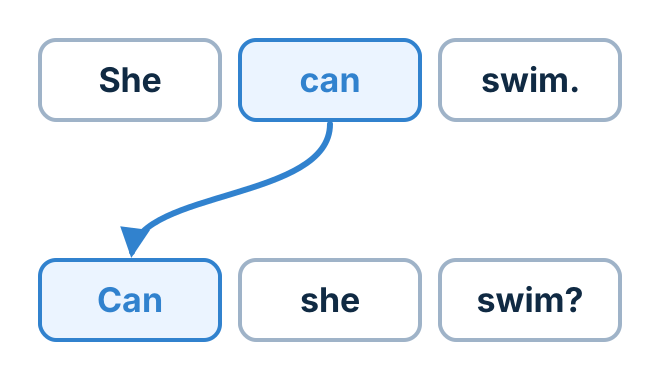
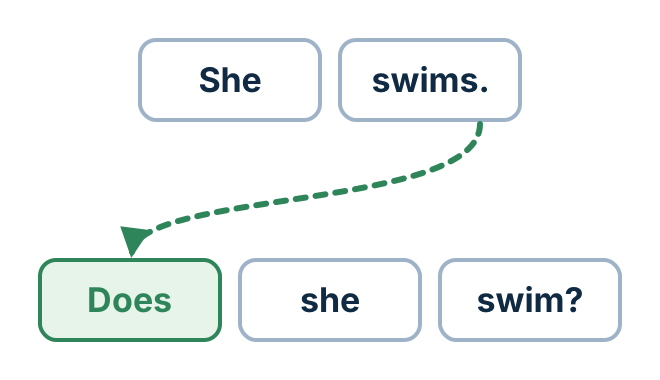
swims का -s और called का भूतकाल सहायक क्रिया (does, did) पर चला जाता है, इसलिए मुख्य क्रिया अपने मूल रूप में लौट आती है।
वर्तमान सतत (present continuous)
be + -ing वाले प्रश्न और नकारात्मक वाक्य (Are you listening? He isn’t working today) इस काल की बाकी बातों के साथ Present Continuous गाइड में समझाए गए हैं। Present continuous गाइड (अंग्रेज़ी में) →
Present perfect
ever वाले प्रश्न और yet वाले नकारात्मक वाक्य (Have you ever…? I haven’t finished yet) Present Perfect गाइड में समझाए गए हैं। Present perfect गाइड (अंग्रेज़ी में) →
सीधे प्रश्न
प्रश्न को कौन-सी सहायक क्रिया चाहिए, और उसके बाद कौन-सा रूप आता है?
नियम: सहायक क्रिया को कर्ता से पहले रखें: be, have या modal खुद आगे आ जाते हैं, और बाकी क्रियाओं के साथ do, does या did जोड़ें। do, does या did के बाद मुख्य क्रिया मूल रूप में रहती है।
प्रश्न किस सहायक क्रिया से शुरू होता है?
| अगर क्रिया है | प्रयोग करें | उदाहरण |
|---|---|---|
| be | am, is, are, was, were | Were the tickets expensive? |
| perfect रूप | have, has, had | Has the parcel arrived? |
| continuous रूप | am, is, are, was, were | Is it still snowing? |
| modal | can, will, should, must… | Should we book a table? |
| कोई और क्रिया, वर्तमान | do, does | Does this bus stop at the library? |
| कोई और क्रिया, भूत | did | Did the team win on Saturday? |
पहले प्रश्नवाचक शब्द, फिर वही क्रम
| प्रश्नवाचक शब्द | सहायक क्रिया | कर्ता | बाकी हिस्सा |
|---|---|---|---|
| Where | did | you | park? |
| How much | does | the course | cost? |
| What | are | you | laughing at? |
| How long | will | the meeting | last? |
स्वामित्व वाला have
जब have मुख्य क्रिया हो, तो Do you have a pen? सबसे सुरक्षित प्रश्न है। Have you got a pen? भी आम है, खासकर ब्रिटिश अंग्रेज़ी में। Have you a pen? पुराना लगता है।
कथन जैसे प्रश्न
बोलचाल में ऊपर उठती आवाज़ वाला कथन (You’re leaving already?) आश्चर्य दिखाता है या उस बात की पुष्टि करता है जिसे आप सच मानते हैं। यह अनौपचारिक है और सामान्य प्रश्न क्रम की जगह नहीं लेता।
इस भाग की आम गलतियाँ
- कर्ता से पहले सहायक क्रिया नहीं
Why you are laughing?✓ Why are you laughing?सहायक क्रिया कर्ता से पहले आती है। - सहायक क्रिया के बाद गलत क्रिया रूप
Does he wants a drink?✓ Does he want a drink?does के बाद मूल रूप आता है। - गलत सहायक क्रिया
Do you be hungry?✓ Are you hungry?be खुद प्रश्न बनाता है, do के बिना।
कर्ता और कर्म वाले प्रश्न
प्रश्नवाचक शब्द कर्ता है या कर्म?
नियम: अगर प्रश्नवाचक शब्द कर्ता है, तो कथन वाला क्रम रखें, do नहीं। अगर कर्म है, तो सामान्य प्रश्न वाला क्रम रखें।
तीन चरण
- 1
प्रश्न का उत्तर पूरे वाक्य में दें।
- 2
उत्तर वाला शब्द ढूँढें। क्रिया से पहले हो तो वह कर्ता है। क्रिया के बाद हो तो वह कर्म है।
- 3
कर्ता: कथन वाला क्रम, do नहीं। कर्म: सहायक क्रिया कर्ता से पहले।
| प्रश्न | पूरा उत्तर | प्रकार |
|---|---|---|
| Who invited Sam? | Lena invited Sam. | कर्ता: do नहीं |
| Who did Sam invite? | Sam invited Lena. | कर्म: did + कर्ता |
| What broke the printer? | A paper jam broke the printer. | कर्ता: do नहीं |
| What did the printer print? | The printer printed a blank page. | कर्म: did + कर्ता |
कर्ता वाले प्रश्न में भी वह सहायक क्रिया आ सकती है जो क्रिया का ही हिस्सा है: Who can help? What is happening? Who has seen this film? सिर्फ़ अतिरिक्त do हटता है।
इस भाग की आम गलतियाँ
- कर्ता वाले प्रश्न में do
Who did win the race?✓ Who won the race?Who कर्ता है, इसलिए did नहीं आता। - कर्म वाले प्रश्न में सहायक क्रिया नहीं
What you bought at the market?✓ What did you buy at the market?What कर्म है, इसलिए did जोड़ें। - कर्ता वाले प्रश्न में do
Which bus does go to the stadium?✓ Which bus goes to the stadium?Which bus कर्ता है, इसलिए does नहीं आता।
अप्रत्यक्ष प्रश्न
क्या प्रश्न किसी दूसरे वाक्य के अंदर है?
नियम: Can you tell me, Do you know, I wonder या asked जैसी शुरुआत के बाद कथन वाला क्रम रखें, do नहीं। हाँ-ना प्रश्न में if या whether जुड़ता है।
शुरुआत से विराम चिह्न तय होता है
| शुरुआत प्रश्न है: अंत में ? | शुरुआत कथन है: अंत में . |
|---|---|
| Can you tell me where the exit is? | I wonder where the exit is. |
| Do you know when the film starts? | I don’t know when the film starts. |
| Do you have any idea who sent this? | I’m not sure who sent this. |
हाँ-ना प्रश्न: if या whether
| सीधा | अप्रत्यक्ष |
|---|---|
| Is the museum free? | Do you know if the museum is free? |
| Will they agree? | I doubt whether they will agree. |
to से पहले (whether to stay) और preposition के बाद (a debate about whether it works) if नहीं, whether लगाएँ।
Reported questions
| सीधा प्रश्न | Reported |
|---|---|
| “Are you tired?” | She asked if I was tired. |
| “Where did you go?” | He asked where I had gone. |
| “Will you be there?” | They asked if I would be there. |
| “Can you swim?” | She asked if I could swim. |
अगर स्थिति अब भी सच है, तो काल वैसा ही रह सकता है: She asked where I live (मैं अब भी वहीं रहता हूँ)।
Do you know …? या … do you think?
Do you know where he lives? एक तथ्य पूछता है, और इसका उत्तर yes या no हो सकता है। Where do you think he lives? राय पूछता है, इसलिए प्रश्नवाचक शब्द सबसे आगे जाता है और do you think प्रश्न वाला हिस्सा बनता है।
इस भाग की आम गलतियाँ
- अप्रत्यक्ष प्रश्न में प्रश्न वाला क्रम
Do you know when does the shop open?✓ Do you know when the shop opens?do you know के बाद कथन वाला क्रम। - if या whether नहीं
I'm not sure is she coming.✓ I'm not sure if she's coming.हाँ-ना प्रश्न में if या whether चाहिए। - do you think के साथ शब्द क्रम
Do you think where she went?✓ Where do you think she went?प्रश्नवाचक शब्द सबसे पहले आता है।
नकारात्मक वाक्य
क्या not के लिए सहायक क्रिया है, और क्या वाक्य में पहले से कोई निषेध शब्द है?
नियम: not को सहायक क्रिया के बाद रखें, या don’t, doesn’t या didn’t + मूल रूप लगाएँ। एक उपवाक्य में एक ही निषेध रखें, और नकारात्मक प्रश्नों का उत्तर तथ्य के अनुसार दें।
संक्षिप्त रूप
एक उपवाक्य में एक निषेध
| not + any वाला शब्द | no वाला शब्द, not नहीं |
|---|---|
| I didn’t tell anyone. | I told no one. |
| There isn’t anything to eat. | There’s nothing to eat. |
| He hasn’t been anywhere. | He’s been nowhere. |
no वाले शब्दों वाले रूप अक्सर ज़्यादा औपचारिक या ज़्यादा ज़ोरदार होते हैं। अंग्रेज़ी की कुछ किस्मों में बोलचाल में दोहरा निषेध होता है, लेकिन लेखन या परीक्षा में यह मानक नहीं है।
नकारात्मक प्रश्न का उत्तर
| प्रश्न | अगर तथ्य सकारात्मक है | अगर तथ्य नकारात्मक है |
|---|---|---|
| Aren’t you hungry? | Yes, I am. | No, I’m not. |
| Didn’t she pass the test? | Yes, she did. | No, she didn’t. |
yes और no तथ्य के साथ चलते हैं
कुछ भाषाओं में yes का अर्थ होता है “आपने जो कहा वह सही है”। अंग्रेज़ी में yes और no उसके बाद आने वाले तथ्य से मेल खाते हैं, इसलिए yes के बाद हमेशा सकारात्मक और no के बाद हमेशा नकारात्मक आता है।
I don’t think
अंग्रेज़ी में आमतौर पर think को नकारात्मक बनाया जाता है: I don’t think it will rain, I think it won’t rain से ज़्यादा स्वाभाविक लगता है, हालाँकि दोनों सही हैं। believe, expect और suppose के साथ भी ऐसा ही है।
इस भाग की आम गलतियाँ
- not से पहले सहायक क्रिया नहीं
She not speaks French.✓ She doesn't speak French.यहाँ not को does चाहिए, और speak मूल रूप में लौटता है। - दोहरा निषेध
We didn't get no reply.✓ We didn't get any reply.एक उपवाक्य में एक निषेध। - yes और no उलटे
Isn't this your bag? Yes, it isn't.✓ Isn't this your bag? No, it isn't.तथ्य नकारात्मक है, इसलिए उत्तर no है।
Question tags
सहायक क्रिया क्या है, और वाक्य सकारात्मक है या नकारात्मक?
नियम: सहायक क्रिया दोहराएँ (या do, does, did लें) और सर्वनाम लगाएँ, और आमतौर पर ध्रुवता बदलें: सकारात्मक वाक्य के साथ नकारात्मक tag, नकारात्मक वाक्य के साथ सकारात्मक tag।
दो चरणों में tag बनाएँ
- 1
सहायक क्रिया ढूँढें। अगर नहीं है, तो उसी काल का do, does या did लें।
- 2
ध्रुवता बदलें और सर्वनाम लगाएँ: सकारात्मक नकारात्मक बनता है, नकारात्मक सकारात्मक।
| वाक्य | सहायक क्रिया | Tag |
|---|---|---|
| Your brother plays tennis, | (does) | doesn’t he? |
| We won’t be late, | will | will we? |
| The shops were closed, | were | weren’t they? |
| She’d already gone, | had | hadn’t she? |
| You could hear me, | could | couldn’t you? |
नियम से हटकर चलने वाले tag
| वाक्य | Tag |
|---|---|
| I’m on the list, | aren’t I? |
| Let’s ask her, | shall we? |
| Pass me the salt, | will you? / could you? |
| No one noticed, | did they? |
| There isn’t much time, | is there? |
| This is yours, | isn’t it? |
आवाज़ का उतार-चढ़ाव
tag पर नीचे जाती आवाज़ का मतलब है कि आप सहमति की उम्मीद करते हैं (It’s cold, isn’t it?)। ऊपर उठती आवाज़ का मतलब है कि यह असली प्रश्न है और आप निश्चित नहीं हैं।
एक जैसी ध्रुवता वाले tag
सकारात्मक वाक्य के साथ सकारात्मक tag (So you’re moving to Canada, are you?) होता है, लेकिन यह पुष्टि नहीं, बल्कि आश्चर्य या रुचि दिखाता है। निदान परीक्षा सामान्य उलटी ध्रुवता वाले ढाँचे की जाँच करती है।
इस भाग की आम गलतियाँ
- tag वाक्य से मेल नहीं खाता
They've been to Rome, didn't they?✓ They've been to Rome, haven't they?They’ve का मतलब they have है, इसलिए tag में have आता है। - tag की ध्रुवता वही है
You aren't busy, aren't you?✓ You aren't busy, are you?नकारात्मक वाक्य के साथ सकारात्मक tag आता है। - विशेष tag रूप
Let's start, don't we?✓ Let's start, shall we?Let’s के साथ shall we आता है।
स्वयं जाँच
क्या हर वाक्य सही है? उत्तर देखने के लिए टैप करें। अगर आप निश्चित नहीं थे, तो भाग का लेबल बताता है कि कहाँ देखना है।
भाग 1Do you have time for a quick coffee?
सही। यहाँ स्वामित्व वाला have सामान्य क्रिया है, इसलिए प्रश्न में do आता है।
भाग 1Where your brother is studying?
गलत। सहायक क्रिया कर्ता से पहले आती है: Where is your brother studying?
भाग 2What caused the delay?
सही। What कर्ता है (something caused the delay), इसलिए did नहीं आता।
भाग 2Who did she marry?
सही। Who कर्म है (she married someone), इसलिए प्रश्न में did चाहिए।
भाग 3Could you tell me how much does the ticket cost?
गलत। could you tell me के बाद कथन वाला क्रम आता है: how much the ticket costs।
भाग 3I wonder whether the train will be on time.
सही। whether एक अप्रत्यक्ष हाँ-ना प्रश्न शुरू करता है, और वाक्य पूर्णविराम पर खत्म होता है।
भाग 4I don't have no idea.
गलत। एक ही निषेध रखें: I don’t have any idea, या I have no idea।
भाग 4Didn't you finish the book? Yes, I finished it last week.
सही। तथ्य सकारात्मक है, इसलिए उत्तर yes है।
भाग 5I'm invited too, aren't I?
सही। I’m के बाद tag aren’t I होता है।
भाग 5He hasn't replied yet, hasn't he?
गलत। नकारात्मक वाक्य के साथ सकारात्मक tag आता है: He hasn’t replied yet, has he?
AI अभ्यास प्रॉम्प्ट
इसे किसी AI चैट टूल में पेस्ट करें।
प्रॉम्प्ट दिखाएँ
और अभ्यास
- Test-English: Questions, different types (B1, शब्द क्रम और सहायक क्रियाएँ, अंग्रेज़ी में)
- Test-English: Subject questions and questions with a preposition (A2, अंग्रेज़ी में)
- Test-English: Indirect questions (B1, अंग्रेज़ी में)
- Perfect English Grammar: Subject and object questions (अंग्रेज़ी में)
- British Council LearnEnglish: Question tags (B1 से B2, अंग्रेज़ी में)