
수식어는 다른 단어의 의미를 바꾸거나 더하는 단어로, 보통 부사나 형용사입니다. 표현을 더 강하게, 약하게, 정확하게, 또는 공손하게 만들 수 있습니다. 이 주제의 세 파트는 알맞은 수식어 선택 문제를 다루고, 두 파트는 형태와 순서를 다룹니다. 이 가이드는 다섯 파트로 되어 있으며, 진단 테스트의 다섯 파트와 정확히 일치합니다.
영어 원문 가이드 읽기 → 이 페이지는 기계 번역이며 원어민의 검토를 거치지 않았으므로 부정확한 부분이 있을 수 있습니다. 기준은 영어판입니다.
진단 결과에서 복습이 필요한 파트를 알려 줍니다. 아래에서 해당 파트를 누르세요.
핵심 개념: 수식어는 무엇을 꾸미고 있는가?
알맞은 수식어는 꾸미는 단어에 따라 달라집니다. 같은 단어라도 한 자리에서는 맞고 다른 자리에서는 틀릴 수 있습니다.
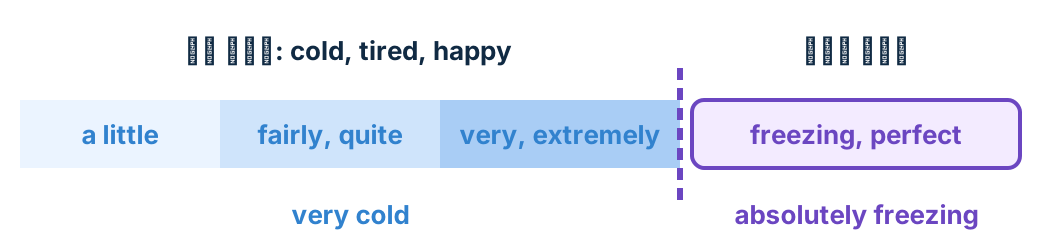
| 꾸밈을 받는 단어 | 쓰는 말 | 예문 |
|---|---|---|
| 등급 형용사 | very, really, quite, extremely | very tired |
| 극단 형용사 | absolutely, completely, totally | absolutely perfect |
| 비교급 | much, far, a little, even | much friendlier |
| 최상급 | by far, easily (the 앞) | by far the best |
| 동사 | really, a lot, very much | really like, like it a lot |
- 1
수식어는 무엇을 꾸미고 있는가? 형용사, 비교, 동사, 또는 명사.
- 2
그 단어에 맞는 수식어는 무엇인가? 등급 형용사에는 very, 극단 형용사에는 absolutely, 비교급에는 much, 동사에는 really (파트 1~3).
- 3
형태와 위치가 맞는가? 형용사가 아니라 부사를 쓰고, 동사와 목적어 사이에 두지 않습니다. so인가 such인가, hard인가 hardly인가 (파트 4와 5).
수식어는 표현을 더 강하게, 약하게, 정확하게, 또는 공손하게 만들 수 있습니다. 파트 1~3은 단어 선택을, 파트 4와 5는 형태와 순서를 다룹니다.
very, absolutely, 아니면 too?
이 형용사는 정도를 나타내는가, 이미 극단적인가, 아니면 원하는 것보다 지나친가?
규칙: 등급 형용사에는 very (very cold), 극단 형용사에는 absolutely (absolutely freezing)를 씁니다. too는 원하는 것보다 지나치다는 뜻입니다. enough는 형용사 뒤에 옵니다.
정도가 더하거나 덜할 수 있는가, 아니면 이미 극단적인가?
| 등급 형용사 | 극단 형용사 (비등급) |
|---|---|
| cold, hot, tired, happy, sad, angry, big, small, interesting, boring, nice, difficult, tall, funny | freezing, boiling, exhausted, thrilled, furious, enormous, fascinating, terrifying, perfect, impossible, starving, spotless, tiny |
등급 형용사: very
It is very cold today.
I am so tired.
He is fairly confident.
극단 형용사: absolutely
That is an absolutely perfect answer.
I am completely exhausted.
That idea is utterly ridiculous.
really는 두 종류 모두에 쓸 수 있습니다: really cold, really freezing. 미국 영어에서 quite는 보통 very의 뜻이고, 영국 영어에서는 흔히 fairly의 뜻입니다.
too, very, enough
| 단어 | 의미 | 예문 |
|---|---|---|
| very | 강함, 흔히 칭찬 | The cake is very good. |
| too | 원하는 것보다 지나침, 문제가 있음 | The tea is too hot to drink. |
| adjective + enough | 필요한 만큼 | Is the room big enough for ten people? |
| enough + noun | 필요한 수나 양만큼 | We have enough chairs. |
한국어 너무나 중국어 太는 두 가지 뜻을 모두 가지기 때문에 많은 학습자가 too를 very의 뜻으로 씁니다. 영어에서 too good이나 too delicious는 칭찬이 아니라 문제가 있다는 말로 들립니다.
이 파트의 흔한 오류
- too를 칭찬으로 쓴 경우
Your new haircut looks too nice!✓ Your new haircut looks really nice!too는 원하는 것보다 지나치다는 뜻이므로 불평처럼 들립니다. - 비등급 형용사에 very를 쓴 경우
By midnight we were very starving.✓ By midnight we were absolutely starving.starving은 이미 극단적인 뜻입니다. - enough의 위치가 틀린 경우
Is the printer enough fast for the whole office?✓ Is the printer fast enough for the whole office?enough는 형용사 뒤에 옵니다.
더 알아보기: 부정문의 등급 형용사
부정문에서 영어는 수식어를 흔히 부드럽게 씁니다: It’s not very warm outside. I’m not particularly hungry. That was not exactly thrilling.
비교급과 최상급
두 가지를 비교하는가, 아니면 하나를 나머지 전부와 비교하는가?
규칙: 비교급에는 much, far, a lot, a little, even을 쓰고 very나 so는 쓰지 않으며, -er 형태에 more를 더하지 않습니다. the + 최상급 앞에는 by far나 easily를 씁니다. very는 the 뒤에 옵니다: the very best.
비교급
| 수식어 | 차이 | 예문 |
|---|---|---|
| much, a lot, far | 큼 | The train is much faster than the bus. |
| a little, slightly, a bit | 작음 | My room is slightly bigger than yours. |
| even | 놀라움 | The sequel is even better than the first film. |
-er과 more 중 하나만 쓰세요: much easier이지 more easier가 아닙니다. better와 worse는 이미 비교급이므로 more를 붙이지 않습니다.
최상급
| 수식어 | 위치 | 예문 |
|---|---|---|
| by far, easily | the 앞 | It is by far the oldest building in town. |
| very | the 뒤 | This is the very best seat in the theater. |
| possibly | the 앞, 조심스러운 느낌을 더함 | This is possibly the cheapest flight this month. |
둘이면 비교급, 셋 이상이면 최상급을 씁니다: the taller of the two, the tallest in the class.
이 파트의 흔한 오류
- 비교급에 very나 so를 쓴 경우
The second hotel was very nicer.✓ The second hotel was much nicer.very는 비교급을 꾸미지 않습니다. - 비교급이나 최상급을 겹쳐 쓴 경우
My grades are more better this year.✓ My grades are much better this year.better는 이미 비교급입니다. - 최상급의 the 앞에 very를 쓴 경우
It was very the longest meeting of my life.✓ It was by far the longest meeting of my life.very는 the 앞이 아니라 뒤에 옵니다.
더 알아보기: 비교급과 very much
very 혼자서는 비교급을 꾸밀 수 없지만 very much는 가능하며, 특히 영국 영어에서 그렇습니다: She feels very much better today.
동사와 자연스러운 짝
수식어가 동사와 함께 쓰이는가, 아니면 흔히 함께 쓰는 짝이 있는 단어와 쓰이는가?
규칙: very는 동사를 꾸미지 않습니다: really like나 like it very much라고 합니다. 많은 수식어에는 흔히 함께 쓰는 짝이 있습니다: highly recommended, strongly agree, deeply regret.
very는 동사 앞에 오지 않는다
| 패턴 | 예문 |
|---|---|
| really + verb | I really like this song. |
| verb + object + a lot or very much | I like this song a lot. I like it very much. |
| much + prefer | I much prefer tea to coffee. |
| 흔히 함께 쓰는 짝이 있는 동사 | totally agree, strongly disagree, deeply regret, greatly appreciate |
중국어 很은 喜欢 (like) 같은 동사 앞에 올 수 있어서 학습자들이 very like라고 쓰는 경우가 많습니다. 영어의 very는 이렇게 쓸 수 없습니다.
자연스러운 짝
| 자연스러움 | 피할 것 | 의미 |
|---|---|---|
| highly recommended | 적극 추천됨 | |
| highly skilled | 매우 유능함 | |
| well known | 많은 사람에게 알려짐 | |
| widely regarded | 일반적으로 여겨짐 | |
| deeply grateful | 진심으로 감사함 | |
| strongly opposed | 단호히 반대함 | |
| bitterly cold | 몹시 추움 |
어조와 격식
| 수식어 | 격식 | 예문 |
|---|---|---|
| so, really, pretty | 일상적 | I’m so happy you came! |
| fairly, rather, somewhat | 중립 또는 격식 | The results were fairly encouraging. |
| extremely, incredibly | 중립적이지만 강함 | She worked incredibly hard. |
| highly, deeply, greatly | 격식 또는 글 | I am deeply concerned. |
이 파트의 흔한 오류
- 동사 앞에 very를 쓴 경우
I very miss my family.✓ I really miss my family.very는 동사를 꾸미지 않습니다. - 부자연스러운 수식어 짝
I highly agree with the new rules.✓ I strongly agree with the new rules.agree는 strongly나 totally와 짝을 이룹니다. - too를 칭찬으로 쓴 경우
I too much love this show.✓ I really love this show.too much는 very의 뜻으로 쓰지 않습니다.
부사의 형태와 위치
동사를 설명하는가, 형용사를 설명하는가? 목적어는 어디에 있는가?
규칙: 동사나 형용사를 설명할 때는 부사를 씁니다 (speak clearly, incredibly quiet). 형용사 앞에 두고, 동사와 목적어 뒤에 둡니다. 그 사이에 두지 않습니다.
형용사인가 부사인가?
| 형용사 | 부사 | 예문 |
|---|---|---|
| clear, careful, quick | clearly, carefully, quickly | She drives carefully. |
| good | well | He sings well. |
| fast, hard, late | fast, hard, late (no -ly) | They arrived late. |
hardly와 lately는 다른 단어입니다: hardly는 거의 ~ 않다, lately는 최근에라는 뜻입니다. 일상 대화에서 real good이나 drive safe라고 하는 사람도 있지만 글에서는 부사를 쓰세요.
위치
| 꾸미는 대상 | 위치 | 예문 |
|---|---|---|
| 형용사 또는 부사 | 바로 앞 | She is extremely talented. He drove incredibly fast. |
| 목적어가 있는 동사 | 목적어 뒤 | He plays the piano well. |
| 동사 (really, completely, hardly) | 보통 본동사 앞 | I completely forgot her birthday. |
맞는 표현
She speaks English very well.
I completely forgot her birthday.
He drove incredibly fast.
틀린 표현
She speaks very well English.I forgot completely her birthday.He drove incredible fast.
이 파트의 흔한 오류
- 부사가 필요한 곳에 형용사를 쓴 경우
She finished the exercise very quick.✓ She finished the exercise very quickly.quickly는 동사 finished를 설명합니다. - 동사와 목적어 사이에 부사를 넣은 경우
My sister speaks fluently three languages.✓ My sister speaks three languages fluently.부사는 목적어 뒤에 두세요. - 부사가 필요한 곳에 형용사를 쓴 경우
Our new printer works very good.✓ Our new printer works very well.well은 good의 부사입니다.
so, such, hardly
so인가 such인가? hard인가 hardly인가?
규칙: so + 형용사, such (a) + 형용사 + 명사, so much 또는 so many + 명사. hard는 열심히라는 뜻이고, hardly는 거의 ~ 않다라는 뜻이므로 not을 더하지 않습니다.
so와 such
| 구조 | 예문 |
|---|---|
| so + adjective or adverb | The lake was so calm that we could see the bottom. |
| so much + uncountable noun, so many + plural noun | There was so much food that we took some home. |
| such a + adjective + singular noun | It was such a long flight. |
| such + adjective + plural or uncountable noun | They are such good friends. We had such bad luck. |
that으로 결과를 나타낼 때는 too가 아니라 so나 such를 씁니다: so tired that이지 too tired that이 아닙니다. 격식 있는 영어에서는 so + 형용사 + a + 명사도 가능합니다: so good a teacher.
hard, hardly, 그 밖의 부정 수식어
| 단어 | 의미 | 예문 |
|---|---|---|
| hard | 많은 노력을 들여 | She studies hard. |
| hardly | 거의 ~ 않다 | She hardly studies. |
| barely, scarcely | 거의 ~ 않다, 간신히 | We barely caught the train. |
| hardly ever | 거의 ~ 하지 않다 | I hardly ever drive. |
hardly, barely, scarcely는 이미 부정의 뜻이므로 not을 더하지 않습니다. 격식 있는 글에서는 hardly로 문장을 시작해 도치하고 when을 이어 쓸 수 있습니다: Hardly had the meeting started when the power went out. No sooner는 대신 than을 씁니다.
이 파트의 흔한 오류
- so와 such를 혼동한 경우
We had so fun at the party.✓ We had so much fun at the party.fun은 명사이므로 so much fun이나 such fun을 씁니다. - hard와 hardly를 혼동한 경우
Everyone on the team worked hardly to finish on time.✓ Everyone on the team worked hard to finish on time.hard는 열심히라는 뜻이고, hardly는 거의 ~ 않다라는 뜻입니다. - hardly, barely, scarcely에 부정어를 더한 경우
I can't hardly wait for the holidays.✓ I can hardly wait for the holidays.hardly는 이미 부정의 뜻입니다.
자가 점검
각 문장이 맞을까요? 누르면 답이 보입니다. 확실하지 않았다면 파트 표시를 보고 어디를 다시 볼지 확인하세요.
파트 1The water is too cold for swimming today.
맞음. too는 문제를 나타냅니다: 물이 원하는 것보다 차갑다는 뜻입니다.
파트 1The final exam was very impossible.
틀림. The final exam was completely impossible. impossible은 비등급 형용사입니다.
파트 2This laptop is a lot lighter than my old one.
맞음. a lot은 비교급과 함께 큰 차이를 나타냅니다.
파트 2Anna is the most kindest person I know.
틀림. Anna is the kindest person I know. kindest는 이미 최상급입니다.
파트 3I very enjoyed your presentation.
틀림. I really enjoyed your presentation. very는 동사를 꾸미지 않습니다.
파트 3The chef is highly skilled.
맞음. highly skilled는 자연스러운 짝입니다.
파트 4He drives very carefully at night.
맞음. carefully는 drives를 설명하고, very는 carefully 앞에 옵니다.
파트 4She plays beautiful the violin.
틀림. She plays the violin beautifully. 부사를 쓰고, 목적어 뒤에 두세요.
파트 5It was such a boring lecture that I left early.
맞음. such a는 형용사 + 단수 명사 앞에 옵니다.
파트 5She works hardly every day.
틀림. She works hard every day. hardly는 거의 ~ 않다라는 뜻입니다.
AI 연습 프롬프트
이 내용을 AI 채팅 도구에 붙여 넣으세요.