
Modifier वे शब्द हैं, आमतौर पर क्रियाविशेषण या विशेषण, जो किसी दूसरे शब्द का अर्थ बदलते या बढ़ाते हैं। वे किसी वर्णन को ज़्यादा तीव्र, कमज़ोर, सटीक या विनम्र बना सकते हैं। इस विषय के तीन भाग सही modifier चुनने के बारे में हैं, और दो भाग रूप और क्रमके बारे में हैं। इस गाइड के पाँच भाग हैं, जो निदान परीक्षा के पाँच भागों से ठीक मेल खाते हैं।
अंग्रेज़ी गाइड पढ़ें → यह पेज मशीन अनुवाद है और किसी मूल भाषी ने इसकी जाँच नहीं की है, इसलिए इसमें गलतियाँ हो सकती हैं। अंग्रेज़ी संस्करण ही आधार है।
निदान परीक्षा का परिणाम बताता है कि किस भाग को दोहराने की ज़रूरत है। नीचे उस भाग पर टैप करें।
मूल विचार: modifier किस शब्द को बदल रहा है?
सही modifier उस शब्द पर निर्भर करता है जिसे वह बदलता है। एक ही शब्द एक जगह सही और दूसरी जगह गलत हो सकता है।
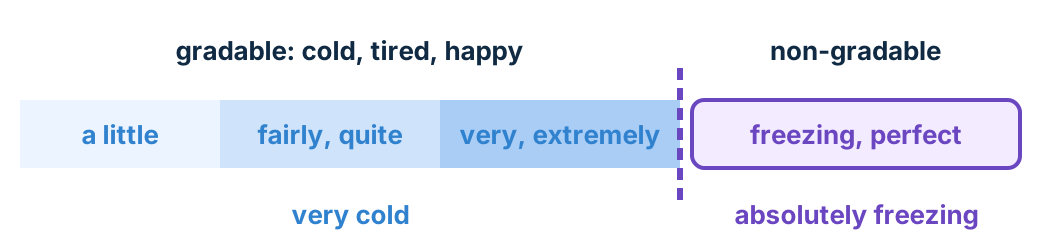
| जिस शब्द को बदला जा रहा है | प्रयोग | उदाहरण |
|---|---|---|
| gradable विशेषण | very, really, quite, extremely | very tired |
| चरम विशेषण | absolutely, completely, totally | absolutely perfect |
| comparative (तुलनात्मक रूप) | much, far, a little, even | much friendlier |
| superlative (सर्वोच्च रूप) | by far, easily (the से पहले) | by far the best |
| क्रिया | really, a lot, very much | really like, like it a lot |
- 1
modifier किस शब्द को बदल रहा है? विशेषण, तुलना, क्रिया या संज्ञा।
- 2
उस शब्द के साथ कौन सा modifier ठीक बैठता है? gradable विशेषणों के लिए very, चरम विशेषणों के लिए absolutely, comparative के लिए much, क्रियाओं के लिए really (भाग 1 से 3)।
- 3
क्या रूप और स्थान सही है? विशेषण नहीं, क्रियाविशेषण, और क्रिया तथा उसके object के बीच में नहीं। so या such, hard या hardly (भाग 4 और 5)।
Modifier किसी कथन को ज़्यादा तीव्र, कमज़ोर, सटीक या विनम्र बना सकते हैं। भाग 1 से 3 शब्द चुनने के बारे में हैं। भाग 4 और 5 रूप और क्रम के बारे में हैं।
very, absolutely या too?
क्या विशेषण gradable है, पहले से चरम है, या आपकी चाहत से ज़्यादा है?
नियम: gradable विशेषणों के साथ very (very cold) और चरम विशेषणों के साथ absolutely (absolutely freezing) का प्रयोग करें। too का अर्थ है आपकी चाहत से ज़्यादा। enough विशेषण के बाद आता है।
क्या यह कम या ज़्यादा हो सकता है, या पहले से चरम है?
| Gradable | चरम (non-gradable) |
|---|---|
| cold, hot, tired, happy, sad, angry, big, small, interesting, boring, nice, difficult, tall, funny | freezing, boiling, exhausted, thrilled, furious, enormous, fascinating, terrifying, perfect, impossible, starving, spotless, tiny |
Gradable: very
It is very cold today.
I am so tired.
He is fairly confident.
चरम: absolutely
That is an absolutely perfect answer.
I am completely exhausted.
That idea is utterly ridiculous.
really दोनों तरह के विशेषणों के साथ चलता है: really cold, really freezing। अमेरिकी अंग्रेज़ी में quite का अर्थ आमतौर पर very होता है। ब्रिटिश अंग्रेज़ी में इसका अर्थ अक्सर fairly होता है।
too, very और enough
| शब्द | अर्थ | उदाहरण |
|---|---|---|
| very | तीव्र, अक्सर प्रशंसा | The cake is very good. |
| too | आपकी चाहत से ज़्यादा, एक समस्या | The tea is too hot to drink. |
| adjective + enough | जितना आपको चाहिए | Is the room big enough for ten people? |
| enough + noun | जितनी संख्या या मात्रा आपको चाहिए | We have enough chairs. |
कई सीखने वाले too को very के अर्थ में इस्तेमाल करते हैं, क्योंकि कोरियाई 너무 या चीनी 太 जैसे शब्द दोनों काम कर सकते हैं। अंग्रेज़ी में too good या too delicious प्रशंसा नहीं, बल्कि समस्या जैसा लगता है।
इस भाग की आम गलतियाँ
- too को प्रशंसा के लिए इस्तेमाल करना
Your new haircut looks too nice!✓ Your new haircut looks really nice!too का अर्थ है आपकी चाहत से ज़्यादा, इसलिए यह शिकायत जैसा लगता है। - non-gradable विशेषण के साथ very
By midnight we were very starving.✓ By midnight we were absolutely starving.starving पहले से ही चरम है। - enough गलत जगह पर
Is the printer enough fast for the whole office?✓ Is the printer fast enough for the whole office?enough विशेषण के बाद आता है।
और जानें: नकारात्मक वाक्यों में gradable विशेषण
नकारात्मक वाक्यों में अंग्रेज़ी अक्सर modifier को नरम कर देती है: It’s not very warm outside. I’m not particularly hungry. That was not exactly thrilling.
Comparative और superlative
क्या यह दो चीज़ों की तुलना है, या एक चीज़ की बाकी सब से तुलना?
नियम: Comparative के साथ much, far, a lot, a little या even का प्रयोग करें, very या so का नहीं, और -er रूप में कभी more न जोड़ें। the + superlative से पहले by far या easily का प्रयोग करें। very, the के बाद आता है: the very best।
Comparative
| Modifier | अंतर | उदाहरण |
|---|---|---|
| much, a lot, far | बड़ा | The train is much faster than the bus. |
| a little, slightly, a bit | छोटा | My room is slightly bigger than yours. |
| even | अप्रत्याशित | The sequel is even better than the first film. |
-er या more में से एक का प्रयोग करें, दोनों का नहीं: much easier, more easier नहीं। better और worse पहले से comparative हैं, इसलिए इनके साथ more कभी नहीं आता।
Superlative
| Modifier | स्थान | उदाहरण |
|---|---|---|
| by far, easily | the से पहले | It is by far the oldest building in town. |
| very | the के बाद | This is the very best seat in the theater. |
| possibly | the से पहले, सावधानी जोड़ता है | This is possibly the cheapest flight this month. |
दो चीज़ों के लिए comparative और तीन या ज़्यादा के लिए superlative का प्रयोग करें: the taller of the two, the tallest in the class।
इस भाग की आम गलतियाँ
- comparative के साथ very या so
The second hotel was very nicer.✓ The second hotel was much nicer.very किसी comparative को नहीं बदलता। - दोहरा comparative या superlative
My grades are more better this year.✓ My grades are much better this year.better पहले से comparative है। - superlative के the से पहले very
It was very the longest meeting of my life.✓ It was by far the longest meeting of my life.very, the के बाद आता है, पहले नहीं।
और जानें: comparative के साथ very much
अकेला very किसी comparative को नहीं बदल सकता, पर very much बदल सकता है, खासकर ब्रिटिश अंग्रेज़ी में: She feels very much better today.
क्रियाएँ और स्वाभाविक जोड़ियाँ
क्या modifier किसी क्रिया के साथ है, या ऐसे शब्द के साथ जिसका कोई सामान्य साथी शब्द है?
नियम: very किसी क्रिया को नहीं बदलता: really like या like it very much कहें। कई modifier के सामान्य साथी शब्द होते हैं: highly recommended, strongly agree, deeply regret।
very क्रिया से पहले नहीं आता
| पैटर्न | उदाहरण |
|---|---|
| really + verb | I really like this song. |
| verb + object + a lot or very much | I like this song a lot. I like it very much. |
| much + prefer | I much prefer tea to coffee. |
| सामान्य साथी शब्द वाली क्रिया | totally agree, strongly disagree, deeply regret, greatly appreciate |
चीनी 很 को 喜欢 (like) जैसी क्रिया से पहले रखा जा सकता है, इसलिए सीखने वाले अक्सर very like लिखते हैं। अंग्रेज़ी में very ऐसा नहीं कर सकता।
स्वाभाविक जोड़ियाँ
| स्वाभाविक | इनसे बचें | अर्थ |
|---|---|---|
| highly recommended | ज़ोरदार सिफ़ारिश की गई | |
| highly skilled | बहुत सक्षम | |
| well known | बहुत लोगों द्वारा जाना जाता | |
| widely regarded | आमतौर पर माना जाता | |
| deeply grateful | दिल से आभारी | |
| strongly opposed | दृढ़ता से विरोधी | |
| bitterly cold | बेहद ठंडा |
लहजा और शैली
| Modifier | शैली | उदाहरण |
|---|---|---|
| so, really, pretty | अनौपचारिक | I’m so happy you came! |
| fairly, rather, somewhat | सामान्य या औपचारिक | The results were fairly encouraging. |
| extremely, incredibly | सामान्य पर तीव्र | She worked incredibly hard. |
| highly, deeply, greatly | औपचारिक या लिखित | I am deeply concerned. |
इस भाग की आम गलतियाँ
- क्रिया से पहले very
I very miss my family.✓ I really miss my family.very किसी क्रिया को नहीं बदलता। - अस्वाभाविक modifier जोड़ी
I highly agree with the new rules.✓ I strongly agree with the new rules.agree के साथ strongly या totally आता है। - too को प्रशंसा के लिए इस्तेमाल करना
I too much love this show.✓ I really love this show.too much, very कहने का तरीका नहीं है।
क्रियाविशेषण का रूप और स्थान
क्या यह किसी क्रिया का वर्णन करता है या विशेषण का, और object कहाँ है?
नियम: किसी क्रिया या विशेषण का वर्णन करने के लिए क्रियाविशेषण का प्रयोग करें (speak clearly, incredibly quiet)। इसे विशेषण से पहले रखें, और क्रिया तथा उसके object के बाद रखें, उनके बीच में नहीं।
विशेषण या क्रियाविशेषण?
| विशेषण | क्रियाविशेषण | उदाहरण |
|---|---|---|
| clear, careful, quick | clearly, carefully, quickly | She drives carefully. |
| good | well | He sings well. |
| fast, hard, late | fast, hard, late (no -ly) | They arrived late. |
hardly और lately अलग शब्द हैं: hardly का अर्थ है लगभग नहीं, और lately का अर्थ है हाल ही में। अनौपचारिक बोलचाल में कुछ लोग real good या drive safe कहते हैं, पर लिखते समय क्रियाविशेषण का प्रयोग करें।
स्थान
| यह बदलता है | स्थान | उदाहरण |
|---|---|---|
| विशेषण या क्रियाविशेषण | ठीक उससे पहले | She is extremely talented. He drove incredibly fast. |
| object वाली क्रिया | object के बाद | He plays the piano well. |
| क्रिया (really, completely, hardly) | आमतौर पर मुख्य क्रिया से पहले | I completely forgot her birthday. |
ऐसे कहें
She speaks English very well.
I completely forgot her birthday.
He drove incredibly fast.
ऐसे नहीं
She speaks very well English.I forgot completely her birthday.He drove incredible fast.
इस भाग की आम गलतियाँ
- जहाँ क्रियाविशेषण चाहिए वहाँ विशेषण
She finished the exercise very quick.✓ She finished the exercise very quickly.quickly, क्रिया finished का वर्णन करता है। - क्रिया और उसके object के बीच क्रियाविशेषण
My sister speaks fluently three languages.✓ My sister speaks three languages fluently.क्रियाविशेषण को object के बाद रखें। - जहाँ क्रियाविशेषण चाहिए वहाँ विशेषण
Our new printer works very good.✓ Our new printer works very well.well, good का क्रियाविशेषण है।
so, such और hardly
so या such? hard या hardly?
नियम: so + विशेषण, such (a) + विशेषण + संज्ञा, और so much या so many + संज्ञा। hard का अर्थ है मेहनत से। hardly का अर्थ है लगभग नहीं, इसलिए not न जोड़ें।
so और such
| संरचना | उदाहरण |
|---|---|
| so + adjective or adverb | The lake was so calm that we could see the bottom. |
| so much + uncountable noun, so many + plural noun | There was so much food that we took some home. |
| such a + adjective + singular noun | It was such a long flight. |
| such + adjective + plural or uncountable noun | They are such good friends. We had such bad luck. |
that वाले परिणाम के लिए too नहीं, so या such का प्रयोग करें: so tired that, too tired that नहीं। औपचारिक अंग्रेज़ी में so + विशेषण + a + संज्ञा भी संभव है: so good a teacher।
hard, hardly और अन्य नकारात्मक modifier
| शब्द | अर्थ | उदाहरण |
|---|---|---|
| hard | बहुत मेहनत से | She studies hard. |
| hardly | लगभग नहीं | She hardly studies. |
| barely, scarcely | लगभग नहीं, मुश्किल से | We barely caught the train. |
| hardly ever | लगभग कभी नहीं | I hardly ever drive. |
hardly, barely और scarcely पहले से नकारात्मक हैं, इसलिए not न जोड़ें। औपचारिक लेखन में hardly वाक्य की शुरुआत में inversion के साथ आ सकता है, जिसके बाद when आता है: Hardly had the meeting started when the power went out। No sooner के साथ इसकी जगह than आता है।
इस भाग की आम गलतियाँ
- so और such में भ्रम
We had so fun at the party.✓ We had so much fun at the party.fun एक संज्ञा है, इसलिए so much fun या such fun का प्रयोग करें। - hard और hardly में भ्रम
Everyone on the team worked hardly to finish on time.✓ Everyone on the team worked hard to finish on time.hard का अर्थ है मेहनत से। hardly का अर्थ है लगभग नहीं। - hardly, barely या scarcely के साथ नकारात्मक शब्द जोड़ना
I can't hardly wait for the holidays.✓ I can hardly wait for the holidays.hardly पहले से नकारात्मक है।
स्व-जाँच
क्या हर वाक्य सही है? उत्तर देखने के लिए टैप करें। अगर आप निश्चित नहीं थे, तो भाग का लेबल बताता है कि कहाँ देखना है।
भाग 1The water is too cold for swimming today.
सही। too एक समस्या दिखाता है: पानी आपकी चाहत से ज़्यादा ठंडा है।
भाग 1The final exam was very impossible.
गलत। The final exam was completely impossible. impossible एक non-gradable विशेषण है।
भाग 2This laptop is a lot lighter than my old one.
सही। a lot किसी comparative के साथ बड़ा अंतर दिखाता है।
भाग 2Anna is the most kindest person I know.
गलत। Anna is the kindest person I know. kindest पहले से superlative है।
भाग 3I very enjoyed your presentation.
गलत। I really enjoyed your presentation. very किसी क्रिया को नहीं बदलता।
भाग 3The chef is highly skilled.
सही। highly skilled एक स्वाभाविक जोड़ी है।
भाग 4He drives very carefully at night.
सही। carefully, drives का वर्णन करता है, और very, carefully से पहले आता है।
भाग 4She plays beautiful the violin.
गलत। She plays the violin beautifully. क्रियाविशेषण का प्रयोग करें, और उसे object के बाद रखें।
भाग 5It was such a boring lecture that I left early.
सही। such a किसी विशेषण और एकवचन संज्ञा से पहले आता है।
भाग 5She works hardly every day.
गलत। She works hard every day. hardly का अर्थ है लगभग नहीं।
AI अभ्यास प्रॉम्प्ट
इसे किसी AI चैट टूल में पेस्ट करें।