
can, must और should जैसे modal क्रियाएँ किसी दूसरी क्रिया में अर्थ जोड़ती हैं: क्षमता, अनुमति, बाध्यता, या यह कि बोलने वाला कितना निश्चित है। इस विषय के तीन भाग वर्तमान और भविष्यके बारे में हैं, एक भाग अतीतके बारे में है, और एक भाग modal क्रियाओं के रूप के बारे में है। इस गाइड के पाँच भाग हैं, जो निदान परीक्षा के पाँच भागों से ठीक मेल खाते हैं।
अंग्रेज़ी गाइड पढ़ें → यह पेज मशीन अनुवाद है और किसी मूल भाषी ने इसकी जाँच नहीं की है, इसलिए इसमें गलतियाँ हो सकती हैं। अंग्रेज़ी संस्करण ही आधार है।
आपके निदान परिणाम से पता चलता है कि किस भाग को दोहराना चाहिए। नीचे उस भाग पर टैप करें।
मुख्य विचार: modal आपको क्या बता रहा है?
modal बदलने पर एक ही वाक्य का अर्थ पूरी तरह बदल सकता है। ठीक-ठीक अर्थ केवल modal से नहीं, संदर्भ से पता चलता है।
| प्रयोग | Modal | उदाहरण |
|---|---|---|
| क्षमता | can, could, be able to | She can speak five languages. |
| अनुमति | can, could, may | May I come in? |
| बाध्यता | must, have to | You have to wear a uniform. |
| सलाह | should, ought to | You should see a doctor. |
| संभावना | might, may, could | It might rain later. |
| निश्चितता | must, can’t | That can’t be true. |
| अतीत | had to, was able to, should have, must have | You should have called me. |
- 1
यह किस बारे में है: क्षमता, बाध्यता या निश्चितता? हर एक के अपने modal का समूह है (भाग 1 से 3)।
- 2
क्या यह अतीत के बारे में है? जो हुआ उसके लिए had to या was able to का प्रयोग करें, और निर्णय व अनुमान के लिए modal + have + क्रिया का तीसरा रूप का प्रयोग करें (भाग 4)।
- 3
रूप जाँचें: क्रिया का मूल रूप, -s नहीं, to नहीं (ought to को छोड़कर), और do नहीं (भाग 5)।
एक ही modal अलग-अलग संदर्भों में अलग अर्थ दे सकता है, इसलिए अर्थ हमेशा संदर्भ से तय होता है।
क्षमता और अनुमति
क्या वह व्यक्ति यह कर सकता है, या उसे करने की अनुमति है? क्षमता और अनुमति में एक ही modal का प्रयोग होता है।
नियम: Can और could क्षमता दिखाते हैं, और दूसरे रूपों में can की जगह be able to आता है: will be able to, has been able to। Can, could और may अनुमति माँगने के लिए आते हैं। Could और would विनम्र अनुरोध करते हैं।
क्षमता और अनुमति में एक ही modal का प्रयोग होता है
| प्रयोग | उदाहरण |
|---|---|
| अभी की क्षमता | She can speak five languages. |
| अतीत की क्षमता | He could swim before he could walk. |
| भविष्य की क्षमता | You will be able to drive next year. |
| अनुमति | Can I use your phone? May I come in? |
अनुरोध और सुझाव
| प्रयोग | उदाहरण |
|---|---|
| अनुरोध | Could you open the window? Would you help me? |
| सुझाव | Shall we leave now? Let’s get some coffee. |
इस भाग की आम गलतियाँ
- can, could या be able to गलत तरीके से बनाया गया
I hope we will can meet again soon.✓ I hope we will be able to meet again soon.Can, will के बाद नहीं आ सकता। will be able to का प्रयोग करें। - गलत अर्थ वाला modal
Could you mind waiting a moment?✓ Would you mind waiting a moment?mind वाले विनम्र अनुरोध में would आता है। - can, could या be able to गलत तरीके से बनाया गया
He is can cook very well.✓ He can cook very well.Can के साथ be का प्रयोग कभी नहीं होता।
बाध्यता और आवश्यकता
क्या यह ज़रूरी है, मना है, या वैकल्पिक? modal यह दिखाता है।
नियम: Must और have to बाध्यता दिखाते हैं, और अतीत व भविष्य में केवल have to चलता है। Mustn’t मनाही दिखाता है, don’t have to का अर्थ है ज़रूरी नहीं। Should और ought to सलाह देते हैं, और had better चेतावनी देता है।
Must बनाम have to
| प्रयोग | उदाहरण |
|---|---|
| बाध्यता, अपनी राय | I must finish this today. |
| बाध्यता, बाहरी नियम | You have to wear a uniform at this school. |
| मनाही | You mustn’t smoke in here. |
| ज़रूरी नहीं | You don’t have to come if you’re busy. |
Should, ought to और had better
| प्रयोग | उदाहरण |
|---|---|
| सलाह | You should see a doctor. You ought to apologize. |
| कड़ी चेतावनी | You had better leave now, or you’ll miss the train. |
Have to असली modal नहीं है, इसलिए यह काल और पुरुष के अनुसार बदलता है: had to, will have to, has to।
इस भाग की आम गलतियाँ
- mustn’t और don’t have to में उलझन
You mustn't pay for the tickets. They're free.✓ You don't have to pay for the tickets. They're free.Mustn’t का अर्थ मनाही है, ज़रूरी न होना नहीं। - must और have to में उलझन
We must wait two hours at the airport yesterday.✓ We had to wait two hours at the airport yesterday.Must का कोई भूतकाल रूप नहीं है। - सलाह या बाध्यता की गलत तीव्रता
You would better check the time.✓ You had better check the time.यह हमेशा had better होता है।
और जानें: modal के रूप में needn’t
ब्रिटिश अंग्रेज़ी में needn’t बिना do के modal की तरह चल सकता है: You needn’t worry. ज़्यादातर दूसरी अंग्रेज़ी किस्मों में don’t need to अधिक आम है: You don’t need to worry.
संभावना और निश्चितता
बोलने वाला कितना निश्चित है? modal निश्चितता की मात्रा दिखाता है।
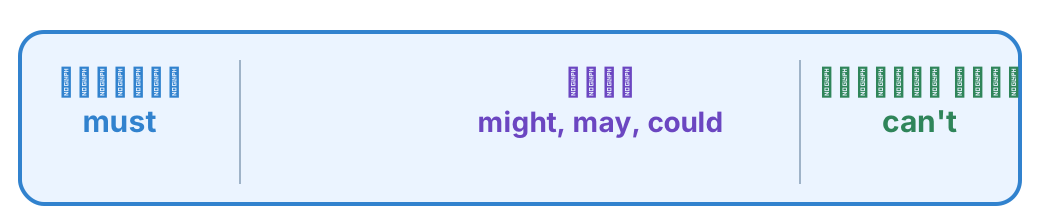
नियम: Must लगभग निश्चितता दिखाता है, might, may और could संभावना दिखाते हैं, और can’t यह लगभग निश्चितता दिखाता है कि कोई बात गलत है। Can उसके लिए है जो आम तौर पर संभव है।
बोलने वाला कितना निश्चित है?
| निश्चितता | Modal | उदाहरण |
|---|---|---|
| लगभग निश्चित, सही | must | She must be tired after that flight. |
| संभव | might, may, could | He might be at home. |
| लगभग निश्चित, सही नहीं | can’t | That can’t be true. |
संभावना की मात्राएँ
| Modal | बारीक अंतर |
|---|---|
| might | एक वास्तविक संभावना |
| may | might जैसा, थोड़ा अधिक औपचारिक |
| could | कई विकल्पों में से एक: We could go to the beach, or we could stay home. |
| can | जो आम तौर पर संभव है, किसी एक स्थिति का मौका नहीं: Winter here can be very cold. |
इस भाग की आम गलतियाँ
- किसी एक स्थिति की संभावना के लिए can का प्रयोग
Call Mia first. She can be busy right now.✓ Call Mia first. She might be busy right now.किसी एक स्थिति की संभावना के लिए might, may या could का प्रयोग करें। - बोलने वाले की निश्चितता के हिसाब से गलत modal
He might be rich. He owns three houses and a boat.✓ He must be rich. He owns three houses and a boat.मज़बूत प्रमाण हो तो must आता है। - बोलने वाले की निश्चितता के हिसाब से गलत modal
That must be Ken's car. Ken doesn't drive.✓ That can't be Ken's car. Ken doesn't drive.जब प्रमाण बात को असंभव बना दे, तो can’t का प्रयोग करें।
और जानें: नकारात्मक अनुमान के लिए must not
Must not आत्मविश्वास से भरा नकारात्मक अनुमान लगा सकता है, खासकर अमेरिकी अंग्रेज़ी में: He must not be home; his car is gone. Can’t अधिक सशक्त है और कहता है कि कोई बात असंभव है। Mustn’t, यानी संक्षिप्त रूप, इस अर्थ में कम चलता है।
अतीत के बारे में modal
क्या यह हुआ? क्या यह ज़रूरी था? क्या यह अच्छा विचार था? modal का भूतकाल रूप इन प्रश्नों का उत्तर देता है।
नियम: अतीत की बाध्यता के लिए had to और अतीत की एक सफलता के लिए was able to का प्रयोग करें। Should have, must have, could have, can’t have और needn’t have अतीत के बारे में निर्णय या अनुमान दिखाते हैं।
अतीत के बारे में निर्णय और अनुमान
| प्रयोग | उदाहरण |
|---|---|
| अच्छा विचार जो हुआ नहीं | You should have called me. |
| अतीत के बारे में पक्का अनुमान | She must have left already. |
| संभव था, पर हुआ नहीं | We could have won the game. |
Couldn’t have और needn’t have
| प्रयोग | उदाहरण |
|---|---|
| असंभव था | I couldn’t have finished without your help. |
| हुआ, लेकिन ज़रूरी नहीं था | You needn’t have brought a gift. |
Had to, didn’t need to और was able to
| प्रयोग | उदाहरण |
|---|---|
| अतीत की बाध्यता | I had to work late last night. |
| ज़रूरी नहीं था, इसलिए नहीं हुआ | I didn’t need to buy a ticket; it was free. |
| अतीत की सामान्य क्षमता | She could read at four. |
| अतीत की एक सफलता | After two hours, we were able to fix the car. |
Should of, should have को गलत सुनने से बनता है। इसे न लिखें।
इस भाग की आम गलतियाँ
- अतीत की एक सफलता के लिए could का प्रयोग
After a long search, I could find my passport.✓ After a long search, I was able to find my passport.अतीत की एक सफलता के लिए was able to या managed to आता है। - अतीत का modal गलत तरीके से बनाया गया
They should of asked for directions.✓ They should have asked for directions.Should of, should have की गलत वर्तनी है। - अर्थ के हिसाब से अतीत का गलत modal
I needn't have paid for parking; it was free, so I didn't.✓ I didn't need to pay for parking; it was free, so I didn't.Needn’t have का अर्थ है कि वह काम हुआ था। जब वह नहीं हुआ, तब didn’t need to ठीक बैठता है।
और जानें: may have और might have
May have और might have अतीत के बारे में कम निश्चित अनुमान लगाते हैं। बोलने वाले को नहीं पता कि वह हुआ या नहीं: She may have missed the bus. Could have भी ऐसा अनुमान हो सकता है, लेकिन अक्सर इसका अर्थ होता है कि कुछ संभव था और हुआ नहीं।
रूप, नकारात्मक वाक्य और प्रश्न
क्या वाक्य modal के तय रूप का पालन करता है? क्रिया का मूल रूप, to नहीं, -s नहीं, do नहीं।
नियम: ज़्यादातर modal बिना to वाली क्रिया के मूल रूप के साथ आते हैं, उन पर -s नहीं लगता, और do का प्रयोग नहीं होता। Have to और be able to पुरुष और काल के अनुसार बदलते हैं और do या does लेते हैं।
हर असली modal का एक ही रूप
| नियम | उदाहरण |
|---|---|
| modal के बाद to नहीं | She can swim, not can to swim. |
| modal पर -s नहीं | He can swim, not he cans swim. |
| नकारात्मक: modal + not, do नहीं | She cannot swim. He should not go. |
Ought to एकमात्र modal है जो to रखता है: You ought to rest.
प्रश्न, और अर्ध-modal
| प्रकार | उदाहरण |
|---|---|
| modal वाला प्रश्न | Can you help me? Should I call her? |
| have to वाला प्रश्न | Does he have to work on Sundays? |
| be able to वाला प्रश्न | Will she be able to come? |
इस भाग की आम गलतियाँ
- असली modal के साथ do या does का प्रयोग
Do you can help me tomorrow?✓ Can you help me tomorrow?असली modal बिना do के प्रश्न बनाते हैं। - modal के बाद -s जोड़ा गया
She should calls her mother.✓ She should call her mother.modal के बाद की क्रिया पर -s नहीं लगता। - have to या be able to को असली modal की तरह बनाया गया
Does he has to wear a helmet?✓ Does he have to wear a helmet?Does के बाद have मूल रूप में रहता है।
खुद जाँचें
क्या हर वाक्य सही है? उत्तर देखने के लिए टैप करें। भाग का लेबल बताता है कि पक्का न होने पर कहाँ देखना है।
Part 1I'd like to can play the piano.
गलत। I’d like to be able to play the piano. Can का to वाला कोई रूप नहीं होता।
Part 1May I leave a few minutes early today?
सही। May विनम्रता से अनुमति माँगता है।
Part 2You don't have to shout. I can hear you fine.
सही। Don’t have to का अर्थ है ज़रूरी नहीं।
Part 2You mustn't bring a gift, but it would be nice.
गलत। You don’t have to bring a gift. Mustn’t का अर्थ है मनाही।
Part 3It can snow tonight, so drive carefully.
गलत। It might snow tonight. Can वह दिखाता है जो आम तौर पर संभव है।
Part 3She can't be at home. I just saw her at the bank.
सही। Can’t दिखाता है कि बोलने वाले को यकीन है कि यह सच नहीं है।
Part 4We could win the final last year.
गलत। We were able to win the final. अतीत की एक सफलता के लिए was able to आता है।
Part 4You should have seen his face!
सही। Should have के बाद क्रिया का तीसरा रूप आता है।
Part 5He must to wear glasses for driving.
गलत। He must wear glasses. must के बाद to नहीं आता।
Part 5Does she have to work tomorrow?
सही। Have to के प्रश्नों में does आता है।
AI अभ्यास प्रॉम्प्ट
इस प्रॉम्प्ट को किसी AI चैट टूल में पेस्ट करें।