
एक ही मूल वाले विशेषण, जैसे bored और boring, अक्सर गड़बड़ा जाते हैं। -ed रूप उस व्यक्ति का वर्णन करता है जो भावना महसूस करता है, और -ing रूप उसका वर्णन करता है जो उस भावना को पैदा करता है । इस विषय के दो भाग अर्थके बारे में हैं, दो भाग रूपके बारे में हैं, और एक भाग में दोनोंकी ज़रूरत होती है। इस गाइड में पाँच भाग हैं, जो डायग्नोस्टिक के पाँच भागों से ठीक मेल खाते हैं।
अंग्रेज़ी गाइड पढ़ें → यह पेज मशीन अनुवाद है और किसी मूल भाषी ने इसकी जाँच नहीं की है, इसलिए इसमें गलतियाँ हो सकती हैं। अंग्रेज़ी संस्करण ही आधार है।
आपका डायग्नोस्टिक परिणाम बताता है कि किस भाग को दोहराना है। नीचे उस भाग पर टैप करें।
मूल विचार: कौन महसूस करता है, और क्या पैदा करता है?
दोनों रूप एक ही क्रिया से बनते हैं, इसलिए फ़र्क़ आसानी से छूट जाता है। विशेषण जिस संज्ञा का वर्णन करता है, वही तय करती है।
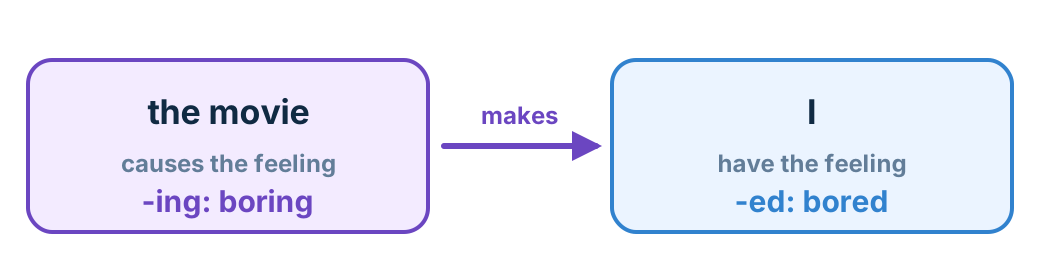
| -ed: व्यक्ति महसूस करता है | -ing: वह भावना पैदा करता है |
|---|---|
| bored | boring |
| tired | tiring |
| confused | confusing |
| excited | exciting |
| interested | interesting |
| stressed | stressful |
| scared | scary |
- 1
वह संज्ञा खोजें जिसका विशेषण वर्णन करता है। यह कर्ता हो सकता है, ठीक उसके बाद की संज्ञा हो सकती है, या make या find का कर्म हो सकता है।
- 2
क्या वह संज्ञा महसूस करती है? इस्तेमाल करें -ed: the tired travelers, the news made me worried.
- 3
क्या वह भावना पैदा करती है? इस्तेमाल करें -ing: a tiring journey, I found the film boring. एक व्यक्ति दोनों हो सकता है (भाग 1)।
भाग 1 और 2 अर्थ के बारे में हैं। भाग 3 में अर्थ और रूप दोनों की ज़रूरत है। भाग 4 और 5 रूप के बारे में हैं: अनियमित जोड़ियाँ, अंत, वर्तनी और preposition।
be, feel और seem के बाद
क्या कर्ता महसूस करता है, या भावना पैदा करता है? एक व्यक्ति दोनों हो सकता है।
नियम: जो महसूस करता है उसके लिए -ed आता है। जो भावना पैदा करता है उसके लिए -ing आता है।
be, feel, look, seem और get के बाद
| कर्ता | महसूस करता है: -ed | पैदा करता है: -ing |
|---|---|---|
| एक व्यक्ति | I am bored। | My uncle is boring। |
| कोई चीज़ या घटना | (महसूस नहीं कर सकती) | The film is boring। |
| एक स्थिति | (महसूस नहीं कर सकती) | The wait was tiring। |
लोग दोनों हो सकते हैं
| वाक्य | अर्थ |
|---|---|
| He is bored। | उसे कोई दिलचस्पी महसूस नहीं होती। |
| He is boring। | वह दूसरे लोगों को ऊबा देता है। |
| She is tired। | उसे आराम की ज़रूरत है। |
| She is tiring। | वह दूसरे लोगों को थका देती है। |
भावना के लिए महसूस करने वाला चाहिए
लोग और जानवर महसूस कर सकते हैं। फ़िल्म, किताब, नौकरी या खेल महसूस नहीं कर सकते, इसलिए भावना के लिए उनके साथ -ed कभी नहीं आता।
इस भाग की आम गलतियाँ
- महसूस करने वाले व्यक्ति के लिए -ing का इस्तेमाल
I felt really boring at the party.✓ I felt really bored at the party.महसूस करने वाले आप हैं। - भावना पैदा करने वाली चीज़ के लिए -ed का इस्तेमाल
The second half of the lesson was tired.✓ The second half of the lesson was tiring.एक पाठ थका हुआ महसूस नहीं कर सकता। - व्यक्ति का उलटा वर्णन
My roommate never stops talking about himself. He is so bored.✓ My roommate never stops talking about himself. He is so boring.वह दूसरे लोगों को वह भावना महसूस कराता है।
और देखें: लोगों के लिए एक त्वरित जाँच
पूछें कि व्यक्ति खुद महसूस करता है या दूसरों को महसूस कराता है। The audience was amused (वे महसूस करते हैं)। The comedian was amusing (वह पैदा करता है)।
संज्ञा से पहले
क्या संज्ञा महसूस करती है, या भावना पैदा करती है? चेहरे के भाव और आवाज़ एक भावना दिखाते हैं।
नियम: संज्ञा से पहले पूछें कि संज्ञा महसूस करती है (-ed) या भावना पैदा करती है (-ing)। नज़र, आवाज़ या चेहरा भावना दिखाता है, इसलिए आम तौर पर -ed आता है।
संज्ञा से पहले भी वही प्रश्न
| महसूस करता है: -ed | पैदा करता है: -ing |
|---|---|
| tired travelers | a tiring journey |
| excited fans | an exciting match |
| confused students | a confusing map |
| disappointed customers | a disappointing meal |
नज़र, आवाज़ और चेहरे
| वाक्यांश | अर्थ |
|---|---|
| a worried look | व्यक्ति चिंतित है |
| a bored expression | व्यक्ति ऊबा हुआ है |
| surprised faces | लोग हैरान हैं |
नज़र या आवाज़ खुद कुछ महसूस नहीं करती, लेकिन वह दिखाती है कि व्यक्ति कैसा महसूस करता है, इसलिए अंग्रेज़ी में आम तौर पर -ed आता है। a worrying look वह नज़र होगी जो आपको चिंतित कर दे।
इस भाग की आम गलतियाँ
- भावना पैदा करने वाली चीज़ के लिए -ed का इस्तेमाल
It was a really interested trip.✓ It was a really interesting trip.एक यात्रा भावना पैदा करती है। - महसूस करने वाले व्यक्ति के लिए -ing का इस्तेमाल
The exciting crowd cheered when the band came on.✓ The excited crowd cheered when the band came on.भीड़ महसूस करती है। - महसूस करने वाले व्यक्ति के लिए -ing का इस्तेमाल
He answered with a boring sigh.✓ He answered with a bored sigh.आह दिखाती है कि वह कैसा महसूस करता है।
Make, find और it
make का कर्म कौन है? क्या find किया गया है? it किसकी जगह है?
नियम: make someone के बाद उस व्यक्ति की भावना के लिए -ed लगाएँ। find something के बाद, और it is या what I find के बाद, कारण के लिए -ing लगाएँ।
कर्म को देखें, या उसे जिसकी जगह वह है
| पैटर्न | उदाहरण | कौन या क्या? |
|---|---|---|
| make or leave + person + -ed | The delay made us annoyed। | हम महसूस करते हैं |
| get or become + -ed | I get bored easily. | मैं महसूस करता हूँ |
| find + thing + -ing | I found the book boring। | किताब पैदा करती है |
| it is + -ing + to or that | It is tiring to commute every day. | स्थिति पैदा करती है |
| what I find + -ing | What I find most annoying is the noise. | शोर पैदा करता है |
एक आम गलती
It makes me boring. इसका मतलब यह हो जाता है कि वह आपको एक उबाऊ व्यक्ति बना देता है। अपनी भावना बताने के लिए -ed लगाएँ: It makes me bored।
इस भाग की आम गलतियाँ
- make someone के बाद -ing
Long meetings make me boring.✓ Long meetings make me bored.Make me आपकी अपनी भावना बताता है। - भावना पैदा करने वाली चीज़ के लिए -ed का इस्तेमाल
I found the lecture very interested.✓ I found the lecture very interesting.find के बाद, व्याख्यान भावना पैदा करता है। - भावना पैदा करने वाली चीज़ के लिए -ed का इस्तेमाल
It is surprised that the shop is still open.✓ It is surprising that the shop is still open.it स्थिति की जगह है।
अनियमित जोड़ियाँ और अंत
क्या जोड़ीदार शब्द, अंत और वर्तनी सही हैं?
नियम: Stressed की जोड़ी stressful से बनती है, और scared की scary से। पूरा -ed अंत लिखें, वर्तनी जाँचें, और क्रियाविशेषण के लिए -ly लगाएँ।
कुछ जोड़ियाँ पैटर्न का पालन नहीं करतीं
| भावना (व्यक्ति) | कारण (चीज़) |
|---|---|
| stressed | stressful (not stressing) |
| scared | scary या frightening (not scaring) |
| worried | worrying |
| relaxed | relaxing |
I am scary का मतलब है कि आप दूसरों को डराते हैं। I feel stressful सही नहीं है: stressed का इस्तेमाल करें।
पूरा अंत लिखें
| नियम | उदाहरण |
|---|---|
| -ed न छोड़ें | I am interested in art (not interest) |
| मौन e हटा दें | excite → excited, exciting |
| व्यंजन + y, -ed से पहले i बन जाता है | worry → worried (but worrying) |
| दोहरे अक्षर बने रहते हैं | embarrass → embarrassed |
| क्रियाविशेषण के लिए -ly जोड़ें | interesting → interestingly |
इस भाग की आम गलतियाँ
- महसूस करने वाले व्यक्ति के लिए stressful या scary का इस्तेमाल
I feel so stressful this week.✓ I feel so stressed this week.जो व्यक्ति तनाव महसूस करता है वह stressed है। - विशेषण की जगह मूल क्रिया
I am interest in learning Spanish.✓ I am interested in learning Spanish.-ed अंत लिखें। - -ed या -ing की वर्तनी की गलती
We were all very embarassed.✓ We were all very embarrassed.Embarrassed में दो r और दो s हैं।
-ed विशेषणों के बाद preposition
विशेषण के बाद कौन सा preposition आता है? जोड़ी के रूप में सीखें।
नियम: हर -ed विशेषण को उसके preposition के साथ सीखें।
हर विशेषण को उसके preposition के साथ सीखें
| विशेषण | Preposition | उदाहरण |
|---|---|---|
| interested | in | interested in history |
| excited, worried, concerned | about | worried about the exam |
| surprised, shocked, amazed | by | shocked by the news |
| bored, satisfied, disappointed | with | bored with this game |
| tired, scared | of | tired of waiting |
कुछ विशेषणों के साथ दो preposition चल सकते हैं, जैसे surprised at या by, bored with या of, और disappointed with या in। अमेरिकी अंग्रेज़ी में excited for भी आम है। एक चुनें और उसे लगातार इस्तेमाल करें।
इस भाग की आम गलतियाँ
- -ed विशेषण के बाद गलत preposition
I am interested about Japanese films.✓ I am interested in Japanese films.Interested के साथ in आता है। - -ed विशेषण के बाद गलत preposition
She is worried of the weather tomorrow.✓ She is worried about the weather tomorrow.Worried के साथ about आता है। - -ed विशेषण के बाद गलत preposition
We were disappointed of the hotel.✓ We were disappointed with the hotel.Disappointed के साथ with आता है।
और देखें: -ing विशेषण और preposition
-ing विशेषणों के साथ आम तौर पर कोई तय preposition नहीं आता, लेकिन यह बताने के लिए कि कौन महसूस करता है, आप for या to जोड़ सकते हैं: The film was boring for the children.
स्वयं जाँच
क्या हर वाक्य सही है? उत्तर देखने के लिए टैप करें। भाग का लेबल बताता है कि अगर आपको पक्का नहीं था तो कहाँ देखना है।
भाग 1The students seemed confused by the question.
सही। छात्र महसूस करते हैं।
भाग 1My job is very tired these days.
गलत। My job is very tiring these days. नौकरी भावना पैदा करती है।
भाग 2We stayed in a relaxing little hotel by the lake.
सही। होटल भावना पैदा करता है।
भाग 2The boring children started to throw paper at each other.
गलत। The bored children started to throw paper at each other. बच्चे महसूस करते हैं।
भाग 3The loud music made the neighbors annoyed.
सही। made the neighbors के बाद उनकी भावना बताएँ।
भाग 3I find grammar rules confused.
गलत। I find grammar rules confusing. find के बाद, नियम भावना पैदा करते हैं।
भाग 4I get scary when I walk home alone at night.
गलत। I get scared when I walk home alone at night. जो व्यक्ति डर महसूस करता है वह scared है।
भाग 4Starting at a new school can be stressful.
सही। जो तनाव पैदा करता है वह stressful है।
भाग 5Are you interested on this topic?
गलत। Are you interested in this topic? Interested के साथ in आता है।
भाग 5They were shocked by the size of the bill.
सही। Shocked के साथ आम तौर पर by आता है।
AI अभ्यास प्रॉम्प्ट
इसे किसी AI चैट टूल में चिपकाएँ।