
Level: B2
Reading | Vocabulary | Activities | Speed Challenge | Shadow Reading and Typing | Questions | AI Prompts | Discussion | Language Focus | Resources
Printable: Student handout (PDF) | Teacher’s key (PDF)
Reading
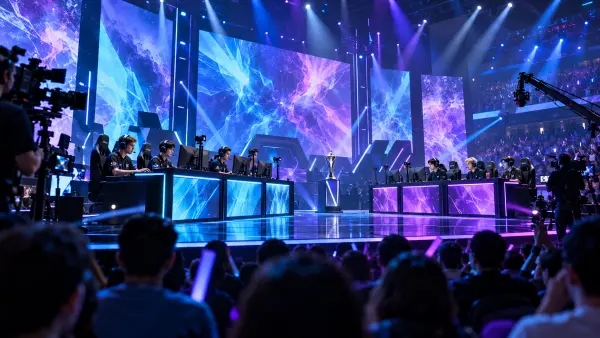
In August 2026, the Esports World Cup (EWC) ended in Paris, its first edition outside Saudi Arabia. It offered a $75 million prize pool, which the organizers called a record, and China-based AG.AL won $7 million as Club Champion. The organizers reported 850 million viewers and 440 million hours watched. Esports Charts, an independent analytics company, counted about 237 million hours using its own method, which shows how much audience metrics depend on what is measured. Yet for most of its history, competitive gaming has struggled to earn more than it spends. Why is it so hard for esports to pay for itself?
Part of the answer is ownership. No company owns football, but every esport is built on a game that belongs to its publisher. A publisher such as Riot Games, which makes League of Legends and VALORANT, decides who may run tournaments, how teams qualify, and how revenue from the competition is shared. This allows publishers to dominate the business. Organizers, teams, and streaming platforms rely on rules they cannot control, and a publisher can change them, or close a league, when its plans change.
Teams have tried several ways to build a steady income. The most important has been sponsorship: brands pay to appear on team shirts, streams, and social media. Many leagues also sold franchises, permanent places for teams. The founding teams of Blizzard’s Overwatch League paid $20 million each to join in 2017. As viewing numbers fell, Activision Blizzard offered each team a $6 million termination fee to leave, and the league ended in 2023. Team valuations fell too. FaZe Clan was valued at $725 million when it joined the stock market in 2022, but in 2023 GameSquare agreed to buy the whole company in a share deal that Bloomberg valued at about $17 million.
Korea, which has had professional gaming leagues since the early 2000s, shows that a strong audience does not guarantee profit. According to filings reported by the Korean financial outlet DealSite, LCK Corporation, which ran Korea’s top League of Legends league, lost 8.1 billion won in 2022 and 28.5 billion won in 2024, while its revenue fell from 27.9 to 11.4 billion won. In October 2025, Riot Games Korea absorbed the league company. From 2026, Riot also removed regional prize money in the LCK and other major leagues, saying it would spend the money elsewhere. The chief executive of the Korean team Gen.G called the change unfortunate.
Publishers now also earn from players, not only from advertisers. Riot sells in-game items linked to teams and events, and part of that income goes to partner teams. Since 2025, it has also allowed approved betting companies to sponsor top teams in the Americas and in Europe, the Middle East, and Africa, though not on Riot’s own broadcasts. In a July 2026 interview with GamesIndustry.biz, John Needham, Riot’s head of publishing and esports, said the company was “super close” to making League of Legends esports break even “within Riot”. That wording describes a division inside a company that profits from the game itself, not an independent business.
The largest new source of money is Saudi Arabia. The Esports Foundation, funded by the country’s Public Investment Fund (PIF), runs the EWC and pays selected teams through its Club Partner Program. Saudi-owned companies also hold large stakes across the industry. In 2022, the PIF-owned Savvy Games Group bought and merged the tournament organizers ESL and FACEIT, and in August 2026 a group including the PIF completed its purchase of the game publisher Electronic Arts. Deals like these consolidate ownership in fewer hands. Saudi subsidies help explain why prizes are so high while many teams struggle, but they also create dependence. The EWC moved to Paris for 2026 after the Esports Foundation cited the regional situation in the Middle East, and critics describe the spending as sportswashing, an attempt to improve a country’s image through sport. The event is scheduled to return to Riyadh in 2027.
What would a sustainable esports business look like? One direction is mobile games: Mobile Legends: Bang Bang, whose biggest leagues are in Indonesia and the Philippines, was again the most-watched EWC tournament in 2026, according to Esports Charts. Some teams now diversify into video content, clothing, and creator streams, so that one bad season does not ruin them. The key test for the next few years is whether publishers can monetize fans directly, share enough of that money with teams, and keep leagues running if Saudi funding slows.
Vocabulary
Each word has a frequency score, a rank, and a tag. The score shows how common the word is in modern English: higher means more common, and each full point means roughly ten times more common. The rank is the word’s position on a list of about 321,000 English word forms, from most to least common. The tag shows where you are most likely to meet the word: Current, Formal, Literary, or Dated. The paragraph number shows where the word first appears in the reading. The labels are information, not instructions. Deciding which words are worth your time is up to you. How to read the scores, ranks, and tags.
metrics (noun, plural): measures or numbers used to track how well something is performing.
Frequency: 3.51 | Rank: 14,731 | Formal | Paragraph 1
Translations: 指标 | 指標 | 지표 | मीट्रिक | مقاييس | показатели | métricas | indicateurs
- Esports Charts, an independent analytics company, counted about 237 million hours using its own method, which shows how much audience metrics depend on what is measured.
- Teams track viewer metrics such as average and peak audience.
revenue (noun): money that an organization earns from its business, before costs are taken away.
Frequency: 4.64 | Rank: 2,290 | Current | Paragraph 2
Translations: 收入 | 収益 | 수익 | राजस्व | إيرادات | выручка | ingresos | revenus
- A publisher such as Riot Games, which makes League of Legends and VALORANT, decides who may run tournaments, how teams qualify, and how revenue from the competition is shared.
- The club’s revenue rose by ten percent last year.
dominate (verb): to have the most power, influence, or importance in a situation.
Frequency: 3.87 | Rank: 8,669 | Formal | Paragraph 2
Translations: 主导 | 支配する | 지배하다 | हावी होना | يهيمن | доминировать | dominar | dominer
- This allows publishers to dominate the business.
- One company dominates the market for phones in that country.
sponsorship (noun): money or support that a company gives to a team, event, or person in return for advertising.
Frequency: 3.72 | Rank: 10,843 | Formal | Paragraph 3
Translations: 赞助 | スポンサーシップ | 후원 | प्रायोजन | رعاية | спонсорство | patrocinio | parrainage
- The most important has been sponsorship: brands pay to appear on team shirts, streams, and social media.
- The team signed a sponsorship deal with a hardware brand.
franchises (noun, plural): licenses that give a team a permanent place in a league, or give a business the right to use a brand.
Frequency: 3.56 | Rank: 13,695 | Formal | Paragraph 3
Translations: 特许经营 | フランチャイズ | 프랜차이즈 | फ्रैंचाइज़ी | امتيازات | франшизы | franquicias | franchises
- Many leagues also sold franchises, permanent places for teams.
- The coffee company sells franchises in twenty countries.
valuations (noun, plural): estimates of how much a company or asset is worth.
Frequency: 3.13 | Rank: 24,463 | Formal | Paragraph 3
Translations: 估值 | 評価額 | 기업 가치 | मूल्यांकन | تقييمات | оценки | valoraciones | valorisations
- Team valuations fell too.
- Investors lowered their valuations after the loss.
absorbed (verb, past): took a smaller company or group into a larger one, so that it no longer exists separately.
Frequency: 3.92 | Rank: 8,036 | Current | Paragraph 4
Translations: 吸收 | 吸収する | 흡수하다 | विलय करना | يضمّ | поглощать | absorber | absorber
- In October 2025, Riot Games Korea absorbed the league company.
- The large bank absorbed two smaller banks last year.
break even (verb phrase): to earn exactly as much money as you spend, with no profit and no loss.
Frequency: no score (phrase) | Current | Paragraph 5
Translations: 收支平衡 | 採算が取れる | 손익분기점에 이르다 | लागत निकालना | يبلغ نقطة التعادل | выйти на безубыточность | alcanzar el punto de equilibrio | atteindre le seuil de rentabilité
- In a July 2026 interview with GamesIndustry.biz, John Needham, Riot’s head of publishing and esports, said the company was “super close” to making League of Legends esports break even “within Riot”.
- The new café expects to break even in its second year.
stakes (noun, plural): shares of ownership in a business, or an interest in the result of something.
Frequency: 4.02 | Rank: 6,884 | Current | Paragraph 6
Translations: 股份 | 持ち分 | 지분 | हिस्सेदारी | حصص | доли | participaciones | participations
- Saudi-owned companies also hold large stakes across the industry.
- The fund bought stakes in three game companies.
consolidate (verb): to combine several smaller things into a single, stronger one.
Frequency: 3.47 | Rank: 15,613 | Formal | Paragraph 6
Translations: 整合 | 統合する | 통합하다 | समेकित करना | يدمج | консолидироваться | consolidar | consolider
- Deals like these consolidate ownership in fewer hands.
- The two small banks will consolidate into one.
subsidies (noun, plural): public money, usually from a government, that lowers the cost of an activity or supports it.
Frequency: 3.74 | Rank: 10,519 | Formal | Paragraph 6
Translations: 补贴 | 補助金 | 보조금 | सब्सिडी | إعانات | субсидии | subvenciones | subventions
- Saudi subsidies help explain why prizes are so high while many teams struggle.
- Government subsidies help keep ticket prices low.
dependence (noun): the state of needing something or someone else in order to survive or succeed.
Frequency: 3.66 | Rank: 11,870 | Formal | Paragraph 6
Translations: 依赖 | 依存 | 의존 | निर्भरता | اعتماد | зависимость | dependencia | dépendance
- Saudi subsidies help explain why prizes are so high while many teams struggle, but they also create dependence.
- A small team’s dependence on one sponsor is risky.
sustainable (adjective): able to continue over time without running out of money or resources.
Frequency: 4.19 | Rank: 5,206 | Current | Paragraph 7
Translations: 可持续的 | 持続可能な | 지속 가능한 | टिकाऊ | مستدام | устойчивый | sostenible | durable
- What would a sustainable esports business look like?
- A business is sustainable if it can continue without outside money.
diversify (verb): to add different types of products, markets, or income so that a business is less risky.
Frequency: 3.16 | Rank: 23,536 | Formal | Paragraph 7
Translations: 多元化 | 多様化する | 다각화하다 | विविधता लाना | يتنوّع | диверсифицироваться | diversificarse | se diversifier
- Some teams now diversify into video content, clothing, and creator streams, so that one bad season does not ruin them.
- To reduce risk, the club plans to diversify its income.
monetize (verb): to earn money from something that did not earn money before.
Frequency: 2.81 | Rank: 36,565 | Formal | Paragraph 7
Translations: 变现 | 収益化する | 수익화하다 | कमाई करना | يحقّق أرباحًا من | монетизировать | monetizar | monétiser
- The key test for the next few years is whether publishers can monetize fans directly, share enough of that money with teams, and keep leagues running if Saudi funding slows.
- Streamers monetize their audience through subscriptions and ads.
Activity Page
Open the activity page in a new tab
Speed Challenge
Answer 12 questions against the clock. Every wrong answer adds 5 seconds, and the lowest score wins. Open the speed challenge in a new tab.
Shadow Reading and Typing: Where the Money Goes
This short text uses many of the words from this lesson. Use it for shadow reading (reading aloud along with a model) and for typing practice.
I have watched League of Legends matches with my friends since high school, and for years I never thought about money. I just bought team shirts and cheered. Then I read that the company running Korea’s top league had lost billions of won, and that Riot Games had absorbed it. That made me curious about how esports really works.
The first thing I learned is that publishers dominate the business, because they own the games. Teams depend heavily on sponsorship, and some once paid huge amounts for franchises in leagues. When audiences shrank, team valuations fell as well. Even the viewing numbers are not simple, since different companies use different metrics.
Now publishers try to monetize fans directly, for example by selling in-game items, and part of that revenue goes to teams. Riot says it is close to making its League of Legends esports break even, but only as a division inside the company. Meanwhile, Saudi money has bought large stakes across the industry. Some people worry that a few owners will consolidate too much control.
I do not know what a sustainable future looks like. Saudi subsidies keep prize money high, but they also create dependence on one source. My favorite team now tries to diversify with videos and clothing, so one bad season will not ruin it. I still buy their shirts, but now I understand that every purchase matters.
How to practice
- Read the text silently once and check any words you are unsure of.
- Read it aloud slowly, one sentence at a time. On the typing page, the Listen button reads each line with your device’s voice, so you can listen first and then repeat.
- Shadow: read aloud again at a natural speed, trying to keep a steady rhythm without stopping.
- Record yourself, listen back, and note one sentence to practice again.
- Type it on the typing page below and check your speed and accuracy.
Open the typing practice in a new tab
Comprehension Questions
- What did AG.AL win at the 2026 EWC, and how large was the total prize pool?
- Why do the organizers’ figure and the Esports Charts figure for hours watched differ? What does this show?
- According to the reading, why are publishers able to dominate the esports business?
- What happened to the Overwatch League, and what does it suggest about franchise leagues?
- How did FaZe Clan’s value change between 2022 and 2023?
- What does the Korean example add to the writer’s argument?
- How has Riot tried to earn more from esports, and why does the phrase “within Riot” matter?
- In what ways has Saudi money shaped esports, and what risks does it bring?
- Which path toward a sustainable esports business in the last paragraph seems best supported by the evidence in the reading? Explain.
IELTS-Style Questions
- True, False, or Not Given: “The 2026 EWC sold more tickets than any earlier edition.” Explain your answer using the reading.
- Yes, No, or Not Given: “The writer believes Needham’s statement shows that League of Legends esports is a profitable independent business.” Explain your answer using the reading.
- Author’s purpose: Why does the writer end with “the key test for the next few years” rather than a firm prediction?
AI Discussion Prompt
I just read a B2 English lesson called The Business of Esports: Big Prizes, Small Profits. It asked why esports finds it hard to pay for itself. It covered the gap between organizer and independent audience figures, publishers’ control over each game, sponsorship and franchise leagues, the end of the Overwatch League, the fall in FaZe Clan’s value, losses at Korea’s top League of Legends league, Riot’s claim that League esports is close to breaking even within the company, and Saudi funding through the Esports World Cup. I am an English learner at about B2 level. Please have a balanced conversation with me about the business of esports, presenting more than one perspective and asking one question at a time. Encourage me to use words like revenue, sponsorship, subsidies, dependence, and sustainable. Respond to my ideas first, then briefly point out one or two language errors.
AI Vocabulary Prompt
I want to practice vocabulary from a lesson about the business of esports. Please quiz me on the following words one at a time, using a mix of question types: multiple choice, true/false, and sentence completion. Give me feedback after each answer before moving on, and bring back the words I miss later. Here are the words: metrics, revenue, dominate, sponsorship, franchises, valuations, absorbed, break even, stakes, consolidate, subsidies, dependence, sustainable, diversify, monetize.
Discussion Questions
- Do you follow any esports team or player? What first got you interested, or why not?
- Would you pay for an in-game item that supports your favorite team? Why or why not?
- Organizers and independent firms often report very different audience numbers. Which kind of source would you trust more, and why?
- No company owns football, but one company owns each esport. Is this a problem for players and fans?
- Closed franchise leagues protect team owners, while open leagues give new teams a chance. Which model seems fairer to you?
- What does the FaZe Clan story suggest about investing in brands that are popular with young people?
- Should esports teams be allowed to take money from betting companies? What limits, if any, should apply?
- Korea has had professional gaming leagues for decades, yet its top league lost money. What might explain this?
- Is it fair for a publisher to remove prize money and spend it in other ways? Who should decide?
- What are the benefits and risks when one country’s government funds a large part of a global industry?
- Critics call Saudi spending on esports sportswashing. What evidence would you need to judge this claim?
- Many major sports events move between host cities. Should the Esports World Cup do the same? Why or why not?
- Can an entertainment industry stay healthy if many of its businesses lose money? Explain your view.
- Is esports best understood as a sport, as entertainment, or as advertising for games? How should the answer affect the way it is funded?
Language Focus: Noun Compounds in Business English
What it is: Business English often builds noun groups from two or more nouns: the last noun is the main idea, and the earlier nouns describe it (prize pool, termination fee). Some are written as two words, some with a hyphen, and some as one word. Plurals are usually on the final noun only.
Why writers use it: Noun compounds pack information into few words, so they are common in reports and headlines. Recognizing the main noun at the end helps you understand them quickly, and using them makes your writing more concise.
Examples from the reading:
- “It offered a $75 million prize pool, which the organizers called a record…”
- “…Activision Blizzard offered each team a $6 million termination fee to leave…”
- “…it has also allowed approved betting companies to sponsor top teams…”
- “…pays selected teams through its Club Partner Program.”
Practice task: Combine into one noun compound: “A fund that supports the development of national teams.” Begin with a national team…
(Example answer: “A national team development fund.”)
Recommended Resources
- 2026 Esports World Cup in Numbers (Esports World Cup). The organizers’ own summary of viewers, hours watched, tickets, and players at the Paris event.
- The Esports World Cup 2026’s Most Watched Tournaments (Insider Gaming). Independent viewing data from Esports Charts for each tournament, with notes on why some numbers grew.
- The LCK Records a 42.7 Billion KRW Deficit Between 2022 and 2024 (Sheep Esports). A short report on the losses of Korea’s top League of Legends league and the reasons given for them.
- Riot Has Almost Made League of Legends Esports Sustainable (Esports.net). An informal account of how Riot changed its broadcasts and its income model to move toward breaking even.
- FaZe Clan to Be Acquired by GameSquare (Digiday). A 2023 news story on the sale of FaZe Clan and the problems that led to it.