
Level: B2
Before You Read | Reading | Vocabulary | Word Partners | Activities | Speed Challenge | Quick Reading | Questions | AI Prompts | Discussion | Language Focus | Resources
Printable: Student handout (PDF | Word) | Teacher’s key (PDF | Word)
Before You Read
Think about these questions or discuss them with a partner.
- When you were a child, how did the adults around you explain death?
- What do you already know about what different religions say happens after death?
- How might ideas about death and what comes after it differ by country, age, or family background?
Reading
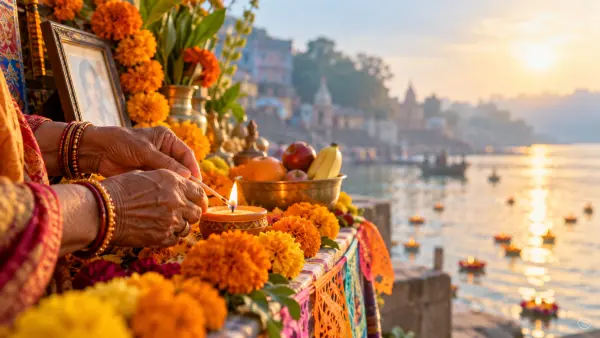
Sooner or later, every culture has to grapple with the same question, usually at a hard moment, when a grandparent dies and a child asks where they have gone. The answers look different. In Varanasi, on the Ganges in India, some elderly Hindus move into simple guesthouses to spend their final days beside the river. In Mexico, families build home altars with candles, marigolds, and a loved one’s favorite food each November. At a humanist funeral in Oslo or London, there may be no prayers at all, only music and stories. Behind each scene is a different answer to an old question: what happens when we die?
For Christians and Muslims, who together make up more than half the world’s population, the traditional answer is one life followed by judgment. Christians traditionally believe that the dead will one day be raised and judged by God, with heaven or hell as their final destination. Islam describes a similar path: the soul waits in a state called barzakh until the Day of Judgment, when each person’s good and bad deeds are weighed. Judaism speaks of a “world to come,” but it has never settled on one official picture, and many rabbis stress that how you live now matters more than guessing what comes next.
In Hinduism, death is less an ending than a transition. The soul is born again and again in a cycle called samsara, and karma, the moral weight of a person’s actions, shapes each new life. The final goal is not a better rebirth but moksha, liberation from the cycle altogether. That is why Varanasi matters: many Hindus believe that dying there and being cremated beside the Ganges frees the soul from rebirth. Buddhists also speak of rebirth, but they teach that there is no permanent self, so what continues is often compared to a flame passed from one candle to the next. The aim is nirvana, the end of suffering.
In much of the world, the dead do not simply leave. They stay part of the family as ancestors. In Japan, many Buddhist families hold a memorial service 49 days after a death, the day when, in traditional belief, the next life is decided. During China’s Qingming festival each spring, families sweep graves and burn paper money and paper models of houses and even phones, which are believed to reach the dead. Mexico’s Day of the Dead rests on a similar idea: for a few days each year, the souls of the dead are thought to come home, guided by candles and flower petals. These rituals comfort the living as much as they honor the dead.
Then there are people with no religion, roughly a quarter of the world’s population. Many atheists and humanists see death as the end of consciousness, like a dreamless sleep that never ends. To some, that sounds bleak. Others find it oddly calming. More than 2,000 years ago, the Greek philosopher Epicurus argued that death should not frighten us: while we exist, death is not here, and when it comes, we are no longer there to experience it. Humanists add that because we have only one life, how we spend it matters all the more, and that people live on in the memories of others and in the legacy they leave behind.
Yet the line between believers and non-believers is more blurred than it looks. In surveys of more than 30 countries in 2023 and 2024, the Pew Research Center found that the share of adults who said there is life after death ranged from 85 percent in Indonesia to 38 percent in Sweden. Even among the religiously unaffiliated, belief was far from rare: in Peru, nearly two-thirds said there probably or definitely is life after death. India was a puzzle. Only about four in ten adults said there is life after death, yet nearly half said they believe in reincarnation. One possible explanation, not tested by the survey, is that many people do not think of rebirth in this world as “life after death” at all.
No survey can tell us which answer is right, and nobody has come back with proof. What the traditions share is easier to see. Almost all of them give the living something to do: light a candle, sweep a grave, tell a story, say a prayer, or say goodbye. If you want to explore the question, try asking an older relative what they were taught about death as a child, and whether they still believe it.
Vocabulary
Each word has a frequency score, a rank, and a tag. The score shows how common the word is in modern English: higher means more common, and each full point means roughly ten times more common. The rank is the word’s position on a list of about 321,000 English word forms, from most to least common. The tag shows where you are most likely to meet the word: Current, Formal, Literary, or Dated. The paragraph number shows where the word first appears in the reading. The labels are information, not instructions. Deciding which words are worth your time is up to you. How to read the scores, ranks, and tags.
grapple with (phrasal verb): to try hard to deal with or understand a difficult problem or question.
Frequency: no score (phrase) | Current | Paragraph 1
Translations: 努力应对 | 取り組む | 씨름하다 | जूझना | يتصارع مع | бороться с | lidiar con | se débattre avec
- Every culture has to grapple with the question of what happens when we die.
- Many cities still grapple with heavy traffic every morning.
destination (noun): the place that someone or something is going to at the end of a journey.
Frequency: 4.24 | Rank: 4,752 | Current | Paragraph 2
Translations: 目的地 | 目的地 | 목적지 | गंतव्य | وجهة | пункт назначения | destino | destination
- In Christian teaching, heaven or hell is the final destination.
- Bali is a popular destination for surfers.
stress (verb): to say strongly that something is important or true.
Frequency: 4.73 | Rank: 1,899 | Current | Paragraph 2
Translations: 强调 | 強調する | 강조하다 | ज़ोर देना | يؤكد | подчёркивать | recalcar | souligner
- Many rabbis stress that how you live now matters most.
- The teacher stressed that the exam starts at nine.
transition (noun): a change or movement from one state or stage to another.
Frequency: 4.46 | Rank: 3,218 | Current | Paragraph 3
Translations: 过渡 | 移行 | 전환 | संक्रमण | انتقال | переход | transición | transition
- In Hinduism, death is seen as a transition, not an ending.
- The transition from school to work can be hard.
liberation (noun): the act or state of being set free from something that limits or controls you.
Frequency: 3.91 | Rank: 8,146 | Formal | Paragraph 3
Translations: 解脱 | 解脱 | 해탈 | मुक्ति | تحرر | освобождение | liberación | libération
- For Hindus, moksha means liberation from the cycle of rebirth.
- Finishing her last exam gave her a sense of liberation.
cremated (verb, past participle): burned to ashes after death, as part of a funeral.
Frequency: 3.05 | Rank: 27,150 | Formal | Paragraph 3
Translations: 被火化 | 火葬される | 화장된 | दाह संस्कार किया गया | أُحرقت جثته | кремированный | incinerado | incinéré
- Many Hindus hope to be cremated beside the Ganges.
- My grandfather wanted to be cremated, not buried.
permanent (adjective): lasting for a very long time or forever, without changing.
Frequency: 4.57 | Rank: 2,618 | Current | Paragraph 3
Translations: 永久的 | 永続的な | 영구적인 | स्थायी | دائم | постоянный | permanente | permanent
- Buddhism teaches that there is no permanent self.
- After two short contracts, she finally got a permanent job.
ancestors (noun, plural): members of your family who lived a long time ago, before your grandparents.
Frequency: 3.98 | Rank: 7,338 | Current | Paragraph 4
Translations: 祖先 | 先祖 | 조상 | पूर्वज | الأسلاف | предки | antepasados | ancêtres
- During Qingming, families clean the graves of their ancestors.
- My ancestors were farmers in the mountains.
memorial (adjective (before a noun)): held or made to remember a person who has died.
Frequency: 4.41 | Rank: 3,558 | Current | Paragraph 4
Translations: 追悼的 | 追悼の | 추모의 | स्मृति | تأبيني | поминальный | conmemorativo | commémoratif
- Many Japanese families hold a memorial service 49 days after a death.
- The school held a memorial concert for its former head teacher.
rituals (noun, plural): sets of actions done in a fixed order, often as part of a religious or social ceremony.
Frequency: 3.67 | Rank: 11,685 | Current | Paragraph 4
Translations: 仪式 | 儀式 | 의례 | अनुष्ठान | طقوس | ритуалы | rituales | rituels
- These rituals comfort the living as much as they honor the dead.
- Making tea is part of my morning ritual.
consciousness (noun): the state of being awake and aware of yourself and the world around you.
Frequency: 4.13 | Rank: 5,778 | Formal | Paragraph 5
Translations: 意识 | 意識 | 의식 | चेतना | الوعي | сознание | conciencia | conscience
- Many humanists see death as the end of consciousness.
- The player lost consciousness for a few seconds after the fall.
bleak (adjective): without hope or comfort; likely to be unpleasant.
Frequency: 3.43 | Rank: 16,455 | Current | Paragraph 5
Translations: 暗淡的 | 暗い | 암울한 | निराशाजनक | قاتم | мрачный | sombrío | sombre
- To some people, the idea of no afterlife sounds bleak.
- Without rain, the farmers face a bleak summer.
legacy (noun): something that a person leaves behind that continues to affect others after they die or leave.
Frequency: 4.37 | Rank: 3,814 | Current | Paragraph 5
Translations: 遗产 | 遺産 | 유산 | विरासत | إرث | наследие | legado | héritage
- Humanists say people live on through the legacy they leave behind.
- Her greatest legacy is the library she started in her village.
blurred (adjective): not clear or not easy to see or separate.
Frequency: 3.47 | Rank: 15,613 | Current | Paragraph 6
Translations: 模糊的 | 曖昧な | 모호해진 | धुंधली | غير واضح | размытый | difuso | flou
- The line between believers and non-believers is more blurred than it looks.
- For people who work from home, the line between work and rest can become blurred.
unaffiliated (adjective): not belonging to or officially connected with a group, such as a religion or political party.
Frequency: 2.76 | Rank: 38,863 | Formal | Paragraph 6
Translations: 无宗教归属的 | 無宗教の | 종교가 없는 | किसी धर्म से न जुड़ा | غير منتسب لدين | не принадлежащий к религии | sin afiliación religiosa | sans appartenance religieuse
- Many religiously unaffiliated people in Peru believe in life after death.
- She ran for mayor as an unaffiliated candidate.
Word Partners
Collocations. Match the two halves to make common phrases. Then use three of the phrases in sentences of your own.
| 1. grapple with | a. job |
| 2. a smooth | b. ancestors |
| 3. a permanent | c. service |
| 4. honor your | d. future |
| 5. a memorial | e. legacy |
| 6. a bleak | f. consciousness |
| 7. leave a lasting | g. transition |
| 8. lose | h. a difficult question |
Answers
- grapple with a difficult question (h)
- a smooth transition (g)
- a permanent job (a)
- honor your ancestors (b)
- a memorial service (c)
- a bleak future (d)
- leave a lasting legacy (e)
- lose consciousness (f)
Word families. Complete each sentence with the correct form of the word in brackets.
- Some people find the idea of having only one life strangely __________. (liberation)
- After a year abroad, she decided to stay in the country __________. (permanent)
- He was still __________ and able to speak when the ambulance arrived. (consciousness)
- Every summer they visit their __________ village in the mountains. (ancestors)
- The months between school and work can be a difficult __________ period. (transition)
- In many countries, __________ is now more common than burial. (cremated)
Answers
- liberating
- permanently
- conscious
- ancestral
- transitional
- cremation
Activity Page
Open the activity page in a new tab
Speed Challenge
Answer 12 questions against the clock. Every wrong answer adds 5 seconds, and the lowest score wins. Open the speed challenge in a new tab.
Quick Reading and Typing: Life After Death in Brief
A shorter version of the reading that uses the lesson vocabulary. Read it for a quick introduction to the topic, or use it for reading aloud, shadowing (reading along with a model), and typing practice.
Every culture has to grapple with the same hard question: what happens when we die? The answers look very different around the world. In Varanasi, India, some elderly Hindus spend their final days beside the river Ganges. In Mexico, families build altars with candles and flowers. At a humanist funeral, there may be no prayers at all, only music and stories.
Christians and Muslims make up more than half of the world’s population. Christians traditionally believe that the dead will be raised and judged by God, with heaven or hell as their final destination. In Islam, the soul waits until the Day of Judgment, when each person’s deeds are weighed. Judaism speaks of a world to come, but it has no single official picture. Many rabbis stress that how you live now matters most.
For Hindus, death is a transition. The soul is born again and again, and karma shapes each new life. The final goal is liberation from this cycle. Many Hindus believe that dying in Varanasi and being cremated beside the Ganges frees the soul. Buddhists also speak of rebirth, but they teach that there is no permanent self. Their aim is nirvana, the end of suffering.
In many places, the dead stay part of the family as ancestors. In Japan, many families hold a memorial service 49 days after a death. During China’s Qingming festival, people burn paper money, which is believed to reach the dead. In Mexico, the souls of the dead are thought to come home for a few days each year. These rituals comfort the living as much as they honor the dead.
People with no religion make up roughly a quarter of the world. Many of them see death as the end of consciousness. To some, that sounds bleak. The Greek philosopher Epicurus argued that death should not frighten us, because we will not be there to experience it. Humanists say people live on in the memories of others and in the legacy they leave. Still, the line between believers and non-believers is blurred. In a large survey, belief in life after death ranged from 85 percent of adults in Indonesia to 38 percent in Sweden. In Peru, nearly two-thirds of unaffiliated adults said there is probably or definitely life after death. No survey can tell us which answer is right.
How to practice
- Read the text silently once and check any words you are unsure of.
- Read it aloud slowly, one sentence at a time. On the typing page, the Listen button reads each line with your device’s voice, so you can listen first and then repeat.
- Shadow: read aloud again at a natural speed, trying to keep a steady rhythm without stopping.
- Record yourself, listen back, and note one sentence to practice again.
- Type it on the typing page below and check your speed and accuracy.
Open the typing practice in a new tab
Comprehension Questions
- What three scenes does the writer describe at the start?
- What do Christians traditionally believe happens after death?
- In Islam, what happens on the Day of Judgment?
- What does the reading say about Judaism and life after death?
- What is the final goal for Hindus, and why is Varanasi important?
- How is the Buddhist idea of rebirth different from the Hindu idea?
- Give two examples of how families honor the dead as ancestors.
- How do many people with no religion see death, and what did Epicurus argue?
- Why do you think so many cultures have rituals for the dead? Give two reasons.
IELTS-Style Questions
- True, False, or Not Given: “Judaism has one official teaching about what happens after death.” Explain your answer using the reading.
- Yes, No, or Not Given: “The writer believes that a survey can show which answer about death is right.” Explain your answer using the reading.
- Author’s purpose: Why does the writer mention Epicurus? Is it (a) to give a non-religious argument that death should not be feared, (b) to prove that there is life after death, or (c) to describe an ancient Greek funeral?
AI Discussion Prompt
I just read an article about what different traditions say happens when we die. It covered Christian and Islamic ideas of judgment, heaven, and hell; Hindu and Buddhist ideas of rebirth, karma, moksha, and nirvana; ancestor traditions such as Japan’s 49-day memorial service, China’s Qingming festival, and Mexico’s Day of the Dead; humanist and atheist views, including Epicurus; and a large survey showing that belief in life after death ranges from 85 percent in Indonesia to 38 percent in Sweden. I am an English learner at about B2 level. Please ask me one question at a time, starting with how funerals or memorial days are usually held where I live. Do not ask me about my own religion unless I bring it up. Respond to my ideas first, then briefly correct any language errors, and ask follow-up questions that make me explain my reasons.
AI Vocabulary Prompt
I want to practice vocabulary from an article about beliefs about life after death around the world. Please quiz me on the following words one at a time, using a mix of question types: multiple choice, true/false, and sentence completion. Give me feedback after each answer before moving on, and bring back the words I miss later. Here are the words: grapple with, destination, stress, transition, liberation, cremated, permanent, ancestors, memorial, rituals, consciousness, bleak, legacy, blurred, unaffiliated.
Discussion Questions
- How are funerals usually held in your country or community?
- Have you ever taken part in a festival or tradition that honors the dead? What happened?
- Which of the beliefs in the reading did you know the least about before reading?
- Should people follow their family’s funeral traditions even if they do not share the beliefs behind them?
- Is it easy or difficult to talk about death in your family? Why?
- Why do you think the idea of being reborn appeals to many people?
- Some people want a big funeral, and others want something small and simple. What are the advantages of each?
- What kind of legacy would you most like to leave behind?
- Why might some people with no religion still believe in some kind of life after death?
- Do beliefs about what happens after death change how people live today? Give examples.
- How might ideas about death change as more people in a society become unaffiliated?
- Epicurus argued that death should not frighten us. Do you find his argument convincing? Why or why not?
- Should schools teach about different beliefs on death? What are the benefits and the risks?
- Imagine an app that let you chat with a digital copy of someone who has died. Would it help people grieve, or make grief harder?
Language Focus: Talking About Beliefs: Believe In, Believe That, and Be Believed To
What it is: Use believe in + a noun or -ing form to say you think something exists or is good (believe in reincarnation, believe in hard work). Use believe that + a clause to say you think a statement is true. Use be believed to or be thought to + a base verb when you report what people in general think, without naming who.
Why writers use it: A reading about many traditions needs to show whose belief each idea is. These patterns let the writer report beliefs fairly without stating them as facts.
Examples from the reading:
- “Christians traditionally believe that the dead will one day be raised and judged by God…”
- “…many Hindus believe that dying there and being cremated beside the Ganges frees the soul from rebirth.”
- “…paper money and paper models of houses and even phones, which are believed to reach the dead.”
- “…yet nearly half said they believe in reincarnation.”
Part A. Sentence starters Finish each sentence so that it is true for you or your country.
believe in + noun or -ing
- When I was a child, I believed in …
- One thing I strongly believe in is …
believe that + clause
- Many people in my country believe that …
- I used to believe that …
be believed to + base verb
- In many places, certain foods are believed to …
Model answers
- When I was a child, I believed in ghosts and was afraid of the dark.
- One thing I strongly believe in is giving people a second chance.
- Many people in my country believe that drinking cold water after a meal is bad for you.
- I used to believe that adults always knew the right answer.
- In many places, certain foods are believed to bring good luck at New Year.
Part B. Questions Answer each question in a full sentence. Try to answer using believe in, believe that, or be believed to / be thought to. Then ask a partner.
- As a child, did you believe in any magical creatures or characters?
- What is something many people believe that you think is not true?
- What is believed to bring good luck where you live?
- Which animal is thought to be the smartest? Do you agree?
- What do you believe makes someone a good friend?
Model answers
- Yes, I believed in fairies and left them small gifts in the garden.
- Many people believe that we use only 10 percent of our brains, but that is not true.
- Four-leaf clovers are believed to bring good luck.
- Dolphins are thought to be among the smartest animals, and I agree.
- I believe that a good friend is honest with you, even when it is hard.
Online Resources
- Beliefs about the afterlife (Pew Research Center). The survey behind paragraph 6, with country results for life after death, reincarnation, and ancestral spirits.
- Many religious nones around the world hold spiritual beliefs (Pew Research Center). How many people with no religion still believe in life after death or spirits, country by country.
- The holy city in India where thousands go to die (Gulf Today (AFP)). A report from a Varanasi hospice, where elderly Hindus spend their final days beside the Ganges.
- Indigenous festivity dedicated to the dead (UNESCO Intangible Cultural Heritage). How Mexican families welcome the souls of the dead home with flowers, candles, and favorite foods.
- Epicurus on why death should not concern us (Philosophy Break). A short, clear explanation of the argument by Epicurus in paragraph 5.