
Level: B1
Before You Read | Reading | Vocabulary | Word Partners | Activities | Speed Challenge | Quick Reading | Questions | AI Prompts | Discussion | Language Focus | Resources
Printable: Student handout (PDF | Word) | Teacher’s key (PDF | Word)
Before You Read
Think about these questions or discuss them with a partner.
- What is the last thing you got for free? Did you really need it?
- Have you ever started a free trial for an app or a streaming service? What happened when the trial ended?
- How might people react differently to free offers, depending on their age, their income, or the country they live in?
Reading
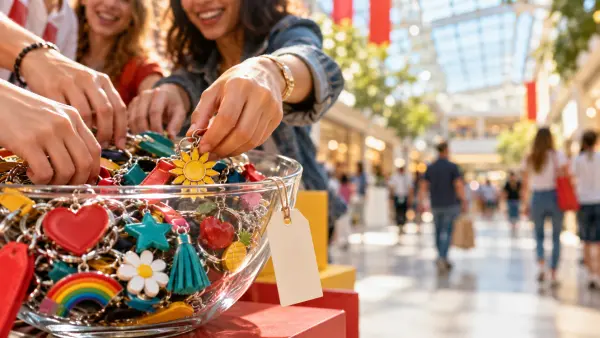
You are walking through a busy shopping mall when you see a table with a big sign: FREE. A young man is giving away keychains with a company logo on them. You do not need a keychain. You already have three at home. But a line has formed, the offer looks tempting, and soon you are in it, ready to grab one too. Why do free things pull us so strongly?
Researchers in the United States tested this with chocolate. At a university, they set up a stand that sold a fancy Swiss truffle for 15 cents and a simple, cheap chocolate for 1 cent. Most buyers made a rational choice: about three in four of them chose the truffle. Then the researchers lowered both prices by one cent. The truffle cost 14 cents, and the cheap chocolate was free. This time, about seven in ten buyers took the free one, although the difference in price was exactly the same.
Economists call this the zero price effect. When something costs even a little, we think about the downside. Is it worth the money? When it costs nothing, that question seems to disappear, and we stop thinking carefully. A well-known story from online shopping shows the same pattern. Years ago, Amazon offered free delivery on larger orders in many countries, and sales went up. In France, delivery cost about 20 cents instead. According to the story, sales there did not rise until delivery became free too.
Free gifts also work in another way. When someone gives us something, many of us feel that we owe them something back. Psychologists call this reciprocity. In one study in a US restaurant, customers who received a small piece of chocolate with their bill left bigger tips. A free taste of cheese or juice feels generous, and research suggests that tasting events in stores can boost sales for several weeks, not just on the day.
Today, one of the most common free offers is the free trial. You sign up for a month of music, films, or a language app and type in your card details. The company hopes for one simple thing: that you will forget. When the trial ends, the subscription starts, and the company begins to charge you every month. Many people admit that they have paid for a service they meant to cancel. Some governments have pushed back. Since 2022, German websites that sell subscriptions must have a clear cancel button, and a 2024 UK law will require companies to send a reminder before a free trial turns into a paid one. Rules like these make it harder to end up paying by accident.
Free apps and games are paid for in other ways. Many apps make money from advertisers, who pay to reach you, and from data about you. In free mobile games, one industry report found that only a tiny fraction of players, fewer than 2 in 100, spent real money in a month. That small group helps to pay for everyone else.
Free things are not always a bad deal. Free samples and free trials can help you find things you love. The trick is to slow down. Before you take something free, ask yourself: would I want this if it cost a little? Set a reminder a day or two before a free trial ends. And when an app costs nothing, ask what you are giving instead: your time, your attention, or your data. Next time a FREE sign is hard to resist, imagine it says one cent, and see whether you still join the line.
Vocabulary
Each word has a frequency score, a rank, and a tag. The score shows how common the word is in modern English: higher means more common, and each full point means roughly ten times more common. The rank is the word’s position on a list of about 321,000 English word forms, from most to least common. The tag shows where you are most likely to meet the word: Current, Formal, Literary, or Dated. The paragraph number shows where the word first appears in the reading. The labels are information, not instructions. Deciding which words are worth your time is up to you. How to read the scores, ranks, and tags.
tempting (adjective): attractive in a way that makes you want to have or do something, even if you do not need it.
Frequency: 3.65 | Rank: 12,045 | Current | Paragraph 1
Translations: 诱人的 | 魅力的な | 솔깃한 | लुभावना | مُغرٍ | заманчивый | tentador | tentant
- A free keychain can look tempting, even if you have three at home.
- The cake looked so tempting that I ate two pieces.
grab (verb): to take something quickly, often with your hand.
Frequency: 4.52 | Rank: 2,888 | Current | Paragraph 1
Translations: 抓取 | さっと取る | 재빨리 집다 | झपटना | يلتقط بسرعة | схватить | agarrar | attraper
- People in the line were ready to grab a free keychain.
- Let me grab my coat, and then we can go.
rational (adjective): based on clear thinking and good reasons, not on feelings.
Frequency: 4.06 | Rank: 6,456 | Formal | Paragraph 2
Translations: 理性的 | 合理的な | 합리적인 | तर्कसंगत | عقلاني | рациональный | racional | rationnel
- Choosing the better chocolate for a small price was a rational choice.
- Try to make a rational decision when you buy a car.
downside (noun): the bad part or disadvantage of something.
Frequency: 3.54 | Rank: 14,106 | Current | Paragraph 3
Translations: 缺点 | デメリット | 단점 | नकारात्मक पहलू | جانب سلبي | недостаток | desventaja | inconvénient
- When something is free, we often forget to think about the downside.
- The downside of living in the city is the noise.
owe (verb): to feel that you should give or do something for someone because they did something for you.
Frequency: 4.13 | Rank: 5,778 | Current | Paragraph 4
Translations: 欠 | 借りがある | 빚지다 | ऋणी होना | يدين | быть обязанным | deber | devoir
- After a free gift, many people feel that they owe the giver something.
- You helped me move, so I owe you a dinner.
generous (adjective): giving more money, time, or help than people expect.
Frequency: 4.20 | Rank: 5,121 | Current | Paragraph 4
Translations: 慷慨的 | 気前のよい | 후한 | उदार | كريم | щедрый | generoso | généreux
- A free taste of cheese feels generous to most shoppers.
- My aunt is very generous and always brings gifts.
boost (verb): to increase or improve something.
Frequency: 4.41 | Rank: 3,558 | Current | Paragraph 4
Translations: 提升 | 押し上げる | 끌어올리다 | बढ़ाना | يعزز | повышать | impulsar | stimuler
- Free tastings can boost sales of cheese for weeks.
- A short walk can boost your energy in the afternoon.
sign up (phrasal verb): to give your name and details so that you can join a service, course, or activity.
Frequency: no score (phrase) | Current | Paragraph 5
Translations: 注册 | 登録する | 가입하다 | नाम दर्ज कराना | يسجّل | зарегистрироваться | registrarse | s’inscrire
- You sign up for a free month and type in your card details.
- I signed up for a cooking class on Saturdays.
subscription (noun): an agreement to pay regularly, for example every month, to use a service or get a product.
Frequency: 4.06 | Rank: 6,456 | Current | Paragraph 5
Translations: 订阅 | サブスクリプション | 구독 | सदस्यता | اشتراك | подписка | suscripción | abonnement
- When the free trial ends, the paid subscription starts.
- I have a subscription to a music app.
charge (verb): to ask someone to pay an amount of money for something.
Frequency: 5.02 | Rank: 1,021 | Current | Paragraph 5
Translations: 收费 | 料金を請求する | 요금을 청구하다 | शुल्क लेना | يتقاضى | взимать плату | cobrar | facturer
- After the free month, the company begins to charge you every month.
- The hotel charges extra for breakfast.
cancel (verb): to end an agreement or a plan so that it does not continue or happen.
Frequency: 4.18 | Rank: 5,309 | Current | Paragraph 5
Translations: 取消 | 解約する | 해지하다 | रद्द करना | يلغي | отменить | cancelar | annuler
- Many people forget to cancel a free trial before it ends.
- The concert was canceled because of the rain.
require (verb): to make something necessary, often by a rule or a law.
Frequency: 4.78 | Rank: 1,724 | Formal | Paragraph 5
Translations: 要求 | 義務づける | 요구하다 | अनिवार्य करना | يُلزم | требовать | exigir | exiger
- The law will require companies to send a reminder.
- This job requires good English.
advertisers (noun, plural): companies or people that pay to show information about their products to the public.
Frequency: 3.58 | Rank: 13,321 | Current | Paragraph 6
Translations: 广告商 | 広告主 | 광고주 | विज्ञापनदाता | المعلنون | рекламодатели | anunciantes | annonceurs
- Free apps often make money from advertisers.
- The website lost several advertisers last year.
fraction (noun): a very small part or amount of something.
Frequency: 3.96 | Rank: 7,553 | Current | Paragraph 6
Translations: 一小部分 | ごく一部 | 극히 일부 | छोटा हिस्सा | جزء ضئيل | малая доля | fracción | fraction
- Only a tiny fraction of players spend real money in free games.
- The shirt was on sale for a fraction of the normal price.
resist (verb): to stop yourself from doing or taking something that you want.
Frequency: 4.20 | Rank: 5,121 | Current | Paragraph 7
Translations: 抗拒 | 我慢する | 참다 | खुद को रोकना | يقاوم | устоять | resistir | résister
- A free gift can be hard to resist.
- I could not resist the smell of fresh bread.
Word Partners
Collocations. Match the two halves to make common phrases. Then use three of the phrases in sentences of your own.
| 1. a tempting | a. a seat |
| 2. grab | b. subscription |
| 3. a rational | c. offer |
| 4. owe someone | d. decision |
| 5. boost | e. of the price |
| 6. cancel a | f. sales |
| 7. a fraction | g. urge |
| 8. resist the | h. a favor |
Answers
- a tempting offer (c)
- grab a seat (a)
- a rational decision (d)
- owe someone a favor (h)
- boost sales (f)
- cancel a subscription (b)
- a fraction of the price (e)
- resist the urge (g)
Word families. Complete each sentence with the correct form of the word in brackets.
- Free samples are a big __________ for hungry shoppers. (tempting)
- Try to think __________ before you sign up for anything. (rational)
- We were surprised by the __________ of the people in the village. (generous)
- A reminder email is now a legal __________ in some countries. (require)
- If you change your mind, you can ask for a __________ within 14 days. (cancel)
- The free app shows a lot of __________ between videos. (advertisers)
Answers
- temptation
- rationally
- generosity
- requirement
- cancellation / cancelation
- advertisements / adverts / ads / advertising
Activity Page
Open the activity page in a new tab
Speed Challenge
Answer 12 questions against the clock. Every wrong answer adds 5 seconds, and the lowest score wins. Open the speed challenge in a new tab.
Quick Reading and Typing: The Psychology of Free in Brief
A shorter version of the reading that uses the lesson vocabulary. Read it for a quick introduction to the topic, or use it for reading aloud, shadowing (reading along with a model), and typing practice.
Imagine you are walking through a shopping mall. A young man is giving away free keychains. You do not need one, but the offer looks tempting, and soon you are in the line, ready to grab one too. Why do free things pull us so strongly?
Researchers in the United States tested this with chocolate. They sold a fancy truffle for 15 cents and a cheap chocolate for 1 cent. Most buyers made a rational choice, and about three in four chose the truffle. Then the researchers lowered both prices by one cent. Now the cheap chocolate was free, and about seven in ten buyers took it. The difference in price was exactly the same.
This is called the zero price effect. When something costs a little, we think about the downside. When it costs nothing, we stop thinking carefully. In a well-known story, Amazon offered free delivery in many countries, and sales went up. In France, delivery cost about 20 cents, and sales did not rise until it became free. Free gifts also make many of us feel that we owe something back. In one restaurant study, customers who got a small piece of chocolate with their bill left bigger tips. Free samples in stores feel generous, and they can boost sales for weeks.
Free trials work in a different way. You sign up and type in your card details. When the trial ends, the subscription starts, and the company begins to charge you every month. Many people pay for services they meant to cancel. Since 2022, German websites must have a clear cancel button, and a 2024 UK law will require reminders before a free trial ends. Free apps often make money from advertisers and from your data. In free mobile games, only a tiny fraction of players spend real money.
Free things are not always bad, but it helps to slow down. Ask yourself: would I want this if it cost a little? Set a reminder before a free trial ends, so you do not end up paying by accident. And when a free offer is hard to resist, imagine it costs one cent.
How to practice
- Read the text silently once and check any words you are unsure of.
- Read it aloud slowly, one sentence at a time. On the typing page, the Listen button reads each line with your device’s voice, so you can listen first and then repeat.
- Shadow: read aloud again at a natural speed, trying to keep a steady rhythm without stopping.
- Record yourself, listen back, and note one sentence to practice again.
- Type it on the typing page below and check your speed and accuracy.
Open the typing practice in a new tab
Comprehension Questions
- What is the young man in the shopping mall doing, and why do people join the line?
- In the first chocolate test, what did the two chocolates cost, and which one did most buyers choose?
- What changed in the second test, and what happened?
- What is the zero price effect? Explain it in your own words.
- What happened to Amazon’s sales in France, according to the story?
- Why do free gifts make many people want to give something back? Give the example from the restaurant.
- How does a free trial make money for a company?
- What have Germany and the UK done about subscriptions?
- Which piece of advice at the end do you think is the most useful? Give a reason.
IELTS-Style Questions
- True, False, or Not Given: “In the second chocolate test, the price difference between the two chocolates became bigger.” Explain your answer using the reading.
- Yes, No, or Not Given: “The writer believes that all free offers are bad for people.” Explain your answer using the reading.
- Author’s purpose: Why does the writer tell the story about Amazon in France? Is it (a) to show that a very small price can stop people from buying, (b) to compare shops in France and the United States, or (c) to explain why delivery is expensive?
AI Discussion Prompt
I just read an article about the psychology of free things. It described a chocolate test in which most buyers chose a 15-cent truffle over a 1-cent chocolate, but most chose the cheaper chocolate when it became free, the zero price effect, why free gifts make people feel they owe something back, how free trials and free apps make money, new rules on subscriptions in Germany and the UK, and tips for thinking before taking something free. I am an English learner at about B1 level. Please ask me one question at a time, starting with something free that I got recently. Use simple language, respond to my ideas first, then briefly correct any language errors, and ask follow-up questions that make me explain my reasons.
AI Vocabulary Prompt
I want to practice vocabulary from an article about the psychology of free things. Please quiz me on the following words one at a time, using a mix of question types: multiple choice, true/false, and sentence completion. Give me feedback after each answer before moving on, and bring back the words I miss later. Here are the words: tempting, grab, rational, downside, owe, generous, boost, sign up, subscription, charge, cancel, require, advertisers, fraction, resist.
Discussion Questions
- Do you often take free things, such as pens, samples, or keychains? What do you do with them?
- What is the best thing you ever got for free?
- Have you ever forgotten to cancel a subscription? How did you feel when you noticed?
- Which free apps do you use every day? Would you pay for any of them?
- Do free samples in shops make you more likely to buy something? Why or why not?
- When someone gives you a gift, do you feel that you must give something back?
- Do you think the chocolate test would have the same result in your country? Why?
- Have you ever spent money in a free mobile game? What did you buy, and why?
- Should companies be allowed to give free gifts, such as toys, to children in order to sell them products?
- Is it fair for companies to use free offers to get people’s card details?
- Are you happy to see advertisements in return for a free app, or would you rather pay?
- Free things are sometimes paid for with our data. How much do you worry about this?
- Some people say that nothing is really free. Do you agree?
- Should governments protect people from their own mistakes, such as forgetting to cancel a trial, or should people be responsible for themselves?
Language Focus: Phrasal Verbs (give away, sign up, end up, slow down)
What it is: A phrasal verb is a verb plus a small word such as up, down, or away. Together they have a new meaning. Give away means give for free. Sign up means join. End up means finally be in a situation, often one you did not plan. Slow down means do something less quickly.
Why writers use it: Phrasal verbs are very common in everyday English, especially when people talk about shopping, money, and daily choices. The meaning is often hard to guess from the two parts, so it helps to learn them as one item.
Examples from the reading:
- “A young man is giving away keychains with a company logo on them.”
- “You sign up for a month of music, films, or a language app…”
- “Rules like these make it harder to end up paying by accident.”
- “The trick is to slow down.”
Part A. Sentence starters Finish each sentence so that it is true for you.
- When I go shopping, I often end up …
- The last thing I signed up for was …
- Something I gave away recently was …
- When I feel stressed, I slow down by …
- If a friend picks up the bill at dinner, I usually …
Model answers
- When I go shopping, I often end up buying snacks I do not need.
- The last thing I signed up for was a free trial of a music app.
- Something I gave away recently was a box of old books.
- When I feel stressed, I slow down by going for a short walk.
- If a friend picks up the bill at dinner, I usually pay next time.
Part B. Questions Answer each question in a full sentence. Try to answer using a phrasal verb from the box. Then ask a partner.
- What did you sign up for when you were a child?
- What do you do with clothes that you no longer wear?
- Have you ever bought something you did not plan to buy? What happened?
- What helps you relax after a busy day?
- Who usually pays when you eat out with friends?
Model answers
- When I was a child, I signed up for a swimming club.
- I usually give them away to my cousins.
- Yes. I went to buy milk, but I ended up buying a new jacket.
- I slow down by turning off my phone and reading.
- We take turns. Last time, my friend picked up the bill.
Online Resources
- Zero as a Special Price: The True Value of Free Products (Marketing Science (author copy)). The research paper behind the chocolate test in paragraph 2. Look at the graphs to see how choices changed.
- The Power of FREE (Cardinal Path). A short, easy summary of the chocolate test and the Amazon delivery story from paragraphs 2 and 3.
- Free samples increase sales (BYU Marriott School of Business). Why free tastings in shops work, and why their effect lasts for weeks (paragraph 4).
- Report: 0.19% of Players Account for 48% of Free-to-Play Game Revenue (Adweek). A news story about how few players pay in free mobile games (paragraph 6).
- Germany: The obligation to provide consumers with an online cancellation button (Bird and Bird). A short legal article about the cancel button that German subscription websites must have (paragraph 5).